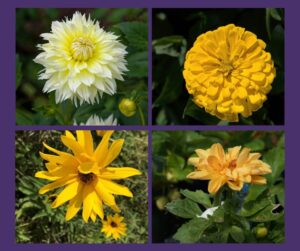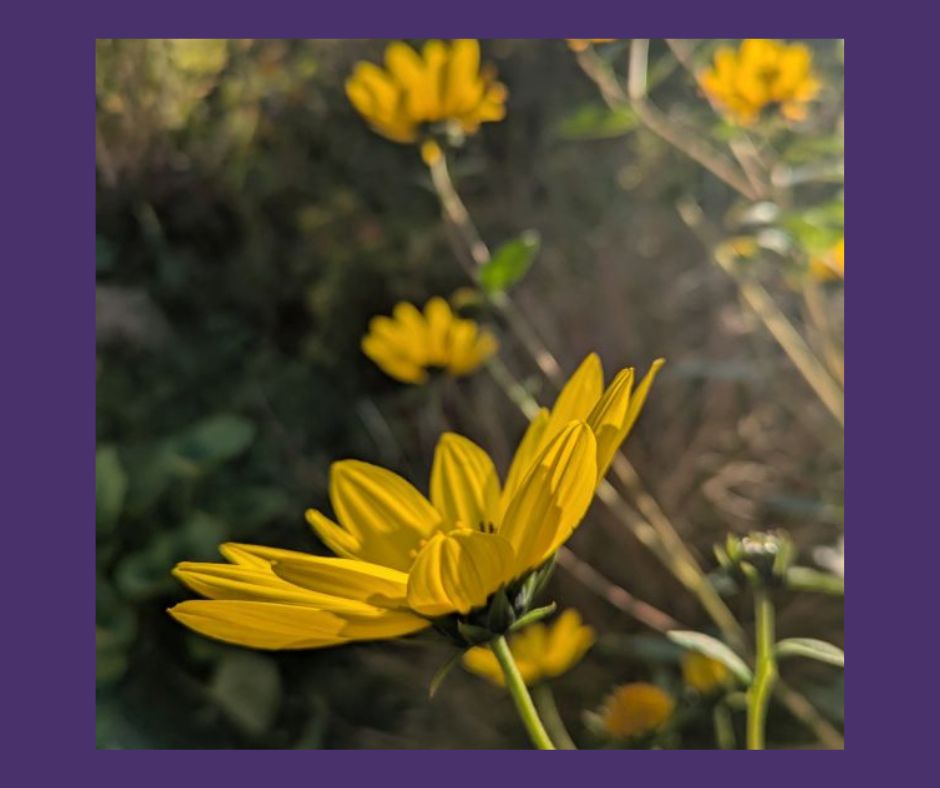
Thought I’d suggest 15 yellow flowers for the Autumn Equinox to celebrate the sun and brighten up your garden borders and pots. 😊
The golden blaze of a hot summer is slowly folding itself into the warm days and cooler evenings of autumn, with longed for rain spattering on the soil after those dry weeks.
Many of us have seen plants, flowers and crops wither and shrivel under that continuous heat. But let’s remember that whilst we may be needing drought tolerant summer perennials, we need them to be rain and wet soil tolerant over the winter months.
Yellow is one of the primary colours, and it can be neon, richly luxuriant, even subtle. As a garden and planting designer ive frequently been informed by new clients that they don’t like yellow flowers. Then I mention daffodils, primroses and sunflowers…
However, if you really disliked yellow flowers in your garden I don’t think you would be reading this blog, so read on, enjoy the pictures and discover a new must-have plant!
All the flowers below will be in bloom for the Equinox across most of the UK. So although, there are subtle variations depending on the microclimate of your own garden, you should be able to grow these flowers in your borders or in a sheltered porch.
You’ll find three cultivars or varieties suggested for each of these autumn flowering plants to make up our 15 yellow flowers for the Autumn Equinox. That way, you’re more likely to find at least one of the plants you fancy at the garden centre or nursery now so you can enjoy them straight away. Btw, there’s a link at the end for my blog tips on choosing and buying plants – and what to do if you get carried away!
- Chrysanthemum
- Dahlia
- Helianthus
- Rudbeckia
- Zinnia
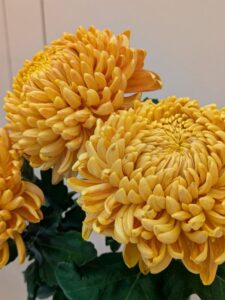
Chrysanthemum
I’ve loved bronze Chrysanths since I was a child and, after a pause to create borders in this new garden, I’m starting to grow these gorgeous flowers again. I’m growing yellow, white, bronze, red, old varieties …. but more on Chrysanthemums in another blog. Regular dead heading keeps Chrysanthemums flowering right through into late October, and possibly until the first frost.
Chrysanthemum ‘Conella Yellow’ compact growth makes it an excellent choice for pots
Chrysanthemum ‘Early Yellow’ is a spray Chrysanth with dark aromatic foliage, especially good for pots, borders and cut flowers (hence ‘spray’ )
Chrysanthemum ‘Nantyderry Sunshine’ double yellow flowers on this compact plant
Dahlia
Many gardeners have found their Dahlias suffering with the heatwaves of the last couple of summers. This year I grew some of mine where they had dappled sunlight in the afternoon rather than full sun. They flowered better and needed less water than those that were in sunnier spots, so I’ll certainly repeat next year.
And if you have neither the time nor inclination to lift and store tubers overwinter, then treat them as annuals. You could even buy them as a small plant rather than a tuber you have to grow on! This is particularly useful for those gardeners short on space. More on Dahlia types in the blog link at the end.
Dahlia ‘oakwood Goldcrest’ semi cactus type, c 3 foot tall
Dahlia ‘Honka Yellow’ a little bit different, but loved by bees!
Dahlia Bishop of York’ has a delicious combination of dark foliage and a single or semi-double yellow flower, c 3 foot tall
Helianthus
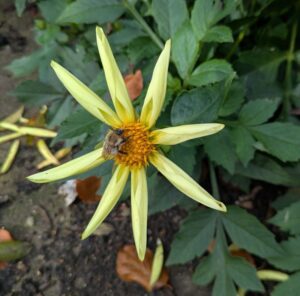
The ones I’m suggesting here are the perennial sunflowers, with glorious yellow daisy-like flowers. Generally tall, 6 – 8 feet high, on self-supporting stems – except in a windy spot.
They’re ‘see through’ like Verbena bonariensis, so don’t think they have to go to the back of a border – although they do look stunning against a dark green hedge. I love to plant them mixed in with dark purple buddleia and Verbena bonariensis. And have recently discovered a tall Aster, Symphyotrichum laeve ‘Glow in the Dark’ which next year I shall grow with my Helianthus.
Helianthus ‘Lemon Queen’ has pale flowers, makes a lovely cut flower
Helianthus giganteus has darker, slightly coarser leaves but a rich yellow flower
Helianthus salicifolius, the willow leaved sunflower gives you interesting foliage too
But avoid Helianthus tuberosum except in your vegetable garden – this is Jerusalem artichoke and can be a thug in the ornamental border.

Rudbeckia
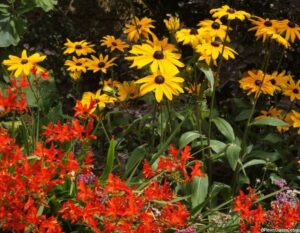
Also known as coneflowers for their shape as the flowers fade and expose the conical centre, and sometimes black eyed Susan (which is also the common name for a climber, Thunbergia). These American prairie natives are a magnet for pollinators and the seed heads both look decorative and offer a food source for our garden birds, especially finches.
Rudbeckia ‘Goldblitz’ at no more than 2 foot high, this Rudbeckia is happy in a pot
Rudbeckia fulgida var sullivantii ‘Goldsturm’ good for pots and borders
Rudbeckia laciniata ‘Herbstsonne’ is a tall perennial up 8 foot, it needs a moist soil to keep itself upright and flower well. But glorious.
Zinnia
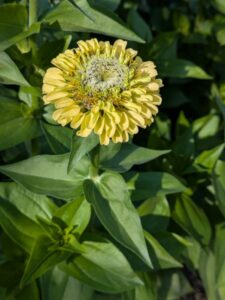
Zinnias are related to sunflowers and are native to Mexico in particular, but also to much of South America and the southern United States. Often sold as annual bedding plants, they are actually tender perennials. In sheltered spots they may overwinter in the ground, but otherwise find a frost free place for them. Or compost the spent plants and buy fresh seed and / or plants next year. Taller varieties make good cut flowers you can grow and pick for yourself.
Zinnia elegans, not so good for pollinators, but we’re allowed a few of these when most of our flowers are😉
Zinnia grandiflora Profusion Yellow
Zinnia ‘Benary’s Giant Yellow’
And finally
Growing even some of these 15 yellow flowers for the autumn equinox in your borders and in pots by your front door will cheer you up regardless of the weather. And if you’re not currently growing these ones, there’s still time to rush out and buy as most will be available in garden centres and nurseries. Possibly at a bargain price. Which, as they’re all perennials is a win-win situation, because you’ll have yellow flowers for next year’s Autumn Equinox too!
For more help with colourful planting schemes why not ask about our Planting Design services? Or we offer one to one bespoke Gardening Lessons, where your classroom is actually your own garden. We can help you learn gardening basics, and also show you how to plan an ornamental border.
And for sitting back and reading a bit more, there are suggested gardening articles below, a selection of the many in Plews Potting Shed.
And you could come and find us on Instagram Pinterest Facebook YouTube
Feeling nosey? You can have a peek at the progress of my garden renovation, Spitfires and Slow Worms, on Instagram and Facebook
You’ll get to see it in person if you come to the Plews Gardening Workshops
And why not get your local garden club, allotment, WI, U3A or other group to ask me along to give a talk?
Related Gardening articles you may enjoy from our Award Winning Blog
Plant Care Tips
10 Tips for Buying Garden Plants
Bought More Plants than You Meant? Help is Here!
Plants don’t take Holidays: How to keep your garden alive while you do!
Autumn Gardening
Autumn Equinox, Harvest Festivals and Your Garden
Autumn Borders Colourful Planting Ideas
Why do leaves fall? And other Autumn Gardening Questions
Dahlias and Asters
Michaelmas Daisies – Still an Aster?
Types of Dahlia – Glorious Blooms