10 Tips for buying garden plants could also be entitled “How not to buy garden plants”. Or to put it another way, when you get to the garden centre or nursery, this blog will help you to choose the plants that are right for you and your garden! You’ll find related blogs and a couple of helpful lists to download at the end.
Herewith a few tricks of the trade from your friendly garden designer who has purchased tens of thousands of plants over the years for clients, friends and for herself …
Know Your Garden
This is specifically in relation to the part of your garden or border where the plants will go. But arguably even the new plants have to fit in with those already there, unless they are in a distinct and separate area.
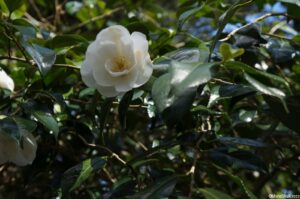
What are the aspect and situation where you intend putting the new plants? For example, is it sunny or shady; dry or damp? Do you know whether your soil is acid or alkaline, clay, chalk or sand? After all, Camellia is not going to thrive in a cold, damp spot in an alkaline soil…
How Big is your Garden Border?
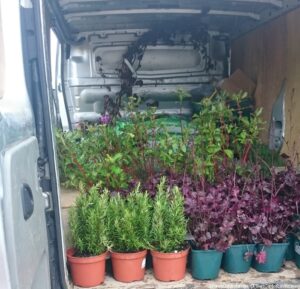
Before you even get as far as your car, you should know how big the space is you’re filling. Do you plan to buy just a few plants fill in to give a fresh look for a change in season? Or are you buying plants for most of a border? And if the latter, is your car boot big enough to bring them all back?

Make a Plant List
The list should consist of the plant species or cultivars you’ve decided on, plus how many of each you need. If you’re filling in gaps with a standout plant for a particular season, then one may be enough. Otherwise think in threes, fives or sevens, depending on space.
If you’re not confident enough to make changes when you’re at the garden centre, having already decided on a back-up option is crucial. You need to know that the change to one plant type will still fit in with your overall planting scheme. And of course the plant itself has to be suitable for the soil, aspect and so on. For example, Heuchera ‘key lime pie’ makes an appropriate substitute for Heuchera ‘lime marmalade’. There is also the option of purchasing your specified cultivar from elsewhere or waiting for the nursery to have grown on their stock, or have a delivery.
Also, there are trends in plants as in fashion and some cost more because of the name. Do your homework beforehand and look for the ‘own brand’ equivalent to compare with before buying. For example Hydrangea Annabelle is white and if all you’re really bothered about is a white flowering hydrangea, there are plenty of others to choose from.
Click here for a helpful list to download or keep on your mobile (it’s also at the end so you can keep on reading)

Soil Improver
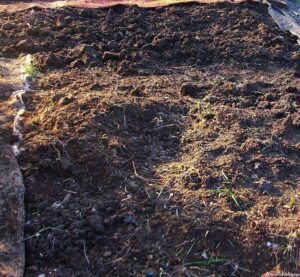
Would you simply paint over the wallpaper that’s peeling? Preparation is all. I mean, what would be the point of spending ££££ on new plants if the soil is too poor and they all die? See blog links below for helpful tips, but I will say here that knowing your soil is a key element of a successful garden. There are a few quick fixes which can help temporarily. (Ask me about those if you can’t find the answer in Plews blogs).
10 Tips for Buying Garden Plants – Budget
Yes, you do need a budget even when buying for yourself! Let’s work on the basis that you’ve already improved the soi for planting in the border, or have your pots ready if you’re container gardening. This means, for example, your shopping budget may include top dressing but wouldn’t include soil improver.
Now, you have your list of plants to buy may also have done a bit of homework as to the likely prices of them in different pots sizes. Remember it costs money to raise good quality plants for sale. If you want or need an ‘instant garden’ it will cost substantially more than waiting 3 – 5 years for plants to grow and fill the space.
In fact, you may need to revisit your plant list and garden planning notes and revise them once you’ve worked out your budget. Perhaps adding a few packets of annual flower seeds to your shopping list is the answer? They’ll fill up the gaps in a border for the first year at a minimal cost.
Back to your budget. For example, you have £100 to spend. Allow £120. That extra is your contingency fund should you see a bargain or have to get a slightly larger plant than planned for. And if you garden in containers, you may need to allow for more potting compost and possibly pots too. If you don’t use the contingency money, put it to one side to increase your budget next time you go plant shopping!
I haven’t suggested how many plants you’d get for £100, as it depends on where you are in the country, what sort of plant – shrub, herbaceous perennial – and what size of pot. It could be anything from 1 to 25 plants.
Flower Power
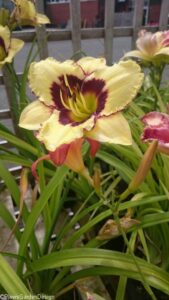
Okay, hands up who’s bought the plant with all the flowers already in bloom? This is a good plan when you need the plant to look stunning immediately and for a few days, as what you’re effectively buying is a bunch of flowers.
Of course, if it’s at a marked down price, and you know the plant is a perennial not an annual and in good health, then it’s a future investment. But if it’s an annual that you’re buying for a few weeks of flowering, you’re probably out of luck and it’s money for nothing.
By all means have some flowers open, but look for the plant with lots of buds as well. If you’re buying more than one plant, some in flower and some with buds also works. And in all honesty, I do quite often buy a group of five plants with at least one of them in flower, so that my client can appreciate the planting design straight away.
Are those Plants Healthy?
Our 10 tips for buying garden plants wouldn’t be complete without this section. The quickest and easiest way for most gardeners to check a plant’s health is to look at the foliage.
Are there spots on the leaves? This could be as simple as water or fertiliser splash and not a problem.
Or is it mildew? This will show as a white, dusty coating on foliage and possibly stems as well. Unlikely that you’d find this on plants on a good nursery or garden centre except possibly in their sale area.
Are the leaves drooping? Check whether this is due to lack of water by lifting the pot: lightweight suggests dry soil.
Perhaps the leaves look a bit droopy, crinkled or brown. This might be lack of watering but could be something more serious. However, is there new growth and is that healthy? If so, then it’s likely the plant kept getting missed out when watering was happening.
And do have a look at the other plants around on the display. If they’re healthy then it’s likely that they all are.

Garden Teacher Tip – A note on Liverworts and Moss
Liverworts and moss may be found on the pot soil surface. This both is and isn’t a problem. It’s more of a problem for the nursery than for you. One of the causes is overwatering, another is that the spores are present in the rain water or recycled water that the garden centre is using to water their stock.
They’re usually associated with compacted soil or poor drainage. Now this could be sign of poor management at the garden centre but if the stock is looking healthy overall, that’s unlikely. It’s more likely that it wasn’t spotted, particularly on some of the mature plants such as shrubs, where bending down and investigating the soil surface is trickier.
For me, alarm bells would start ringing if I saw many pots where the soil surface was totally covered with liverworts and moss. Being me, if the nursery was otherwise in good order, I’d probably start up a conversation with staff. They may have taken on an apprentice who didn’t realise that it was a problem and be grateful I’d noticed it and pointed it out. Left alone they could have a major problem and could lose custom.
Although they don’t harm plants, liverworts and moss can look unsightly, and may inhibit growth of small or young plants. But you may still not want to take them home. What you can do is pick them off the soil surface when you’re loading your car, putting them into that dog poop bag that you have even though you don’t have a dog. When you get home empty the bag into your green waste bin.
10 Tips for buying Garden Plants – Bigger Equals Better
Not always! There are a couple of things to consider here.
Firstly, ask yourself what effect do you want and how soon? Often three smaller plants will fill up a space more effectively straight away and spread over a couple of seasons to look more impressive than a single, initially larger, plant would do.
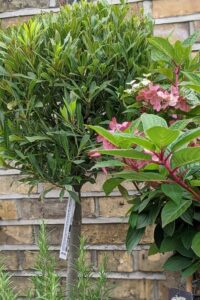
Secondly, if you are, for example, trying to hide an unsightly view, you may well need a larger plant than will fit in your car! You’ll also need to take other things into consideration before introducing a 15 foot tree into a 40 foot long garden. And remember, even a standard bay tree could be 5 foot tall.
Lastly, compare the size of the plant you’ve picked up with the one in a smaller pot – they may be the same so why pay more? However, there are caveats to this comparison, so read onto the next section.
Get to the Root of the Problem
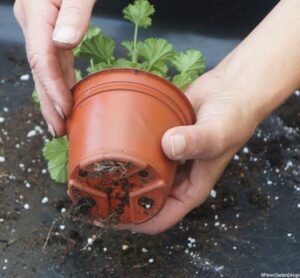
Size comparison – how to check which will be the better buy for you. Is the small potted plant rootbound? Tip the pot to see if there are a few or lots of roots poking through. If the latter, then its rootbound and in desperate need of being put into a larger pot. Check the plant in the larger pot. If the smaller one is rootbound, and the larger one has lots of loose soil as its recently been potted on, you have one answer. If the plant has been in the pot a while, then it will have an undisturbed root system and that’s the one I’d buy.
At the other extreme from lots of soil and no roots is the pot-bound plant, where the roots go round and round and there seems to be no soil at all. This plant should have been re-potted a long time ago and is probably also suffering from lack of nutrients. If you still have to have it, do the health checks and ask if the nursery or garden centre will reduce the price. Be sure to give it lots of tlc when you get home and repot as soon as you can.
What plant is it?
Buying an unlabelled plant can give you a nasty shock if the one you bought grows to 10m in 3 years not 3m in 3 years as you were expecting! Or if you didn’t know, and can’t check as there’s no label, that the particular plant is highly vigorous and will spread into areas of the border where you didn’t want it.
That said, I enjoy the excitement of knowing some, but not all about a plant (so long as it’s healthy of course). It helps if you happen to know which species the plant is, for example, it’s a Fuchsia. Keep an eye on it as it grows to establish whether it’s one of the tender Fuchsia, or a trailing variety.

And finally
And most importantly, remember, gardening professionals never, ever, ever indulge in an impulse buy for themselves…well, hardly ever…
If these 10 tips for buying garden plants isn’t enough and you’d like some personal help with a planting design for an ornamental herbaceous or shrub border, perhaps for a herb garden, vegetable plot or mini orchard, then do please get in touch to ask about our design and consultancy services.
We also offer a mix of practical sessions and theory in our bespoke Gardening Lessons and Courses for those who would like personal guidance to learn how to garden in their own garden. There’s a pdf download to answer some of your questions – Plews Gardening Lessons Information
For further gardening advice and inspiration, ideas for edible gardens, cottage gardens and more, check out Plews Potting Shed blogs, including the selection below and our monthly Tipsheet You could come and find us on Instagram – @plewsgd Pinterest and Facebook too.
And on that note, you can have a peek at my new garden in the Instagram account @spitfiresandslowworms and for those of you who prefer Facebook – Spitfires and Slow Worms
Related Gardening articles you may enjoy from our Award Winning Plews Potting Shed Blog
Gardening Printables – free to download from Plews
Plants for Chalk Soil, Alkaline Soil Plant List
Your Garden Soil
Soil Health and Your Garden
Tips for Gardening on Chalk Soil
Tips for Gardening on Clay Soil
Gardening Tips
Is Yours a Shady or a Sunny Garden?
7 Tips for Gardening on a Budget
10 Tips for Saving on Garden Essentials
10 Tips for Successful Seed Shopping
Garden Plants
16 Deer Resistant Shrubs for Clay Soil
Plug Plants for Hanging Baskets and Containers
Summer Bedding Plants – Questions and Answers
Edible Plants for Hanging Baskets