
Mid autumn gardening tips has easy tasks and ideas that will give you a better looking garden now and come the spring!
The aim is to keep you, the helpful wildlife and your soil happy. You’ll find planting ideas for Christmas dinner, colourful planting, pest control with a bit of recycling and more. All of which are easily achievable and time efficient and with an eye to your budget. Plus you could do all of them over a weekend, or spread them out over, whichever suits you best.
Edible Gardening – Veggies
Sow some spinach, all-year-round lettuce, pak choi and chard. These and similar veggies will need protecting from pigeons and deer, and later from frost (with the exception of the chard once a reasonable size).
It’s very satisfying to pop out into the garden for a few fresh leaves for lunch (and impresses visitors!) Indeed, you could even plant some spuds and dish up new potatoes over the Christmas season. See the blog link below for cultivation details.
Other veggies that can or should be sown now are onions and garlic. Onions could be seed or sets (baby onions basically). With garlic it’s the cloves that are planted. Pop a few twigs in between to reduce digging up by squirrels and cats.

Mid autumn gardening tips – frost and pest protection
Protection for overwintering crops can be polytunnel or cloches. If you have a container garden there are pot and raised bed shaped and sized cloches to buy. Alternatively, make a homemade version with some of last year’s horticultural fleece or clear plastic packaging. A couple of options I’ve used are these: –
Set hazel, similar branches or bamboo canes around the veg plants, allowing for growth. Place the fleece or plastic over, securing to the top of each upright by wrapping around with twine, pegs or a cane topper.
To create more of a rectangular ‘cage’ and for larger areas, I slip pea netting over the canes (I use jute, but plastic also works), securing as before. As this gives you a ‘flat roof’ it works well for hardy peas which need a bit of height. Drop the fleece over the netting and don’t worry if you don’t have a large enough piece to cover the whole area. The beauty of this version is that you can use different pieces for each side and top if you need to!
Secure the base edges with fleece pins (aka membrane pegs, ground hooks) stones or bricks. Be sure to make give yourself easy access for weeding and picking.
A few of my favourite overwintering veggies –
- Pea ‘Douce Provence’
- Kale ‘Cavolo Nero’
- Spinach ‘Apollo’
- Pak choi ‘Dwarf Conton White’
- Chard ‘Bright Lights’ (very colourful! Doesn’t need frost protection)
- Lettuce ‘all-year-round’

Edible Gardening – Fruit
Tree Fruit
Prevent winter moth problems on next year’s apple crop, fix grease bands around the trunk near the base. The female can’t fly, so this prevents her from climbing up and laying eggs.
Pick apples, pears and quince as they ripen. Check if they’re ready by gently twisting the stem – the fruit should fall into your hand. Not all varieties will store for long, particularly dessert apples. Windfalls should be eaten or cooked promptly. Undamaged fruit can be stored in a cool, dark, frost-free place to eat later. It needs to be stored so that the fruit isn’t touching and, especially when storage space is tight, wrapping the individual fruit in waxed paper bags, tissue paper or even newspaper helps to keep them apart.
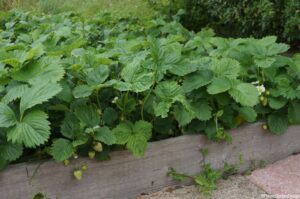
Strawberries
You may already know about growing more strawberry plants from the offsets. Usually, the strawberry runners are pegged down onto the soil, from where you’ll have to carefully dig them up and pot on later. But I have an extra garden teacher tip to make your life easier! Fill small pots with peat free compost & soil mix then sink them into the ground where the strawberry runners are. Keep the offsets attached to the parent, and carefully insert the runners into the pots, so as not to damage the small roots that are forming.
As the pots are sunk into the soil they don’t dry out as they would if sitting on the surface, plus they’re better protected from frosts. Remember it’s normal for the foliage to die back over winter.
in the spring when the offsets have firmly rooted it is easy to separate them from the parent without disturbing the roots – which makes the new plant less stressed. Sorted!
Mid autumn gardening tips – Ideas for prettifying
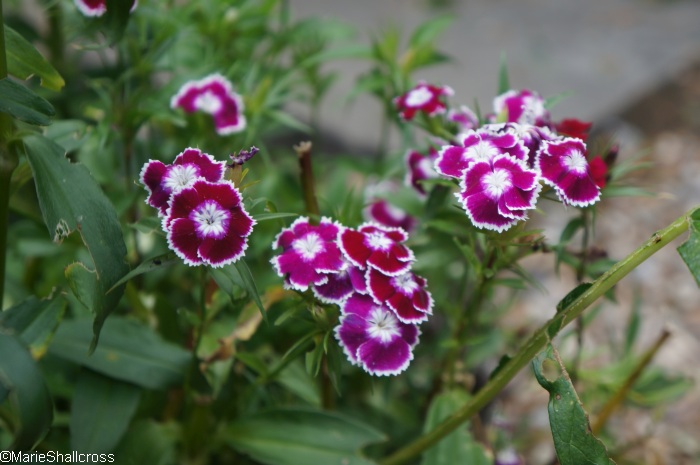
Scented biennials such as Sweet Williams (Dianthus barbatus) and Wallflowers (Erysimum cheiri) can be bought at garden centres now. They may be sold in bare root bunces or in trays. The usual advice is to plant them straight into borders ready for flowering next year. But if you ‘re anything like me, those spaces are still full of tender plants like Lantana, Pelargoniums and Dahlias. What do you do? Try these:
- Both can be potted into individual pots, 9cm or 1 litre, where they’ll be fine until they can be planted in the borders when you lift the tender plants. This is especially useful when you’ve bought bareroot plants.
- Plant wallflowers on top of potted late spring flowering bulbs. This dissuades squirrels from digging and lengthens the period of interest for your display.
- It is okay to temporarily plant Sweet Williams in the ground elsewhere. When you come to move them, ensure you dig up soil with the root ball.
Plant a colourful border edging to last all winter. For example ground hugging Heuchera has foliage in colours including dark purple and caramel, both of which make a good foil to green leaved flowering plants in summer.



Make a garden lasagne
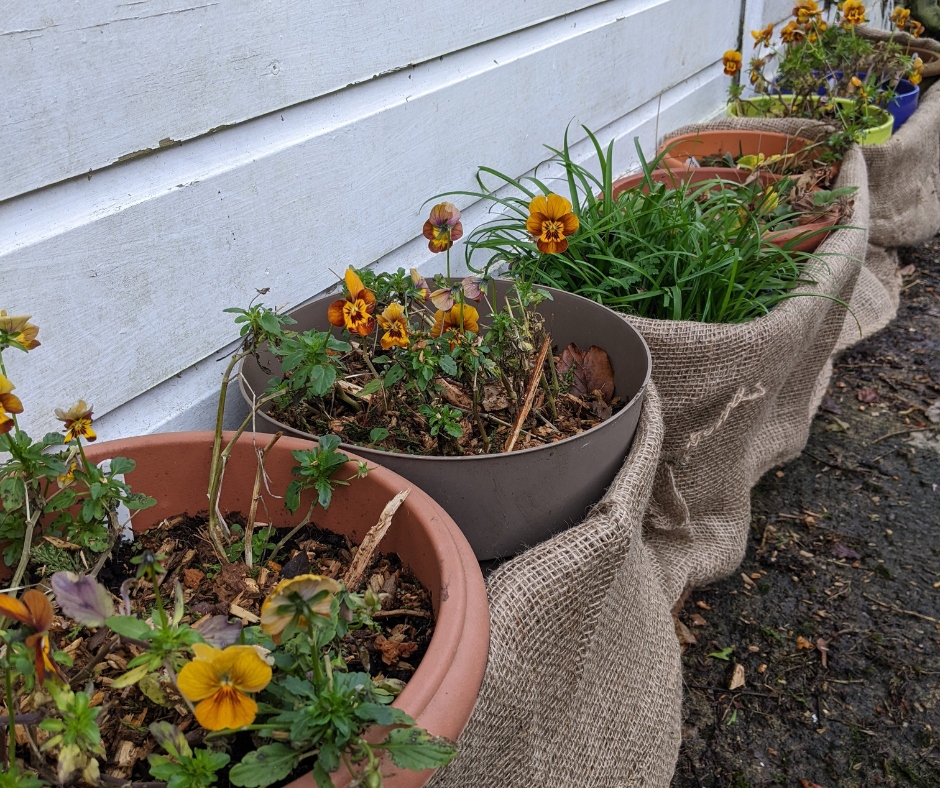
In a big pot centrally plant a small standard Rosemary. Surround with two layers of bulbs, for example, ‘common’ snowdrop (Galanthus nivalis) above and Narcissus ‘Jetfire’ below. Add winter bedding on top – I love Viola ‘honeybee’ for its rich brown and gold scented flowers.
Regarding that small standard Rosemary when you can’t find one:
- Create your own! Take a straight stemmed Rosemary of the correct height to look right in your pot. Cut off the lower stems to give a clear ‘trunk’ of 6-8” / 15-20cm. The cut stems aren’t wasted, use the leaves in cooking, throw into a pot pourri. Dry the stems and burn on an open fire, garden chiminea, etc.
- Use a small lollipop Bay tree instead. Dark green foliage gives you contrast with the flowers for the best effect.
3 General mid autumn gardening tips
Collect large cardboard boxes
Opened out and placed against walls these provide insulation for potting sheds and garages to keep overwintering plants and tubers frost free. I also use them under large gravel trays in which I then stand my banana tree and lemon verbena.
Take photos
Get thee into the garden and record your stunning autumn borders and neighbours’ trees whose colour lends majesty to your view. But also take pics of bare patches and areas that don’t look as good as you’d hoped. These will help you when making lists of plants, bulbs and seeds that you need to buy. And of course, help with planning next year’s garden.
Bird feeders, Bug hotels
Give bird feeding stations an autumn check over. Thoroughly clean those in good nick and replace items where necessary. For example new water trays can bought online or if you’re avoiding plastic where possible, use an enamel or clay dish instead.
Bug hotels may need topping up with new material and autumn is the ideal time to do this. For example, I collect seeds from my garden and add the cut stems. The autumn winds give us fallen twigs – add those and of course fallen leaves too.


and finally …
Whether you find all or just some of these mid autumn gardening tips and ideas relevant for your own garden, I hope they’ve been helpful! For further gardening advice and inspiration, check out Plews Potting Shed blogs, including the autumnal selection below. You could also come and find us on Instagram Pinterest and Facebook.
But most of all, enjoy your garden and if Plews can help you with anything, please do get in touch. For example –
Our Garden Consultancy & Advice Visits may help with some of your issues. Or does your planting need a rethink? Do you have a birthday coming up? Plews bespoke Gardening Lessons, where your classroom is actually your own garden make a wonderful and practical gift. You could learn how to grow an orchard of citrus fruits in your conservatory! We help you with both gardening basics and more ‘expert tasks’, depending on what you need. Have a read through this pdf download for info.
Feeling nosey? You can have a peek at the progress of my garden renovation, Spitfires and Slow Worms, on Instagram and Facebook
You’ll get to see it in person if you come to the Plews Gardening Workshops Current ones on Eventbrite for you to book into. Follow for updates on topics and dates on Plews website, Instagram, Eventbrite, Facebook
Plus get your local garden club, allotment, WI, U3A or other group to ask me along to give a talk (and bring plants 😉)
Related Gardening Blogs from the Award Winning Plews Potting Shed
Autumn gardens
Late Autumn Gardening Checklist
Why do leaves fall? And other Autumn Gardening Questions
Cost saving tips for your garden
7 Plant-Savvy Tips for Budget Gardening
10 Tips for Saving on Garden Essentials
Plants and planting
10 Tips for Buying Garden Plants
Growing New Potatoes for Christmas Dinner
Bulbs
Forcing Bulbs for Christmas flowers
How to Enjoy Spring Flowering Bulbs
General gardening tips
Tips for Gardening on Clay Soil
Tips for Gardening on Chalk Soil
Why do leaves fall? And other Autumn Gardening Questions

original photos by Lindasphotography and chinaface both from getty images


