

What are shade tolerant vegetables?
Faced with a shady garden, many people are put off from growing vegetables as they feel it’s enough of a struggle to find ornamental plants that will grow there. One of the pleasures of teaching gardening lessons in the student’s own garden is helping them to discover that yes, they can successfully grow edible plants in shade and semi shade.
Shade tolerant plants do need some light, and unless you want to cultivate edible fungi, a dark cellar is not the place to grow your vegetables! I have looked at what constitutes a shady or a sunny garden in another post (link for this and other blogs mentioned are given below) Here, we’ll keep to a few key points. For the most part, shade loving vegetables: –
- are quite happy if they receive about 3 hours of sunlight per day. This does not need to be direct sunshine, in fact that can be too much in the hotter months
- usually prefer morning sun to afternoon sun
- also enjoy dappled sunlight throughout the day
Gardening Teacher Tip: –
If you’re starting out your shade tolerant vegetables as seeds and seedlings, give them as much light as possible during these stages. They grow quickly at the beginning and need to turn the sun’s energy into food to promote their growth, ie they need sunlight to photosynthesise.
A Note on Dry Shade
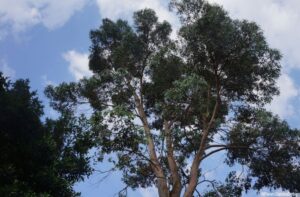
When the reason this area of your garden is shady is nearby and overhanging trees, particularly evergreen trees you will need to regularly water those vegetables growing directly in the ground. Those trees are big plants and need a lot of water, some more than others. One solution to this is to create raised beds, effectively creating a ‘new’ garden for the veg.
Trees, high buildings, fences and walls that create the shade may also be casting a rain shadow. In these situations, it is a good idea to mulch the soil to conserve moisture.
Garden Pests
Slugs and snails just love cool, moist, shady locations. And you’re providing them with lunch too, what a kind gardener you are!
Raised beds may allow you to more easily create barriers to prevent snail and slug attacks on your shade tolerant vegetables. Fixing a copper strip around the bed for example. However if the snails climb trees and parachute onto the raised bed veg, Nematodes (which are added to the soil) may be a good precaution.
Check out further tips for dealing with slugs and snails in the link below.

Shade Tolerant Vegetables – Degrees of Tolerance
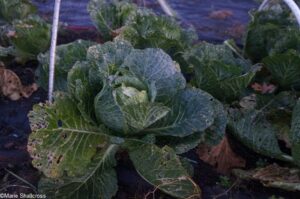
The most shade tolerant vegetables are the leafy vegetables. Basically, the bigger the leaf, the more shade they can take. Once you think about it, it makes sense, as they have a larger surface with which to photosynthesise the sunlight caught.
Pretty much all of the Brassica family grow happily in a reasonable degree of shade. And as you’d expect, leafy vegetables from other plant families enjoy the cooler conditions too. For example lettuce is less likely to bolt.
From radish to potatoes, many of the crops we grow for their roots will also be happy in partial shade.
NB There are a range of vegetables that will tolerate shadier conditions but really prefer a bit more sunlight. These will grow more slowly and may produce smaller crops. This is true of both those we grow as annuals and the perennials. But then picking smaller radish more frequently is hardly a bad thing. If they’re left too long in the ground, they turn woody.
- Broccoli
- Brussels sprouts
- Cabbage
- Cauliflower
- Kale
- Spinach, perennial
- Swiss chard
Salads such as –
- Lettuce
- Mizuna
- Salad rocket
- Spinach, annual
Root vegetables –
- Beetroot
- Carrots
- Kohl rabi
- Parsnips
- Potatoes
- Turnip
Some members of the onion, or allium, family can also be considered as shade tolerant vegetables.
- Onions
- Garlic
- Welsh or bunching onions
Gardening Teacher Tip: –
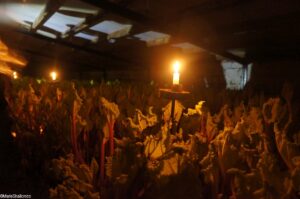
Rhubarb which is a vegetable, but we happen to eat as if it were a fruit is also shade tolerant. Give it morning sunlight and it will be fine. After all, rhubarb will even grow by candlelight!
Why are some vegetables shade tolerant?
A good question!
Those vegetables which have large leaves in relation to their overall size have solar panels. It is effectively the function that those leaves perform. And it enables these vegetables to collect sunlight efficiently, even in shady corners of your garden.
Root vegetables and stem vegetables do well in shade for different reasons. The stem vegetables are able to photosynthesise through the cells in their stems as well as through their leaves. This increased available area, as the stems are proportionately large in comparison to the rest of the plant, allows for a greater shade tolerance.
Root vegetables are slightly different. They produce a leafy top growth in their first year from a seedling. In order to overwinter safely, they build up stores of sugar in their roots. We humans take advantage of this and eat the sweet, swollen root. If the roots were left, they would produce more leaves and, importantly, flowers and seed, in the following year.
With a few exceptions, shade tolerant vegetables do not produce a flower which then turns in to a vegetable for us to harvest and eat. In fact, I could almost stretch a point and say that the majority of vegetables are shade tolerant vegetables! One of the key reasons why more vegetables than fruit are shade tolerant is that critical factor of the fruit needing sunshine to ripen.
Salad vegetables such as lettuce do well in shade as it makes the plants less likely to ‘bolt’ which is run to seed. Hot, dry weather and sunshine encourage bolting, which is why you spend time watering lettuces, mizuna and salad rocket to prevent it happening.
Gardening Teacher Tip: –
Some hardy over-wintering crops that you’d expect to need sun, actually do well in dappled shade. These would be the varieties such as the early maturing Broad bean ‘Aquadulce Claudia’.
Caring for Your Shade Tolerant Vegetables
Generally speaking they need a soil rich in nutrients, especially Nitrogen, which is crucial for vegetative growth. (like leaves).
Not growing these veggies in full sun means they will need less watering as the water won’t evaporate as quickly.
Utilising areas under deciduous trees for growing late cropping and overwintering vegetables is a good use of space. They can establish in the shade and then take advantage of the increased light levels when the leaves fall. Try crops that stand for a long time such as Brussels sprouts and Chard.
Growing Shade Tolerant Vegetables
A few more tips, especially for those ‘borderline’ veggies that don’t produce as large a crop with less sunlight…
- If possible, maximise the light available for your vegetables by painting surrounding walls and fences white.
- Adding decorative mirrors not only reflects light towards your crops but can look pretty.
- Metal surfaces are also reflective. Small boards covered with foil placed in the darker corners will help.
- Raised beds and containers allow crops to catch sunlight when it’s lower in the sky or has to shine over tall fences.
Gardening Teacher Tip: –
Grow some shade tolerant flowers to encourage pollinating insects, add a colourful contrast to the leafy green vegetables and to make your vegetable plot into an ornamental edible garden. For dappled shade try these annuals –
- Calendula, marigolds
- Limnanthes douglasii, poached egg plant
- Mimulus, monkey flower
Small perennials (not all of these have edible flowers!) that like dappled shade or just morning sun are those such as: –
- Aquilegia
- Primrose
- Primula
- Pulmonaria
And finally…
If you’d like help designing shady vegetable garden or kitchen garden, do get in touch to ask about our design and consultancy services.
For further gardening advice and inspiration, ideas for edible gardens and more, check out Plews Potting Shed blogs, including the selection below and our monthly Tipsheet You could come and find us on Instagram – @plewsgd Pinterest and Facebook too.
And on that note, you can have a peek at my new garden in the (new) Instagram account @spitfiresandslowworms and for those of you who prefer Facebook – Spitfires and Slow Worms
And if you’d like some personal help, we offer a mix of practical sessions and theory in our bespoke Gardening Lessons and Courses. And here’s a pdf download to answer some of your questions – Plews Gardening Lessons Information
Related Gardening articles you may enjoy from our Award Winning Blog
Is Yours a Shady or a Sunny Garden?
29 Kitchen Garden Ideas for Leap Year
Edible Gardening
What is a Vegetable Garden and Why Would You Want One?
Easy Maintenance Edible Gardens
Crop Rotation – Growing Methods for Gardeners
Crop Rotation – 3 year plan -printable PDF
Why Do We Grow Vegetables in Rows?
What is the Point of a Raised Garden Bed in the Vegetable Garden?
Gardening Help and Advice
What Might a Plews Gardening Lesson Be Like?
Garden Pests – Snails and Slugs 5 tips for dealing with the molluscs
Successional Sowing, Hardening Off and other Grow Your Own Terms


