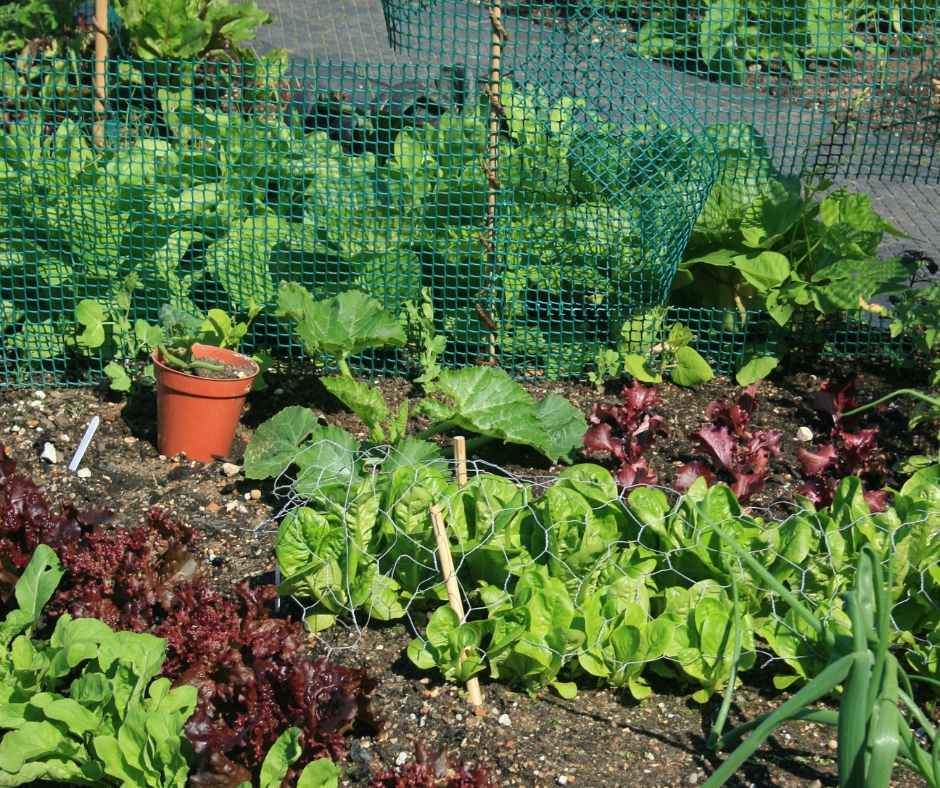
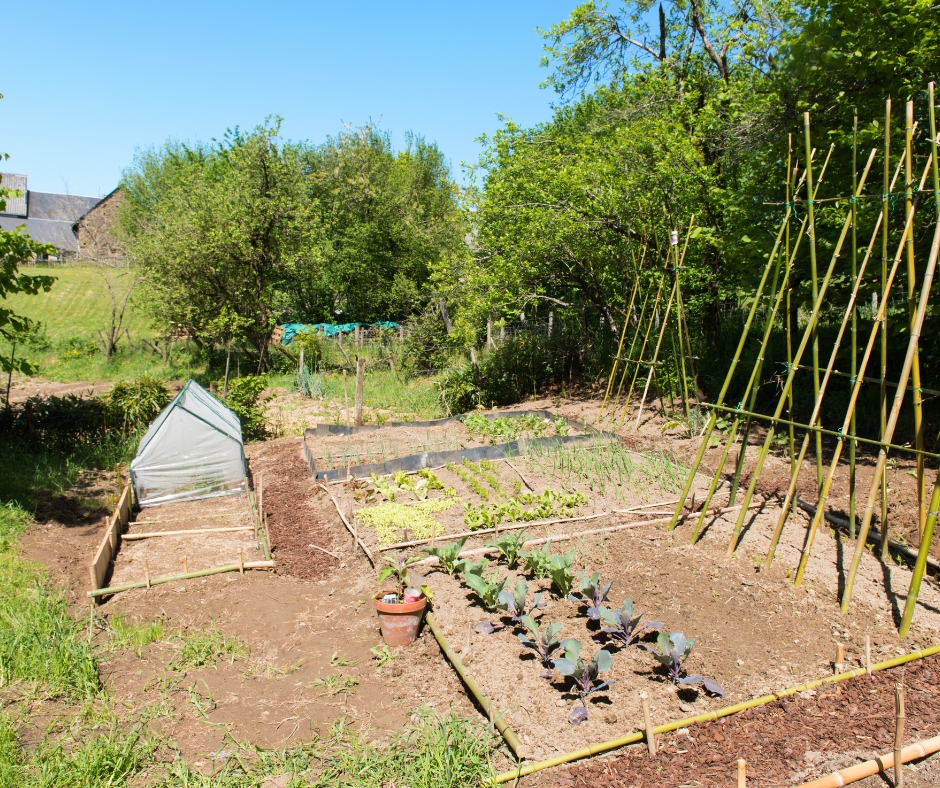
29 Kitchen garden ideas for leap year does not require you to have a 4 acre walled garden. (Although some of us would rather like to have one of those …) with only a few exceptions, it doesn’t matter whether you have a –
- separate good sized kitchen garden
- reasonable sized veggie area
- fruit and veg in among the herbaceous perennials
- a gathering of pots on the patio
or any other permutation. Including just starting out on the growing your own vegetables journey. The ideas will be helpful to you as they can be scaled up or down to suit the space you have. And there are blog links with more tips and ideas plus freebie printables.
Let’s get started !
1
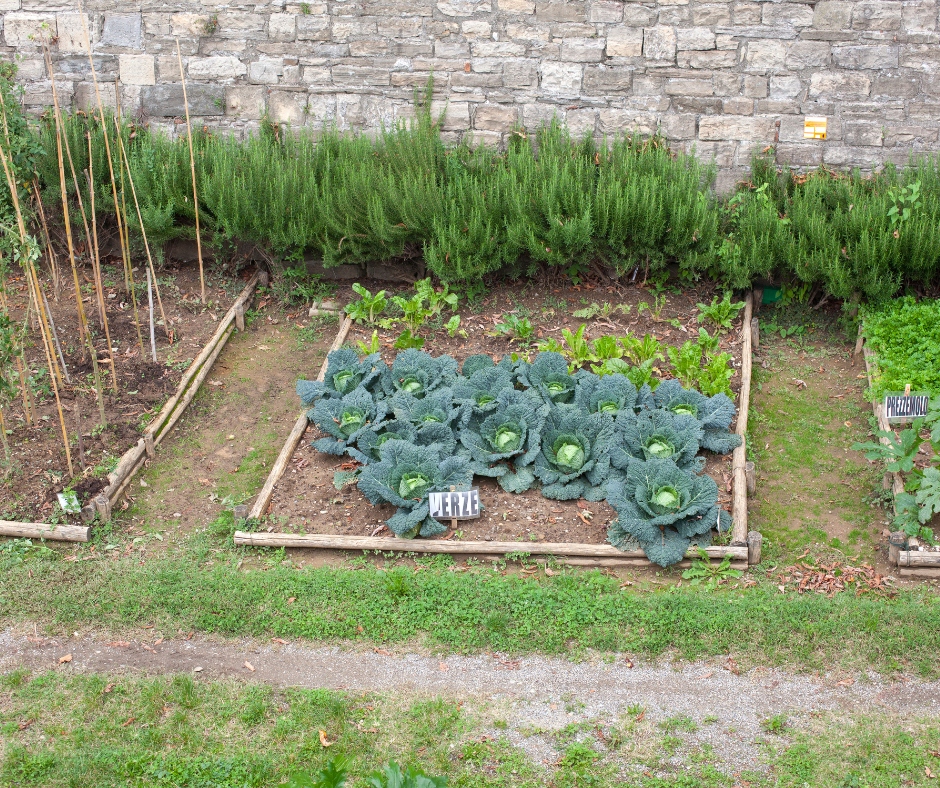
Growing evergreen herbs as a practical and decorative edging. This may be around each border or raised bed or around the vegetable plot as an edible boundary. Having the same plant as a low growing hedge also adds an air of formality to your vegetable plot, keeping it tidy and pleasant to look at even in deep winter. You could use a single herb throughout your vegetable plot, or have a different her surrounding each border. Both options work well, so it comes down to personal choice. Some of the herbs you could grow include: –
- Curry plant
- Hyssop
- Rosemary
- Winter Savory

2
Keeping the vegetable plot tidy. I mean there’s tidy and then there’s too tidy. This is a working garden and pristine veggies belong on Instagram and Pinterest not at home! So tidying up means, for example, removing weeds, and making sure there aren’t too many piles of (useful) dead leaves for unwanted slugs and bugs to hide under.

3
Plan early for where you’re going to store your harvest indoors. A cool, dry, frost free, airy, generally dark-ish place are the requirements for most crops. Have it easily accessible to as you’ll need to regularly check on the stored fruit and vegetables. What could you use? For example: –
- Vintage apple storage racks
- An old chest of drawers
- Net bags
- Vegetable racks
- Small crates that you get from greengrocers and supermarkets
You’ll need to keep the fruit and veg separate from each other. Apple racks are made with this in mind, but if you’re using a chest of drawers say, wrap or separate the crops with tissue paper, newspaper or paper bags.
The other trick is to keep pests such as mice well away from your crops – and they can get through the tiniest of holes. I use my cats for mice control but you may prefer a humane trap…
4
In the autumn mulch the soil around hardy perennial fruit and vegetables growing in borders and raised beds to protect their roots from frost. Where they’re grown in pots, wrap hessian around the pots– it’s more decorative than horticultural fleece or bubble wrap. Mulch the pot soil surface too.

5
Tender perennial fruit and herbs that are growing in pots, orange trees and lemon verbena, for example, are best moved to a frost free environment. This can usually be an unheated greenhouse or potting shed unless you’re in a very cold area, but you’ll need to add insulation under and around the pots as well as inside the building.

6
A practical tip for #6 of our 29 Kitchen garden ideas for leap year. Stack plant pots on their sides so they don’t stick together. This is especially useful when your pots are stored outside rather inside as the rain can make them more likely to stick. Grouping them together by size makes your life easier too. If you have the vertical space, stacking seed trays, gravel trays and covers for same on their sides also reduces the fight to release just one.

7
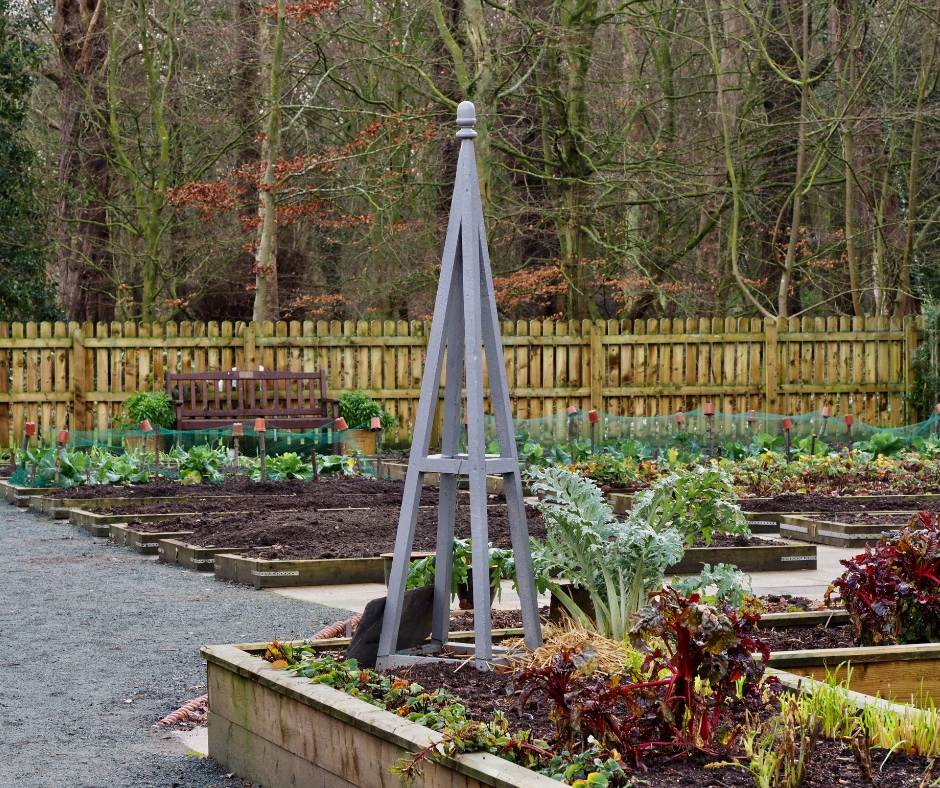
In a small space where you may only want to grow snack sized cucumbers, an obelisk makes an excellent support and can easily sit in your ornamental border if you’re out of room in the vegetable patch!

8
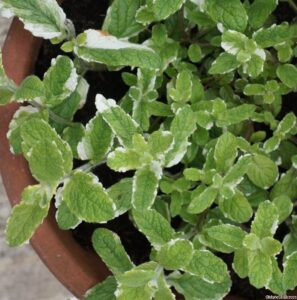
Turn a shady corner into a productive one by growing lots of different Mint in matching pots. There’s variegated apple mint, strawberry mint, Moroccan mint (best for tea) as well as the ‘usual’ garden spearmint.
9
Sort those seed packets and home collected seeds! If you’d like to be really organised –
- Firstly, decide what veg you would like to grow this year. Work out which of these need to be grown from seed, or are better grown from seed.
- This makes you more focussed when you make a list or spreadsheet of what you currently have, or clip packets of the same type of vegetable together.
- Cross reference, checking packets for the ‘sow by’ date. And then purchase or swop seeds with a friend so you have what you want to grow this year.

29 Kitchen Garden Ideas for Leap Year
We’re roughly a third of the way along. I’ve mixed up the types of ideas on purpose as it makes it a more interesting read for you.
10
A critical idea I need to share with you is where to site your kitchen garden or vegetable plot. Do you want to walk down a 100 foot of garden in the rain to pick fresh salad for dinner? Perhaps the main crops growing is away from the house but there’s part of a sunny border that can be utilised for last minute herb picking. Designing edible gardens is one of my favourite things so do get in touch if you need some guidance.

11
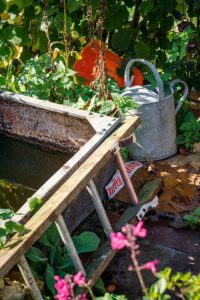
Ponds, dipping ponds, water butts, water tanks, hoses, taps and irrigation systems… Having a water source in or near your kitchen garden is a must. With the best will in the world, you will need to water seeds, seedlings, young plants, crops when they’re at pollination and fruit setting stages and during periods of dry weather. Some plants are thirstier than others.
But you can be inventive. I have two old water tanks, one large, one small, that were left in the garden and both will be put to use. The large one collects water off the potting shed roof and my husband added a tap. Both are convenient for the area which is (very) slowly becoming the kitchen garden.
12
For a bit of extra colour in your kitchen garden and patio pots, you could grow Toscana, a deep pink flowered strawberry. A perfect plant for your edible ornamental garden, Toscana is an everbearing variety of strawberry so will produce flowers and fruit at the same time as the season progresses.

13
Labels, planting plans and lists. I’ll refer you to my blog on this topic for lots of tips and just say that yes, you do need to keep a record of the annual crops you grow for all sorts of reasons. For example to –
- prevent diseases such as clubroot
- keep track of whether that seedling is a courgette, a butternut squash or a cucumber (are you sure you’d know the difference without a label?)
Garden Teacher Tip
Wooden labels last longer if you varnish them after you’ve written the plant name on. Use a water based varnish so as not to harm the plants

14
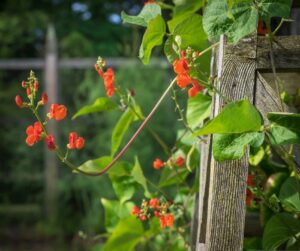
Making use of vertical space is the next of our 29 Kitchen garden ideas for leap year. Add trellis and frames for squash to scramble up; either along a fence or free-standing. This is more suited to the smaller fruited varieties but makes a decorative feature. They may be temporary, perhaps using one of those metal ones that just push in to the soil. Or a more permanent feature in wood.
15
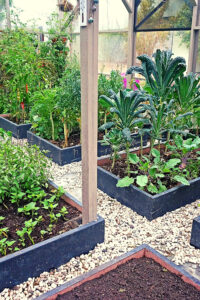
Raised beds are popular, but be sure you get the right ones. As in: why do you want them? It may be to have a decent soil as your garden is very sandy or heavy clay. Perhaps you need to sit whilst tending crops. Or you may just like the look of low raised beds edged with tiles.
16
Do you have to have straight paths in a kitchen garden? No, it’s your garden and you can have what you want. But the point about straight paths is that they’re generally more practical for pushing wheelbarrows between vegetable beds. That said it depends on the shape of the overall plot too. For example, the area where my kitchen garden will be is semi-circular – so there’ll be a curving path.

17
Raspberries are one of my favourite fruits. Happy in the sun, yet tolerant of shade, you can have fruit from early June through to late September without too much problem by growing a range of varieties. Red fruit are the norm, but yellow white and purple are also available, so you could have a colourful semi-shady fruit section.

18
Making a warm environment for early sown seeds and seedlings when your greenhouse or potting shed is unheated.
- Firstly, discover where the cold spots are – possibly in the corners, or the ‘windy’ side. Avoid putting any but the hardiest of seeds in this area.
- Insulate with cardboard around the walls inside. This is a good way to recycle all that packaging, but it does reduce light so I tend to use it in the lower sections to reduce the coolness of the air before it rises up to the staging.
- Place seed trays into gravel trays which can be stood on newspaper or cardboard. (think of the camping adage: “one blanket below is worth three above”)
Gardening Teacher Tip
As the seeds are inside, using cardboard, newspaper and hessian is a better option than fleece or bubblewrap as they are breathable materials. This helps to reduce condensation, which can be a real issue especially in polytunnels.

19
Do you grow spring flowering bulbs under your fruit trees and then have bare earth? Why not grow your squash here where they have plenty of room to roam.
A low frame around the base of the tree would enable a bit of scrambling by the squash without them climbing all the way up the tree. The large leaves of the Cucurbit family mean they enjoy the dappled shade the fruit tree provides.
NB this is best suited to standard and half standard trees, not the trained forms.

29 Kitchen Garden Ideas for Leap Year
A few more ideas and tips left, including shade ideas, composting and a couple of quirky thoughts to end with.
20
Talking of shady spots, why not grow rhubarb? Forcing the rhubarb to produce an early crop is commonly done, but try going to the other end of the season. Grow a later fruiting variety such as Rhubarb ‘Victoria’ and you can still be enjoying rhubarb at Midsummer. The trick is to have a shady spot that helps to keep the plant cool. Then if I’m really lucky, we can pick the last of it in July. It used to be one of the treats towards the end of the school term – rhubarb crumble after sports day.

21
Unless you have an acid soil with a pH of 5.5, you’ll get the best blueberry crop by growing the fruit in large pots or a designated raised bed filled with ericaceous compost. Choose at least three blueberry bushes, an early, mid and late season variety, to extend the harvest period.

22
Why do we grow vegetables in rows? Check out the blog link why, but remember that it isn’t essential to do so. If you like the regularity of rows and find it makes it easier to see the weeds that don’t grow in rows, why not grow Calendula as an colourful edging? Annual marigold gives you edible flowers, is pollinator friendly, and a companion plant to reduce pests.
23
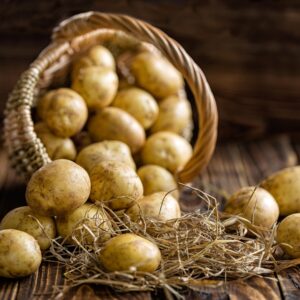
What is a clamp? And then there is the option of storing potatoes and root vegetables in a clamp outside. A clamp is an efficient and inexpensive way of storing root vegetables by insulating them with straw, sand and soil. It’s a method that has been used for centuries but obviously won’t work so well where you have limited space.
Potatoes are best stored in straw, whereas turnips, carrots and parsnips seem to do better in sand.
A clamp is pretty easy to construct. You can make a pyramid shape or a longer narrow clamp, which is easier for removing just a few veg and recovering.
- Firstly choose a spot where water doesn’t collect (or your veg will just rot away).
- You can dig a small trench as a moat to improve drainage, using the spoil as a raised base in the middle.
- Lay down straw or sand on the base to about 20 cm / 8 inches depth.
- Using unblemished veg, remove leafy tops from root crops. Place veg on the sand / straw making sure they don’t touch.
- Cover top and sides with more sand / straw and repeat.
When you’ve finished adding all the veg, add a top layer of sand / straw then cover the whole mound with dry soil. Leave a tuft of straw sticking out for ventilation, allowing excess heat and moisture to escape.
24
Grow your own pea sticks and climbing bean and cucumbers supports. Hazel, Corylus avellana, is easy to grow along one edge of the kitchen garden, I’d suggest the northern side so as not to shade your other crops. Coppice a third of the stems each year for use plant supports.

25
A pretty and practical divider between ornamental garden and vegetable plot is to have an edible barrier. Space saving ones for permanent planting could be a post and wire fence used as support for cordon fruit trees. If you want to keep a view of the vegetable plot then have a row of step over apples.

26
One of our 29 kitchen garden ideas for leap year has to include compost bins and composting. It’s a crucial element of a successful kitchen garden and ‘ plenty on this topic for you to check out. Here I would say, that, from my experience, if you’re short on space, a wormery is the most effective composting method. You get the liquid to use as a feed plus the “proper” compost. And there are decorative ones available.

27
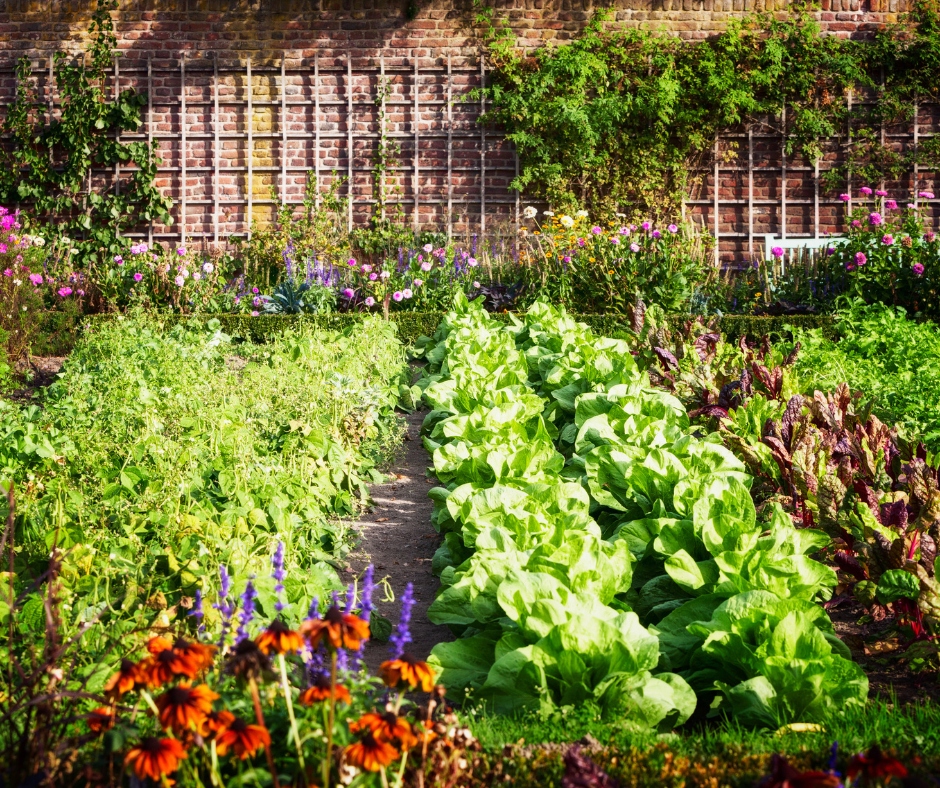
Always grow as many herbs and companion plants as you can. The beneficial insects and predators they encourage will reduce your workload and give you pleasure to see, smell and eat.

28
If you want to grow something edible, but are short on time and /or space why not niche down? For example, grow your own ingredients for pizza or botanicals for gin. It would certainly be a talking point!

29
Why not try something new? You could grow heritage seed varieties of fruit and vegetables or try some more unusual veg. I’ve posted a few unusual veggies as reels on @plewsgd – go have a look. And there are some are listed below in the blogs.

And finally
Hopefully, you’ve found these 29 kitchen garden ideas for leap year useful – do let me know. And if you’d like help with an edible garden design, or have queries regarding your existing garden, do get in touch to ask about our design and consultancy services.
For further gardening advice and inspiration, ideas for bee friendly gardens and more, check out Plews Potting Shed blogs, including the selection below and our monthly Tipsheet You could come and find us on Instagram Pinterest and Facebook too.
And on that note, you can have a peek at my new garden in the (new) Instagram account @spitfiresandslowworms and for those of you who prefer Facebook – Spitfires and Slow Worms
And if you’d like some personal help, we offer a mix of practical sessions and theory in our bespoke Gardening Lessons and Courses. Here’s a pdf download to answer some of your questions – Plews Gardening Lessons Information
Related Gardening articles you may enjoy from our Award Winning Blog
There are more, so do check out the categories that interest you
Herbs
9 Evergreen Herbs for Your Kitchen Garden
Practical Tips
29 Gardening Tips for A Leap Year (from 2020)
Growing Methods
Why Do We Grow Vegetables in Rows?
Composting
Vegetables
Edible Plants for Hanging Baskets
6 Unusual Vegetables for You to Grow
Kitchen Garden Design Ideas
What is an Ornamental Edible Garden?
Garden Visits – Kitchen Gardens
Free Gardening Printables
Square Foot Garden Plan Layout Number of Plants per Square
Grow Your Own Pizza Garden – Pizza shaped Planting Plan