Successional sowing, hardening off and other gardening confusions. A gardening lesson blog for terms when you begin growing your own vegetables and flowers from seed. Yes, some of those weird grow your own gardening phrases will be explained! (Plus a few free gardening printables to help you keep track of what you’re doing).
Seed sowing either under cover in a greenhouse or indoors and in your garden should be easy way to grow flowers and vegetables. And so it can be. With a few simple tips and tricks you can make sure the seeds you’re sowing will germinate, grow into seedlings and then into plants. The problem with getting to that confident place is often those gardening terms that are bandied about without any explanation or demonstration…
Gardening Terms and Phrases
But sometimes the terms used by gardening experts are not obvious to beginner gardeners and gardeners trying out something new. And hands up I can be guilty of this too if I’m not actually teaching! These gardening terms and phrases are useful as they’re a shorthand for describing methods of carrying out tasks or particular elements of growing your own fruit veggies and flowers. For example –
- seed beds
- growing media
- seed viability
- damping off
- pricking out
- successional sowing
- hardening off
- catch crops
- companion planting
But they’re not necessarily self-evident. Does catch crops you have to chase around the garden after your runner beans? We shall find out…

And then there are following terms used to describe plants –
- perennial
- biennial
- annual
- ephemeral
- hardy
- half-hardy
- tender
There are links at the end to blogs which (helpfully) explain these. And you’ll find some in the Glossary too.
For our purposes here, annual and biennial plants are the main ones which are grown in vegetable gardens. Although they may be hardy, half-hardy or tender. Basically half-hardy ones need some frost protection, particularly when young plants. Whilst tender plants need to be protected from frost throughout their lives and are often treated as annuals for this reason, even though they may be perennials in their native climate .
I’ll cover the basics in this blog, enabling you to decide if it’s sufficient for your needs, or whether you want to follow up with more reading and video by following the links at the end.

Successional Sowing, Hardening Off and Other Gardening Confusions
Let’s take a look at the terms in the first list, some in more detail than others where they’re not covered in the blog links below.
Seed Beds
As in sowing seeds straight into the ground. Half-hardy and tender plant seeds should be sown directly into the soil only when the ground has warmed up in spring. However, many hardy plants can be sown in autumn and early spring.
Whether you have a vegetable plot or you’re growing ornamental plants you will ideally have a “seed bed”. What this means is an area where the soil has been cultivated to a fine tilth. Which in turn means that the soil has been prepared, initially by double digging where necessary. Not because the seedlings will be in situ long enough to develop deep roots, as they won’t be, but to ensure good drainage on heavier soils. Water retention may be an issue, either too much (clay type soils) or too little (sandy based soils). Grit can be added improve the water flow through the clay soil. Organic matter can added to increase the water retention around the roots in sandy soil.

Growing Media
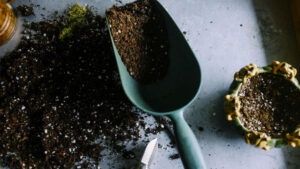
This is the potting compost, soil, etc into which you sow your seeds when starting them off inside. And also when you’re transplanting the seedlings into larger pots, perhaps as they’re ready to be hardened off.
Many gardeners, myself included, start seeds in a free draining media, gradually getting seedlings used to a ‘heavier’ garden soil as they’re transplanted into larger pots.
Seed Viability
Whether or not seeds will germinate and become seedlings and eventually your lunch. I show you an easy way to test for this which is particularly useful for older seeds. Find the blog link with video below, or check out the reels on Instagram @plewsgd

Damping Off
This is a fungal disease which can affect seedlings, quite thoroughly killing them off. Caused by damp conditions, its not always preventable. Another reason, perhaps, for successional sowing of seeds for crops and cut flowers.
Pricking Out
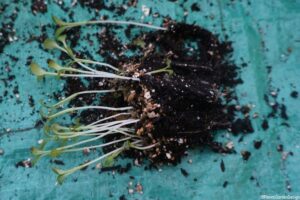
When seedlings have grown sufficiently to be moved from the seed tray or pot where they were sown into a larger, deeper pot they are pricked out. This is a sort of transplanting but with delicate seedlings. They may possibly be pricked out and transplanted straight outside to a seed bed.
Successional Sowing
This is basically a way to spread your harvest across a number of weeks rather than having a huge glut. Although I say harvest, suggestive of edible crops, it works well with annual flowers too, extending their season. Which is especially useful if you want to grow flowers in a mini cutting garden.
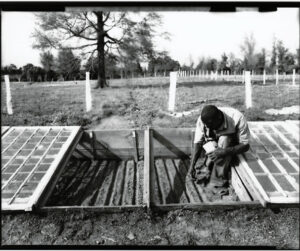
There are other advantages to successional sowing. You can often produce a very early crop as well as a late one with clever timing for when and where seeds are sown. Spreading out your seed sowing also reduces the likelihood of losing your whole crop to slugs, snails, pigeons frost and any other calamity. You’ll have the backup of another batch of seedlings tucked away in the cold frame waiting to be planted out. And whilst it might at first sound like more work, it doesn’t have to be.
How do you do it?
For example, you only sow a quarter or half seed tray at a time for each type of seeds rather than a whole tray. Another advantage is that it’s easier to find room for 6 half trays than 6 whole trays in an already full greenhouse or near a windowsill.
When should you sow and how often?
Start off by keeping within the monthly guidance you’ll find on the seed packet, for example, March – May. NB those in colder areas may need to do a March sowing under cover. As for how many seeds to sow each time, try with a quarter seed tray’s worth of sowing for your first year.
Spacing the batches can be between 2 – 4 weeks apart, depending on the amount of room you’re likely to have to plant out the seedlings to grow on. Again, don’t overdo it when you’re just starting. Try sowing at the beginning of March, end of March / beginning of April, end of April / beginning of May, end of May. This gives you four batches – and you can always add one in between if the slugs or frost decimate your earlier batches. Be sure to keep a record of what you sowed and when.
And when it comes to harvesting, the amounts are manageable both for eating straight away and storing / preserving.

What on earth is Hardening Off?
Put simply, it’s the process by which tender or young plants which have been growing indoors are gradually acclimatised to cooler, windier conditions – ie the great outdoors.
How long this should take depends on whether the plants are young, hardy plants or tender ones. But 2 – 3 weeks from start to finish is about right.
When you start hardening off and how long it takes will also be affected by the weather where you garden. For example, plants in an Aberdeenshire garden could be outside as much as a month later than those in a Cornish garden.
The critical reason for the hardening off process is that you want to prevent the plants being frost damaged to the extent that they die.
A staged process, the following is one example
- hardy peas sown late winter /early spring on staging in an unheated but insulated greenhouse, the seeds are sown individually into modules. This first batch is part of a planned successional sowing
- when grown to a reasonable size, the seedlings are carefully transplanted into larger pots, minimising root disturbance
- (greenhouse insulation still in place as tender plants also present)
- pea seedlings moved to a coldframe during the day, back into greenhouse overnight
- peas left in coldframe, lid closed overnight initially
- peas planted out where they are to grow on and crop. If left uncovered and frost is forecast, they’re covered with horticultural fleece. In cooler areas and more exposed gardens they may be covered overnight at first with fleece.
Tender seedlings being hardened off will have one or more extra stages. For example, they may be sown in a heated propagator and would first move from there to an unheated propagator, both of which are in the greenhouse.
Garden Teacher Tip
You can encourage seedlings to strengthen their shoots ready to be buffeted by breezes – something they’re not used to with their pampered upbringing. Pass a thin piece of cardboard over the tops of the seedlings in different directions for 1-2 minutes every day. Sounds daft but it works!
Catch Crops
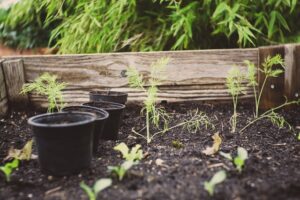
This refers to two ways of getting more crops out of a given space. It is a fast maturing crop which is planted in between plants or more often rows of, slower maturing vegetables. The term also refers to a crop which is using a space which will be needed for a crop later in the season. Where the quick growing plants are grown between slower ones the method may be referred to as intercropping. Catch cropping not the same as successional sowing. Although, just be aware that some early sowings of successional crops may be grown as catch crops or in between slower growing plants.
Companion Planting
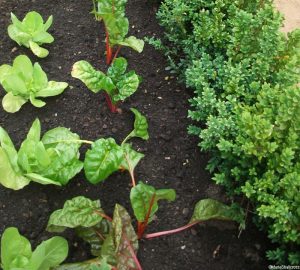
This is an organic method of gardening which is centuries old, although the science that explains why it works is much younger. Seen most often in the kitchen garden, it nevertheless relates to all your garden plants. Fundamentally it’s about maintaining a natural balance by creating plant communities or combinations that are mutually beneficial. This can aid pollination, prevent disease and keep pest numbers down. One example for crops is the Three Sisters method (see blog link below)

Successional Sowing, Hardening Off and Other Gardening Confusions – and finally
For further expanations of gardening terms, plus advice and inspiration on growing flowers and veggies check out the blogs Plews Potting Shed blogs, including the selection below.
Plus get your local garden club, allotment, WI, U3A or other group to ask me along to give a talk
Do you have a birthday coming up? Plews bespoke Gardening Lessons, where your classroom is actually your own garden make a wonderful and practical gift. We help you with both gardening basics and more ‘expert tasks’, depending on what you need. Have a read through this pdf download for info.
And you could come and find us on Instagram Pinterest Facebook YouTube
Feeling nosey? You can have a peek at the progress of my garden renovation, Spitfires and Slow Worms, on Instagram and Facebook
You’ll get to see it in person if you come to the Plews Gardening Workshops Current ones on Eventbrite for you to book into. Follow for updates on topics and dates on Plews website, Instagram, Eventbrite, Facebook
Related Gardening articles you may enjoy from our Award Winning Blog
Seeds
10 Hardy Annual Flowers to Grow from Seed
Your Garden in Summer – Sowing seeds in August
Plug Plants & Seedlings
Plug Plants for Hanging Baskets and Containers
Gardening & Garden Teacher Tips
Why Do We Grow Vegetables in Rows?
What is Square Foot Gardening?
Crop Rotation – Growing Methods for Gardeners
How to use the Three Sisters Cultivation Method
What is Straw Bale Gardeneing?
Gardening Printables
Seed sowing record for veggies
Seed sowing record for flowers