

Plastic free gardening tips – a few ideas to help you to keep your good intentions for plastic free July continuing beyond the end of the month!
We are surrounded by plastic in various forms and sometimes it feels impossible not to use plastic. But there are a surprising number of practical ways to reduce our plastic use in the garden.
Firstly a list of some of the plastic we find and use in our gardens: –
1. Plant pots
2. Propagation sundries such as dibbers and plant labels
3. Seed trays
4. Gravel trays and plant pot saucers
5. Watering cans
6. Pea and fruit netting, plastic ties
7. Trellis
8. Plant supports
9. Bags containing potting compost, horticultural grit, etc
10. Weed fabric / weed proof membrane
11. Bubble wrap for insulation
12. Storage racks and boxes of various types and sizes
13. Plastic bottles for liquid fertiliser, organic bug spray, etc
14. Garden trugs and buckets
15. Over winter cover for furniture, BBQs, etc
16. Polytunnels, greenhouses, cold frames
17. Non-glass windows in greenhouse and cold frame
18. Tables and chairs
19. Parasol poles
20. Lawn / border edging
21. Fencing
22. Artificial grass
23. Lawn mower, or parts of like the clippings basket
24. Water butts, Compost Bins
25. Storage chests and small sheds
26. Bird feeder containers and water bowls
27. Garden gnomes and ornaments
28. Trampolines
29. Sandpits
30. Slides
The scary thing is that I doubled up on some of those items and can think of as many again…
There’s Plastic and then there’s Plastic
Lets consider some of these items in more detail.
Single Use Plastic
The real ‘villain’ is undoubtedly single use plastic with a short ‘shelf life’. I find it ironic that so many non-plastic and recyclable gardening items come wrapped in non-biodegradable plastic film. Especially when there’s no particular need for the plastic wrapping. For example, materials that are manufactured to be exposed to all weathers in our gardens.
Bags containing potting compost, horticultural grit, etc
Some garden necessities such as potting compost are required by law to be in a particular sealed bag because of potential contaminants. And as they are generally stored outside, the material has to be durable.
However, these bags do lend themselves to re-use. For example, spike holes in them and use as: –
⦁ leaf compost storage bags
⦁ growing potatoes, carrots, tomatoes, beans, etc, etc instead of purchasing large pots
NB As far as I’m aware there is currently (2020) only one nursery offering multi purpose peat free compost in paper sacks or bring your to refill. If we keep asking for it, it will become more widely available.

Virtually at the other end of the scale for single use plastic is garden furniture. When you need lightweight chairs for the garden, heavy wooden chairs are of no help, however beautiful they may be.
There is a solution to your problem. For example, buy –
- recycled plastic chairs and tables
- quality plastic garden furniture that is more UV resistant and will therefore last longer
- protect over winter with a non-plastic cover or store in garage / shed
NB: All the wood you use should have FSC mark on it to ensure the timber comes from sustainable forests
Plastic Free Gardening Tips – Plant Pots
Next up are plastic free gardening tips for dealing with those swaying mounds of plant pots that lurk in and near our garden sheds.
Firstly, lets consider the plastic ones. There are three basic types of plastic plant pots –
- non-recyclable (usually, but not only black) plastic pots
- recycled plastic pots
- recyclable plastic pots
In order to avoid single use pots when buying your plants, look for signs up in the nursery These days many have colour coded recycled and recyclable plastic pots; blue, grey and beige for example.
Also check with your local garden centre and plant nursery where you bought the plants and pots. Most are happy to take your ‘returns’ if they’re in good condition as they can sterilise and re-use. So even black pots can have a second life!
NB
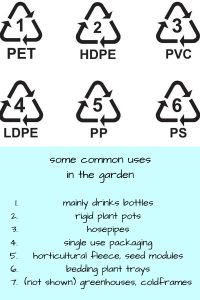
If you want to recycle broken recyclable plastic plant pots, check with your local council first. Many will say that they take them when they are particular PET numbers ( a means of classifying the type of plastic, see infographic below) but not all councils will. For many it is the problem that the sorting machines cannot ‘see’ the pots as recyclable.
Alternatives to So Much Plastic
An increasing number of independent plant nurseries take your plant out of its pot at the point of sale and put it in a pare bag for you to take home. Or you can take your own pots and bags to carry your plants home in. And many mail order nurseries pride themselves on using biodegradable packaging.
This is very much the way to go, you can liken it to taking reusable bags to the shops! Its great to see so many of our independent growers, nurseries and garden centres being innovative. And I feel the more we praise their actions and buy from them, the more likely it will be that this simple plastic reducing if not plastic free option will become more normal.
As garden designer, I am invariably surrounded by a sea of plastic when planting up the design. Whilst its not yet always practical for a lorry load of plants to be sent in plastic free pots, there are a few signs that change is happening.
Plant pots made from recycled materials can be long lasting and are a good alternative to non-plastic where you need lightweight material.
But plastic free gardening tips has to include alternative plant pots! There are both short term and longer lasting options. The obvious longer term option is of course clay pots. These can be standard terracotta (my all time favourite) or glazed. There is an increasing range of plastic pot alternatives: –
- bamboo
- rice husks
- coir
- pressed recycled cardboard and wood chips
- cow poo (really!)
- home made newspaper pots – good for seeds, seedlings and small cuttings
Some of these are made from waste products, which gives increases their life span before they are composted.
A Few More Plastic Free Gardening Tips
Protecting tender plants over winter
Ditch the bubble wrap! Why are you using bubble wrap to insulate pots and plants when in many cases, you could use hessian or newspaper instead?
Obviously lining the inside of your greenhouse in hessian would make it too dark over winter. But you could wrap the pots in hessian, thereby protecting the roots of the tender perennials. Standing the pots on newspaper keeps them off the ground and therefore warmer.
Watering Cans
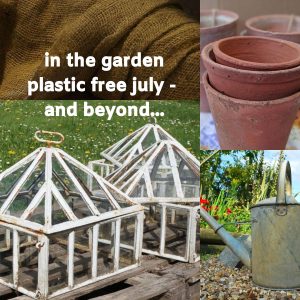
I admit I have and use 2 plastic watering cans for work, for weight (and noise) reasons. However, they were both bought over eight years ago! At home I have 3 more even older plastic watering cans (one for house plants) and three inherited vintage watering cans. Yes that sounds a lot, but then some were kept on the allotment which I gave up a couple of years ago. One of the vintage cans needs a bit of tlc, but that is possible and practical to do. These must be 40+ years old and have plenty of life in them yet.
Which leads me on to my next suggestion – be frugal.
Firstly, review what you have. Then decide what you need.
Remember, don’t simply throw away your garden plastic, reuse and recycle it as much as you can. Doing this until they reach the end of their useful life keeps them out of landfill for as long as possible.
All those plastic items you don’t need, are they reusable by someone else? Recycling spent rigid plastic wherever possible also keeps it in circulation.
If not are they recyclable? (see infographic below)
Once they need replacing, substitute for biodegradable alternatives. Or where that’s not possibly, recycled and recyclable options.Because, unfortunately, its very difficult to be totally plastic free …yet…
Plastic Free Gardening Tips – Know Your Plastic
Remember that not all plastic is recyclable in as many places as we would wish. You may have to do some research. Also note that when it comes to biodegradable and compostable options, all compostable plastics are biodegradable, but not all biodegradable plastics are compostable.
See blog links below for more on greener gardening. And do get in touch if you would like a Garden Advice Visit or Garden Coaching session to help make your own garden plastic free.
For further gardening advice and inspiration, check out Plews Potting Shed blogs, including the selection below and our monthly Tipsheet – You could come and find us on Instagram Pinterest and Facebook too.
And my final thought on these plastic free gardening tips is that as well as being frugal perhaps we should all be willing to accept ‘less than perfect’
Related Gardening articles you may enjoy from our Award Winning Blog
Compostable Packaging – Can You Compost it in the Garden?
Recycling in your Garden
29 Gardening Tips for A Leap Year
7 Tips for Gardening on a Budget
Green Living Water and Watering
What is Organic Gardening?
Peat free compost – are you still confused?


