

Plants called Dog, plants named after Dogs – subtitled interesting tales from your garden; or should that be tails?
Initially sparked by my Border Collie, Sharpe, achieving his 13th birthday, this blog became something of a fascinating study. What was the reason for so many plants to be called dog in their common name as a ‘bad thing’, a warning? The clue wasn’t necessarily in the Botanical, Latin name. So I wandered off into etymology. And then I found lots of interesting plants worldwide that have dog in their common name for different reasons. Too much to include here, and some of the plants are worth a blog of their own.
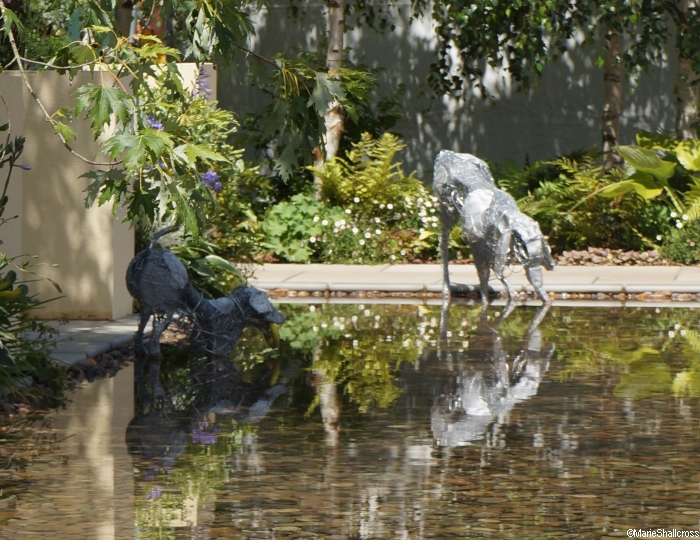
It would seem, from various sources, that ‘dog’ can be used to describe something false, untrue, not what it seems, bad, impure. Which seems a bit harsh for an animal so long domesticated and living with humans as the dog! Be that as it may, it isn’t true of all plants called dog. Some are positive, with the plants smelling sweet and of edible value.
More interestingly from the botanical perspective is that came across fewer instances of ‘dog’ being used within the Linnaean name than within the common name. this may have been the Latin word for dog – canis; or the Greek – cyno.
The Linnaean name is the binomial name which specifies or defines the plant regardless of the country or native language.
Plants called Dog – a List
Not necessarily a definitive list, but fairly comprehensive. Do tell me of more that you may know of, whether the Botanical name or the common name. I’ve listed these under common name, giving the Latin name below, also any other common names. The list also highlights the importance of using the botanical name to avoid confusion.
Dog bane, dogsbane
Dioscorides AD65 in a medical text mentions dogbane in relation to the sap, which was sometimes used to treat heart problems. The common name ‘dogsbane’ or ‘dog bane’, is used for at least five different plants. These are –
- Amsonia tabernaemontana, blue dogbane
- Apocynum androsaemifolium, American dogsbane
- Apocynum cannabinum, hemp dogbane, Indian hemp, used to make fibres
- Apocynum venetum, venetian dogbane, used in Chinese medicine
- Plectranthus ornatus, said to be useful in repelling dogs from an area
Dog cactus
Opuntia schottii Engelm, dog cholla, Clavellina
Dog fennel
#1 – Anthemis, Marguerite
#2 – Eupatorium capillifolium
Dog flower
Antirrhinum majus, snapdragon

Dog grass
Agropyron repens, Baldwins couch grass
Dog rose
Rosa canina, bird rose, sweet briar

Dog strangling vine
- Cynanchum rossicum
- Cynanchum louiseae
Dogs mercury
Mercurialis perennis
Dogs tooth grass
Cynodon dactylon
Dogs tooth violet
Erythronium, the name refers to the shape of the bulb. The first named is very obviously named after dogs, the second nis the one pictured (and one of my favourite spring floweringbulbs).
- Erythronium dens-canis
- Erythronium tuolumnense pagoda

Dog tooth pea
Lathyrus sativus
Dog Violet
Viola riviniana, Viola canina, common dog violet. So-called to distinguish it from the secented Viola oderata

Dogwood
All of the Cornus may be called dogwood, including, for example, Cornus kousa, the handkerchief tree. But it is more commonly used for the following two.
- Cornus sanguinea
Cornus alba

Wet dog plant
Illicium floridanum, flowers are supposed to smell like wet dog!
Plants called Dog – and the Plews Team
Sharpe, as many of you will know, is an important member of the Plews Team. Well known for his expertise in checking the health of plants at trade nurseries and whether Plews Garden Landscaping have correctly put up new fencing.
But some of you will also remember his predecessor, Eowyn, a beautiful, even tempered German Shepherd. She was very fond of edible gardens and had a skill for nipping peas off the plant and eating them that I haven’t seen in another dog!

For dog friendly gardens, a garden filled with plants called dog, or even a dog free zone, why not get in touch for Garden Design or Garden Advice?
Related Gardening articles from the award winning Plews Potting Shed
How to Puppy Proof Your Garden
Pets in your Garden – Questions and Answers


