Why vegan herbs specifically? Because I felt that there was a bit of a gap between the buying vegan and all out, full scale grow your own fully fledged vegan kitchen garden. And it occurred to me that those who were –
- finding it difficult to source herbs produced under vegan guidelines
- wanting to grow their own but limited on time
- only had a balcony or windowsill as growing space
might find these tips and ideas helpful.
Gardening organically has become easier over recent years, although it does still have some issues. But a vegan gardener has more problems, certainly on getting started. And if they – or you! – are a novice gardener anyway, you may wonder whether its worth the struggle to find seeds, soil and compost that are vegan.
So the smaller scale of growing a few herbs for cooking is easier to start with. It is also suitable for those with limited time – a potential five plants rather than a whole garden full! And of course for those vegans who live in a flat with only a balcony or windowsills, or possibly a very small garden, then finding room for a few pots of vegan herbs is achievable.
Growing Your Own Vegan Herbs
Slugs and many other garden pests are likely to be less of an issue for those gardening on a balcony or windowsill than for those herbs grown in amore general garden setting. Whereas herbs growing indoors could be susceptible to whitefly and other aphid invasions.
Accepting a certain amount of plant loss is part and parcel of not just a vegan gardener’s life, but an organic gardener’s too. However, companion planting may help reduce the losses.
Companion planting is about growing flowering plants that will either encourage natural predators to eat the pests. Or, in the more aptly named sacrificial plants, be eaten in preference to your crop plants.
Luckily, the essential oils found in the foliage of herbs do seem to reduce the damage caused by many garden pests. Which, if you are really short on space is useful!

Which Herbs?
How to choose which herbs to grow is easy. Answer the following: –
- which herbs will you actually use in cooking, salads or tisanes, ie herbal teas / infusions? Make a list.
- how much space do you have to grow your vegan herbs?
- and how much sun reaches the place where you plan to grow them?
Let’s consider a couple of examples.
Basil
If Basil is on your list, you’ll be pleased to know that it doesn’t take up much room and thrives in a pot. However it likes a sunny spot.
There are many different types of Basil – see blog link below – so you could just have a Basil Herb garden! This is an annual herb, but you may be able to keep it growing inside until Christmas if you’re lucky. Or grow one of the perennial types.

Rosemary
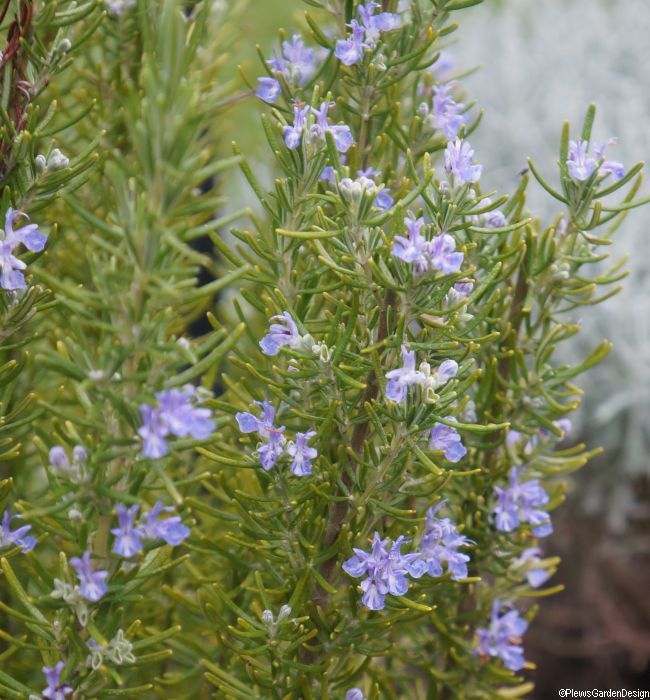
This herb is a perennial gets big after a while.
It will grow in a pot, and you can keep repotting it into a larger one but eventually you’ll need to plant it in the ground. If you use a lot of Rosemary and only have a small space, I would suggest you either take cuttings, so giving yourself new, young , small plants. Or buy a new smaller plant to replace the one that’s grown too big. This latter you could always donate to a charity plant sale – labelled vegan in large letters.
Although it’s a Mediterranean herb Rosemary will tolerate partial shade. It is better grown outside long term.
There are a few alternatives to the usual rosemary flavour – for example, ginger Rosemary, which also has a pale streak to its leaves.

For more herbs to grow in pots, look at the blog Getting Going with Growing – National Gardening Week 2017.
Where to buy your Vegan Herbs
Are you looking for herb seeds or small plants? There are a growing number of both plant nurseries and seed suppliers who are organic. Many of them will also have vegan options. Some of the mainstream seed merchants have vegan options too, but you are advised to ring or email to enquire as sometimes its not clear on their websites.
Other nurseries which are not recognised by the Soil Association as being organic, may also have vegan alternatives. A good trick is to look for smaller nurseries perhaps with a café that has lots of vegan cakes. It may sound silly, but you’d be surprised!
These are a few to try (in alphabetical order): –
- Caves Folly Nurseries
- Edible Culture
- Jekka’s Herbs
- John Cullen Gardens
- Manor Farm Herbs
- Poyntzfield Herb Nursery
If you have vegan friends who are gardeners they may know of a local supplier – or indeed be able to offer you seeds or cuttings from their own garden or allotment. Allotment Societies, local garden clubs and plant sales are other places where you may find vegan herbs to buy.
Once you’ve bought the seeds you’ll need potting or multi purpose compost to sow them in. So have a look at the section below. If you live 4 floors up without a lift, you’ll be pleased to know that some of the suppliers offer coir blocks. Much easier to carry upstairs than bags of compost!
Check out Plews seed sowing blogs for helpful tips.

Vegan Potting Composts
Finding vegan compost to purchase is not normally a simple case of visiting your local garden centre. In fact finding peat free composts and organic composts there can be an issue too! However, there are a few companies who sell vegan potting composts and multi-purpose composts. Some of these can be found in nurseries and garden centres, but many will need to be ordered online. Try for example (in alphabetical order): –
- Aconbury Sprouts
- Dalefoot Composts
- FertileFibre
- Happy Compost
- West Riding Organics
One of the issues with vegan composts can be that whilst they are vegan they may not always be peat free or indeed organic. Two ingredients, or potential ingredients which may cause problems are green waste and added nutrients.
Green waste can be a difficult issue as unless you have guarantees on the source of the green waste, you don’t know what has gone in it.
Where do the nutrients, or the added fertiliser come from, and, what is it made of? Think about it for a second – egg shells, manure, wool, pesticides.
A close inspection of the small print is therefore advised!

Making your own Vegan Compost
This is obviously the easiest way to ensure the contents meet the criteria. But there are times when you need extra compost, or you may not have room for compost bins.
For making your own compost, you may find our ebook “Compost and Composting” useful. It discusses other methods and so as well as including much of the information that you can find in Plews ‘how to’ blogs. Just omit non-vegan items as the basic method is the same.
If you are making your own vegan compost, it is easy to ensure a good mix of nutrients by including plants such as comfrey and nettle. Indeed growing a specific crop of comfrey and planting green manures will help bigtime.
NB: – Vegans wouldn’t use wormeries, but can use some Bokashi systems.

Why Vegan Herbs specifically?
This blog was partly inspired by World Vegan Day on November 1st and the month of November being World Vegan Month. But also, as I said at the beginning, to fill what I saw as a knowledge gap for vegans and novice gardeners.
Of course if you’re a vegetarian, or would just like to eat more organic produce, the tips and ideas above and in the links below will still be helpful.
And if you’d like Plews to help you create a vegan herb garden, or you’d like a Gardening Course on growing Veganically in your own garden, do please get in touch. And do feel free to ask me (easy) questions via social media – particularly Instagram for the quickest response (!) but also on Facebook and Twitter
Related Gardening articles you may enjoy from our Award Winning Blog
Plews eBook “Compost & Composting”
Vegan & Organic Gardening
What is a Vegan Garden?
How Not to Garden Organically
What is Organic Gardening?
Peat free Compost – are you still confused?
Herbs
Herb Garden Ideas
Growing Culinary Herbs in your Winter Garden
Nettles – Weed or Herb?
Parsley Sage Rosemary and Thyme
Herbs for Summer Salads
How Many Types of Basil Plant are There?
Growing Methods for Gardeners
Growing Methods for Gardeners
What are Green Manures? Your Kitchen Garden in September
Bokashi Composting