Planning your perfect greenhouse is not about quick decision making, but about getting the right greenhouse for you, your garden, your gardening plans and your budget.
Greenhouse, conservatory, cold frame, orangery, glasshouse, polytunnel, sun porch – all these garden structures can provide the enthusiastic gardener with the opportunity to develop their gardening skills. Protected growing space increases the range of plants that we can grow and extends the growing season, potentially to year round.
As a keen gardener, perhaps you already have a small, plastic greenhouse or cold frame and feel the time is right for something better (bigger!)? Perhaps you’ve recently moved into a new house and discovered a dilapidated glasshouse at the bottom of the garden under overgrown weeds?
Or maybe you’ve enjoyed gardening lessons in your garden with Plews and now that you’ve been bitten by the gardening bug you want more opportunity for gardening?

Why do you need a Greenhouse?
Greenhouses and polytunnels provide a safe, covered environment that allows us gardeners to extend the growing season. For example, by sowing seeds earlier than if we only had a cloche. Although tunnel and bell cloches, be they vintage glass or modern plastic, have their place in the garden too, both in their own right and as part of the hardening off process, they do have their limitations.
The sheltered conditions in a conservatory may be suitable for over wintering tender perennial plants away from frost and rain, but it’s not always a popular choice with other family members. A comfortable temperature for humans may be too high for semi-dormant plants. This is one of the useful arguments in favour of your needing a greenhouse.
Propagating plants from cuttings and seeds can be carried out using a light filled windowsill. However, more attention to care is required. For example:
- making sure no-one closes the curtains so your young seedlings are not stuck in a cold spot overnight
- possibly keeping the radiator turned off so your seedlings don’t frazzle away in the heat
- remembering to turn the seed tray round at regular intervals so your seedlings don’t resemble the Leaning Tower of Pisa as they hunt the daylight
Convincing others of the benefits.. a true tale
So, we are agreed, you need a greenhouse of some description. If your significant other is still not convinced (they have visions of commercial polytunnels taking over the patio, perhaps) you could always try the sneaky trick of ‘having to have’ seed trays on the bedroom floor where they catch the light from the windows…
Once they’ve put their foot in damp seed compost at 6am a couple of times, they’ll be demanding you get a greenhouse. NB you are required to be sanguine about clearing up the mess: gardeners are patient people.
Oh and if this trick results in shelves put up in a sunny utility room for your seed trays of seedlings, don’t worry. This is a step in the right direction! You have room for this spring’s seeds and plenty of time to source the right greenhouse. Then come late summer you take loads of cuttings so there will be no room for next year’s seedlings as well…
As cunning plans go this is useful early stage planning (it worked for me!) but we also need to consider some practicalities in planning your perfect greenhouse.
Planning Your Perfect Greenhouse – Important steps
Choosing the right greenhouse is not as simple as picking one that you like the look of from a catalogue. There are a number of considerations, some of which are personal, some practical –
- The type of plants you want to grow, for example alpines, tender perennials
- Do you want to propagate plants – by sowing seeds, raising seedlings, taking cuttings?
- The number of plants you need to fit in the greenhouse; will you need an integrated cold frame or just one nearby?
- How much space is available in your garden?
- The visual appearance of the greenhouse; how important is this?
- Your available budget
- Possible legal requirements and planning restrictions
Now lets look at these points individually.

Greenhouse Plans – the Plants
The type of plants you want to grow in your greenhouse
A personal choice, but you may have a specific set of plants in mind. For example mainly to overwinter tender perennials such as Pelargoniums (pot Geraniums) and citrus trees that have spent the summer on your patio rather than propagation of edibles.
Or you might like to use your greenhouse as an alpine house, ie for alpines and succulents, you’ll need high light levels (although possibly shade in summer) good airflow, dry and for some species, frost free in winter. These requirements don’t always mix well with other greenhouse plants and seeds.
Most home gardeners will have a mix of plants they want to grow, protect overwinter and propagate.
Do you want to propagate plants?
This may be from seed, cuttings or both. Definitely allow space for a potting tray on the staging unless you’re also planning a potting shed. At certain times you’ll want more shelf / staging space than at others – noticeably in spring when you have lots of seed trays.
Greenhouse staging and shelves can be built in as part of your greenhouse package to fill part or all of the building. I would recommend only having some of the staging built in, perhaps along one side with a shelf over. Staging can be freestanding, which allows for some folding greenhouse staging. This latter gives you oodles of flexibility.
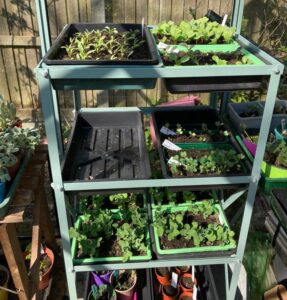
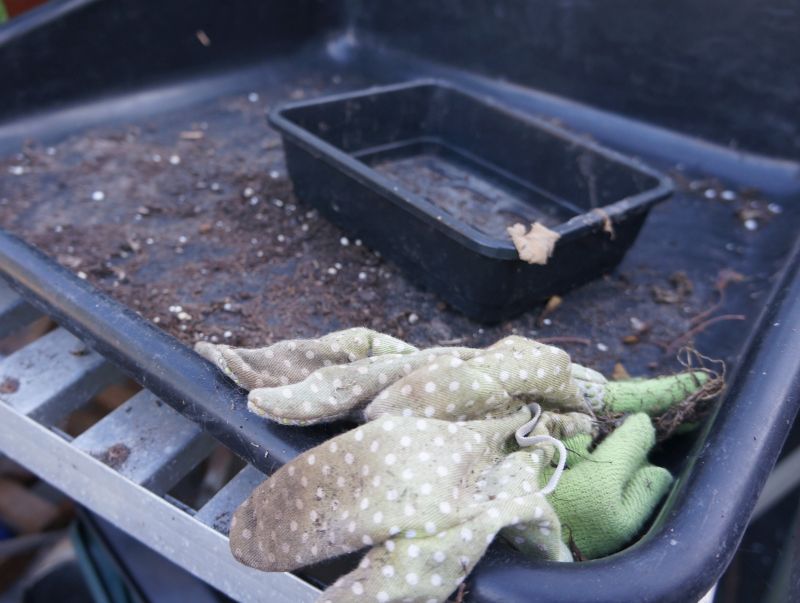
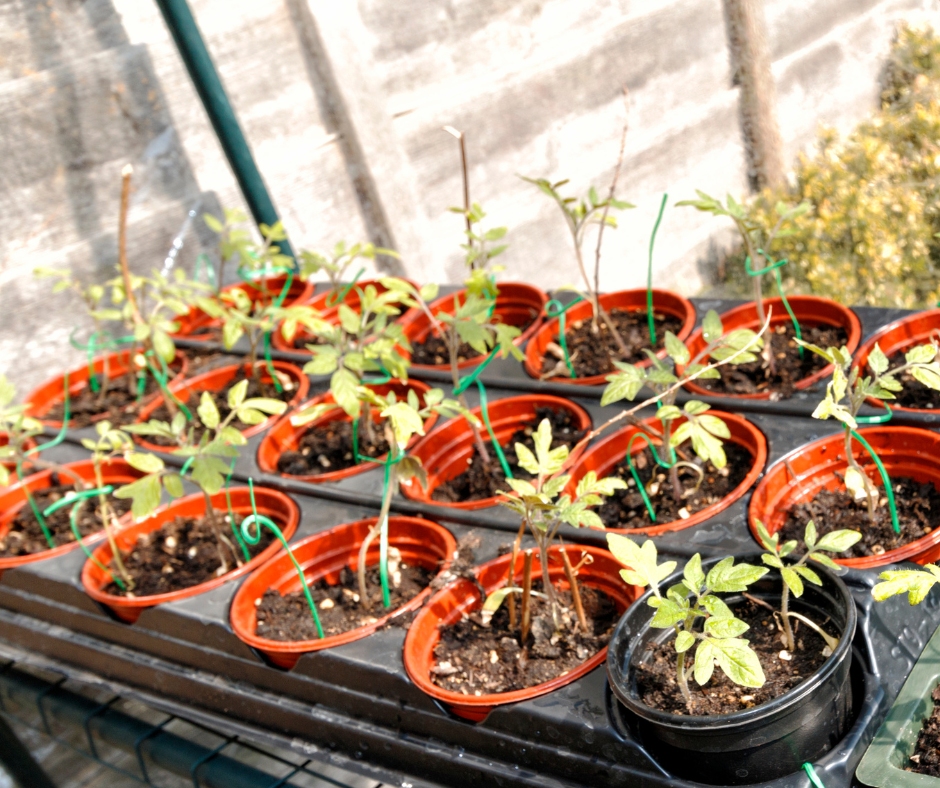
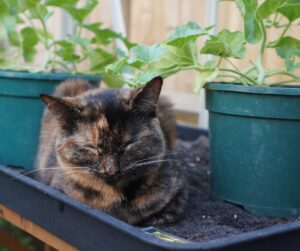
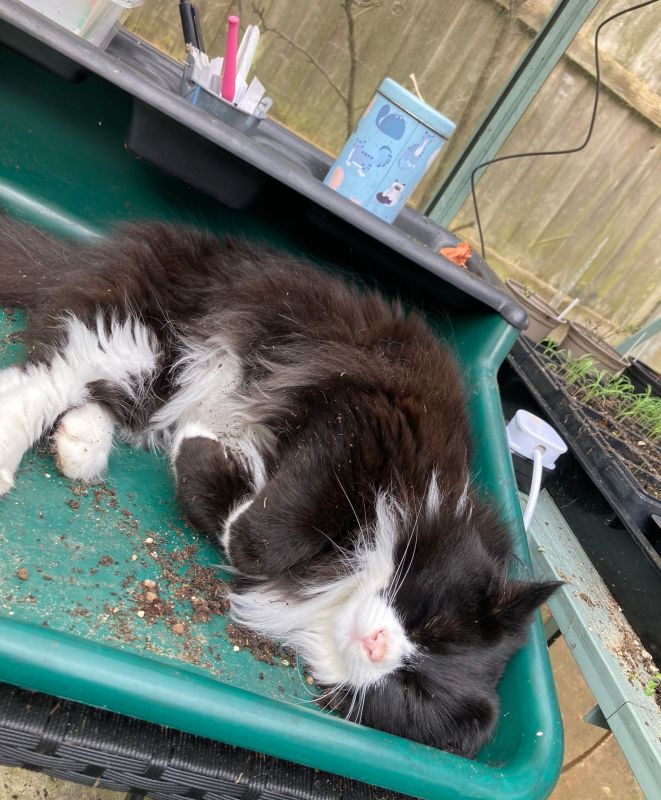
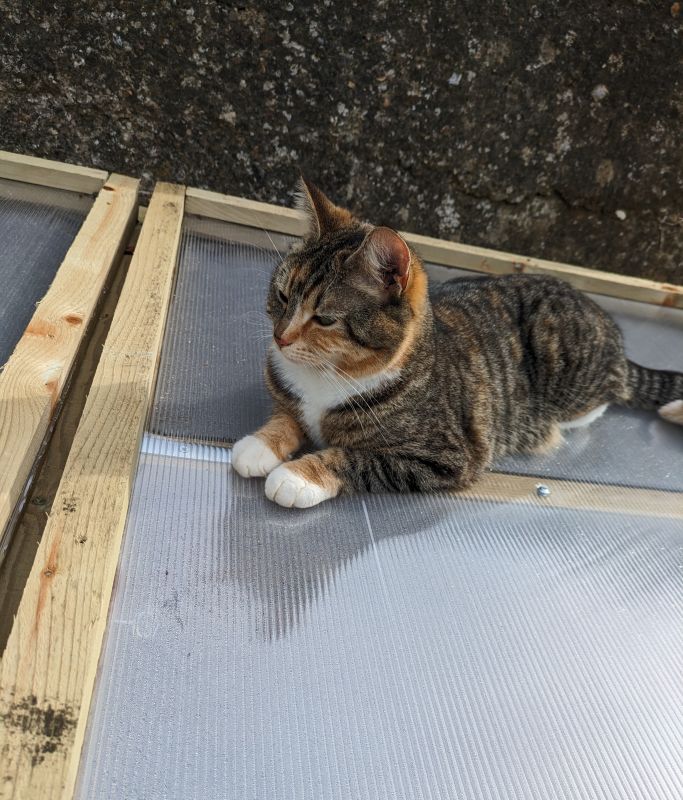
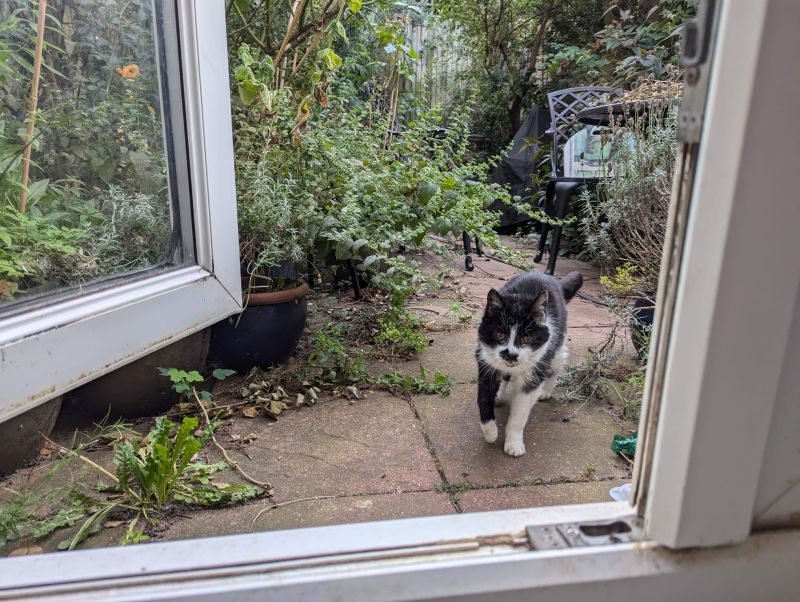
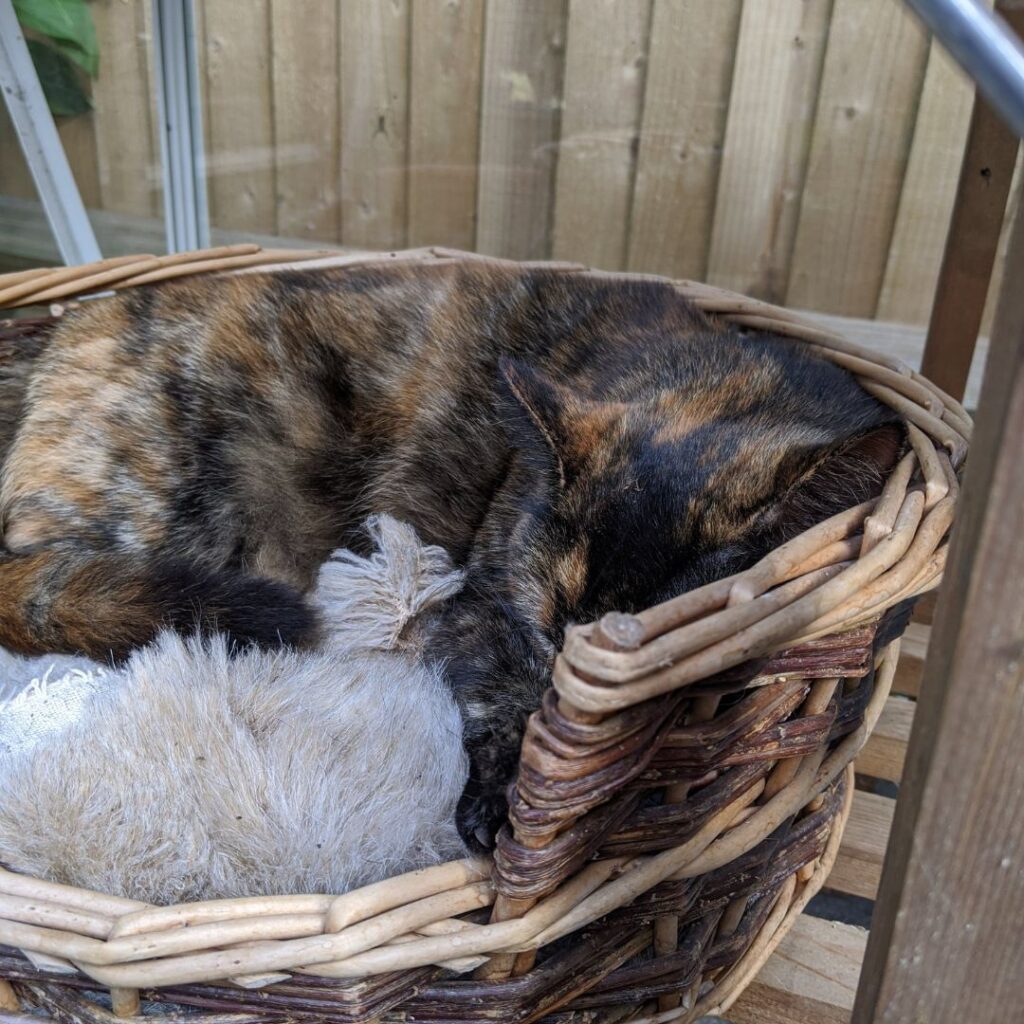
The number of plants and cats you need to fit into your greenhouse
The moral here is to buy as large a greenhouse as will fit in the space available, and add cold frames, and even a temporary second greenhouse if you can (just saying…)

How much space is available in your garden?
There is another Plews blog which has more detail on choosing the best site for your greenhouse, foundations, wind etc. Briefly though –
- Greenhouses need light, but not always bright / full sunlight
- A level site will be needed; do you need to build one?
- Shelter from the worst of the wind is advisable
- Will you need an electricity supply?
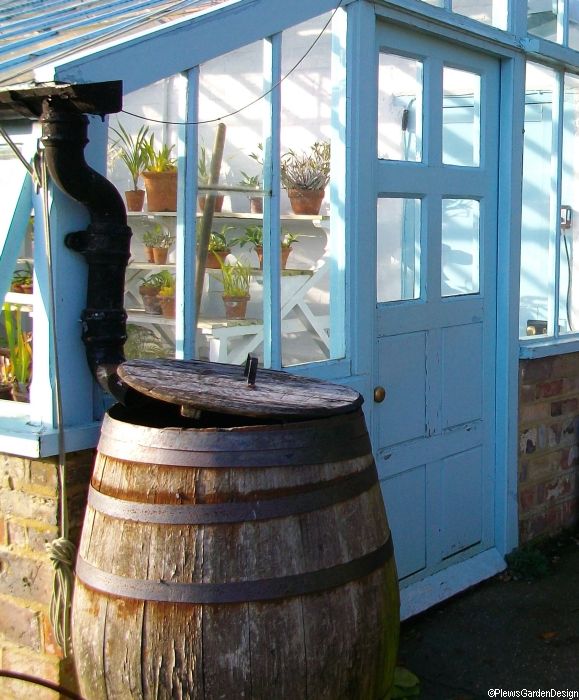
- Is there room for a water butt?
- Take a steel tape measure and measure some of your possible spaces. You’ll need about 1 metre all around the greenhouse in order to clean the glass etc.
- where do you want your greenhouse? On the patio? In the vegetable patch?
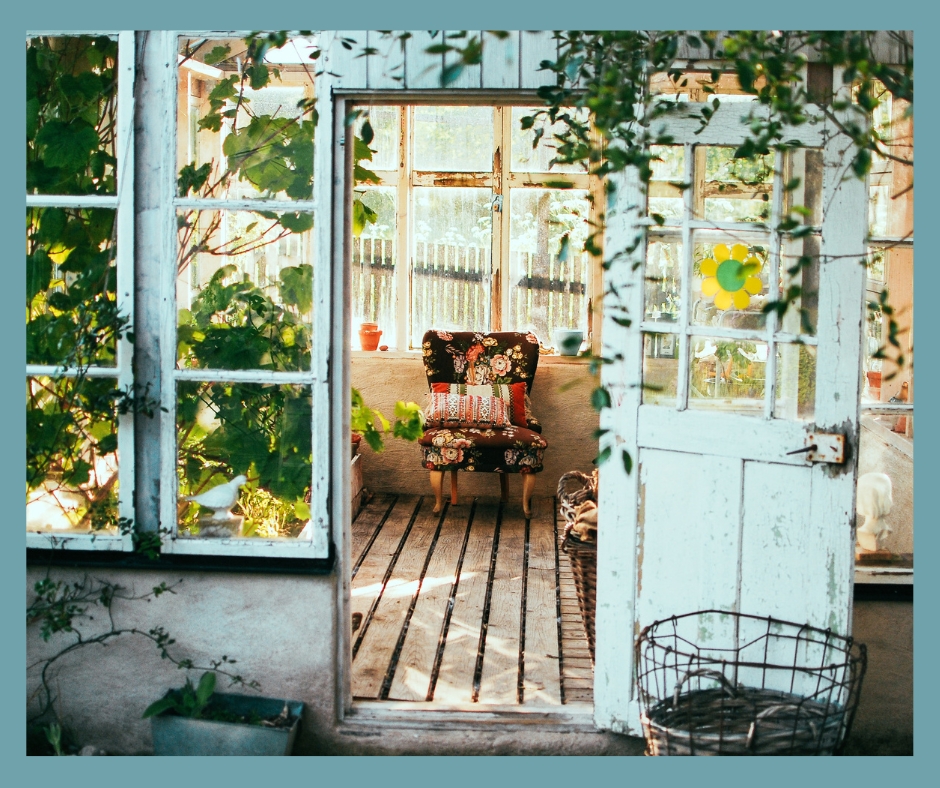
The visual appearance of your greenhouse
Planning your perfect greenhouse is about what you want, so consider –
- Your personal choice of materials and style
Budget – can this be extended by asking for birthday or Christmas money towards your greenhouse?
Where in the garden the greenhouse will be placed, ie how visible it is and to what degree do you want, or not want, to see if from the kitchen window



Your available budget
Depending on what you choose, a small plastic greenhouse may cost £50, a large, fully fitted glasshouse £50,000. However, it’s not just about size. For example, some of the other elements that affect price are –
- The material for the frame – softwood, hardwood, plastic, aluminium (plain or coloured)
- Type of glazing – polycarbonate / styrene, horticultural glass, safety glass
- Style – octagonal greenhouses, high roofed glasshouses, greenhouses with half brick walls and those with more decorative details such as ornate roof ridges generally cost more.
- Bespoke greenhouses, glasshouses and conservatories may cost more, but not always. It’s certainly worth checking out if you have particular requirements or an odd shaped site.
- How many hidden extras are there? The greenhouse base (this is made of metal or brick, with same footprint as greenhouse frame), gutters; roof lights, manual or automatic may or may not be included in the price.
- Foundations, levelling site and erecting the greenhouse are likely to be extra costs.
Planning Your Perfect Greenhouse – Legal requirements and planning restrictions
It’s advisable to check local by-laws too. Planning permission may be required if: –
- You live in a conservation area or your house is listed
- Or you live in a National Park or an area of outstanding natural beauty
- You want to build a greenhouse in your front garden, where it will be highly visible and it is not replacing an existing garden building
- More than 50% of your garden is already occupied by garden buildings
- The greenhouse will be more than 2.5 m high and closer than 2m to your boundary

How not to clutter up your perfect greenhouse
Storage for seed trays, pots, compost, dibbers, plant labels etc will be needed, but do you want this in your greenhouse? It seems a waste of space to keep more than what you’re actually using. A small trug with essentials in is easy to refill.
Pots can be stored on their sides outside on diy shelving. (Mine are on shelves made from re-used bricks and decking planks).
Do you have a shed or garage to keep potting compost dry until it’s needed? Dry is a lot lighter to carry than wet..
Might you need to add a garden storage chest near the greenhouse?
Garden Teacher Tip
Planning your perfect greenhouse now continues by writing your personal check list based on the above. Then look up styles and brands on line based on your criteria. There are masses of greenhouses out there – on line, in paper catalogues, at garden centres and specialist garden shed and greenhouse suppliers. So try not to get lost in the detail just yet or carried away by the special offers (there are usually special offers!)
and finally
Next week I’ll look in more detail at the requirements of the site for your new greenhouse; and at your options for choosing your greenhouse when you covet a Victorian glasshouse or Georgian orangery but don’t have the budget to match. And tips for what to look for when you go and stand in greenhouses for sale.
If Plews can help you with anything in the meantime, please do get in touch. For example –
Our Garden Consultancy & Advice Visits may help with some of your issues. Or does your planting need a rethink? Do you have a birthday coming up? Plews bespoke Gardening Lessons, where your classroom is actually your own garden make a wonderful and practical gift. We help you with both gardening basics and more ‘expert tasks’, depending on what you need. Have a read through this pdf download for info.
For further gardening advice and inspiration, check out Plews Potting Shed blogs, including the selection below. You could come and find us on Instagram Pinterest and Facebook too.
Feeling nosey? You can have a peek at the progress of my garden renovation, Spitfires and Slow Worms, on Instagram and Facebook
You’ll get to see it in person if you come to the Plews Gardening Workshops Current ones on Eventbrite for you to book into. Follow for updates on topics and dates on Plews website, Instagram, Eventbrite, Facebook
Plus get your local garden club, allotment, WI, U3A or other group to ask me along to give a talk (and bring plants 😉)
Related Gardening Blogs from the award winning Plews Potting Shed
Successional Sowing, Hardening Off and other Grow Your Own Terms
Greenhouse Maintenance Tips for Novice Gardeners
Garden Sheds and Garden Design Tips