The question: “Should I plant a garden hedge?” is one I’m often asked, along with “I’d like a garden hedge, what should I plant?” And whilst they are related questions, in this blog I’m focusing on why you should or shouldn’t plant a hedge. What plants you could use are briefly looked at her, but explored in other blogs, links for some can be found at the end.
Hedges for gardens should be more than a utilitarian addition to your garden. Choosing the correct plants for a hedge involves practical considerations, visual requirements, benefits, and of course, budget. But the question as to whether a hedge is the correct answer to your gardening problem needs to come first. This is to establish that the reason why you want to plant a hedge in your garden is actually resolved correctly. Helping you to clarify this is crucial, as with any project, the planning stage is important, or your time and money could well be wasted.
Why would a garden hedge be planted?
Let us consider some of the reasons and situations where you might want a hedge, and what it should accomplish. For example, you may want a hedge to: –
- define your property boundary
- provide privacy
- break up or hide from view different parts of your garden
- provide a secure barrier to contain dogs and children
- hide an unsightly view
- provide security to keep intruders out, by using thorny and prickly plants
- act as a windbreak to give shelter from prevailing winds
- create and provide a habitat for wildlife
- be a decorative garden feature
Some of these are reactions to a particular situation, which may be as easily or better resolved by a fence or a wall. For example, a garden fence or wall will: –
- define your property boundary
- provide privacy
- break up or hide from view different parts of your garden
- provide a secure barrier to contain dogs and children
- and it may hide an unsightly view if positioned correctly
- keep intruders out if planned and built for this aspect
But neither a solid fence nor wall provide an effective wind break as the wind is best slowed down by filtering it through a more open structure. A hedge is the obvious choice, but trellis fencing can also be used.
However, the wall and fence will provide a secure barrier to contain dogs and children, where a hedge may well have gaps.


What budget do I need?
This breaks down into the initial costs to compare plus the ongoing maintenance costs. Prices will vary depending on: –
- where you are in the country
- the plants and size of plants purchased – will they be bare-rooted plants or container grown; or will you grow them yourself
- how and where you dispose of waste
- whether you do the work yourself or get someone into do it. And whether you’re paying someone for both the initial works and the maintenance, or ‘just’ to remove a large conifer hedge
You may need to spend a few hundred pounds or many thousands of pounds on your new garden boundary, so it makes sense to get it right in the first place. And I personally feel that the finished project should also give you pleasure.
Whilst I’m not able to give you an exact idea of costs, what I can do is list the items that have to be included. Which will be helpful if you intend doing the work yourself, And if you’re getting someone in, then you can at least give a basic list to 2 or 3 so as to have comparable estimates. Because I’m nice, I’ve even included fence and wall, so you can find out the price differences if you’re still undecided..
Should I plant a garden hedge or have a fence or a wall instead?
A brief comparison of initial costs by looking at what will be needed.
Clearance
Whatever boundary you’re having, the area will need to be cleared as the first stage in the preparation for the new hedge, fence or garden wall. If there are currently plants growing there that you want to keep, you’ll need to dig them and store in temporary containers. All the waste will need to be disposed of.
Clearance could include the removal of over large conifers, which means using licensed tree surgeons. Or it could be removing an old fence, including the pots and the concrete they were set into. If you’re lucky it will be a simple DIY weekend job, but do check legal requirements and local bylaws, especially where your boundary is against a public highway.
Hedge
- new top soil, soil improver – never skimp on the soil, this is critical for the hedge’s longevity
- the plants themselves, plus mycorrhizal fungi to help with root establishment
- your hedge plants may be
- bare rooted or container grown
- young plants, or whips
- or they may be a couple of feet high
- or larger, established plants known as an ‘instant hedge’
Fence
- posts should be the correct size and type for the height and style of fence
- these will generally need to be concreted in
- styles include feather edge fence, hazel hurdles, oak panels – see blog links below for more info and ideas on garden fences
Wall
- footings will need to be dug; NB these extend beyond the width of the wall
- the wall could be built of breeze blocks then rendered; salvaged old bricks; new stock bricks, or be a dry stone wall


Should I Plant a Garden Hedge? What else do I need to know?
Other considerations will include checking for any planning conditions and discussion with your neighbour, as whether you choose a hedge, fence or wall, you’ll need access for maintenance. There’s a blog link below to Gardens and the Law Q & A which covers planning, wild birds, Tree preservation orders (TPOs), neighbours rights.
You also need to ask yourself what else is going to grow in the border with your hedge. Generally speaking, your ‘average’ fully mature privet hedge will be 8 foot high and 4 foot wide. In a small garden, that’s quite a bit of width lost to a hedge.
A narrow border such as is frequently seen in front garden boundaries will only have enough space for the hedge, if you wish your hedge to be healthy. A slightly wider garden border will allow you add small, shallow rooted perennial plants such as Cyclamen and Bergenia, or annual summer bedding and winter bedding, pansies for example. Remember you will need to feed these extras plants as well as your hedge.
In a narrow rear garden, a hedge, if unsuitable plants are chosen may end up being the only plants in your garden, apart from the lawn. You may consider this to be a good or a bad thing, of course. And it can be a good thing if the hedge plants are chosen for their attractiveness, perhaps offering flowers or berries as well as foliage, for example, Hawthorn (Crataegus) or Hydrangea.
What about Maintenance? Comparing hedge, fence and wall
Garden Hedge Maintenance
- Depending on the plants chosen, this will require pruning 1 – 4 times a year.
- Watering regularly whilst the hedge plants are establishing; during the first 1 -3 years depending on the initial size, plant species, soil type and weather conditions.
- Mulching, or the addition of organic matter to the soil, is advisable yearly.
- Sweeping up of a large amount of leaves during the autumn if a deciduous hedge is planted.
- Sweeping up of small amount of leaves continuously throughout the year if an evergreen hedge is planted.
- Weeding, especially whilst the hedge is establishing.
Garden Fence Maintenance
This will vary depending on the type of fence and what plants are growing around it, but is likely to include –
- painting with a wood preservative, probably every 2 -3 years
- checking over at least annually and after storms for damage and wear & tear
- ensure closely planted trees aren’t damaging the fence
Garden Wall Maintenance
Again, this will vary depending on the materials used, but annual checks and after storms for damage may include looking for –
- do any bricks need re-mortaring, particularly the top course
- ensuring no stones are loose (drystone walls)
- are pillars and the wall itself still level – tree roots can be a nuisance


What different styles of garden hedge are there?
What do you see when you close your eye and visualise your hedge? For example does it need to be easy maintenance? Most people like it to be in keeping with their house style, but a formal hedge can look effective as a backdrop to informal planting on the garden side.
The four main types or styles are:
- formal
- informal
- evergreen
- deciduous
and these then sort of sub-divide themselves into –
- wildlife friendly
- flowering
- scented / aromatic
- edible / productive
- secure barrier
Generally speaking, formal hedges tend to be evergreen with the exception of beech and hornbeam, which, although deciduous, retain their (dead) leaves over winter. However, the formality is also down to the pruning style, where close clipped and straight lines are formal.
Formal hedges do take more maintenance to keep them looking neat and formal. They look good in the front gardens of town houses, new and old. And could be an alternative to a wall where the house architecture is classical and formal.
Informal hedges can be evergreen or deciduous. If you want to provide a habitat and shelter for wildlife, then an informal hedge is a good choice, and you can ensure the best plant species are chosen and planted. For example, a mixed native species hedge, with hazel, Corylus avellana; dog rose, Rosa canina, Briar rose, and hawthorn, Crataegus.


Combining hedges with garden walls and fences
The best of both worlds in some ways, combining living hedges with brick and wood adds a whole new dimension to your garden, both from the practical perspective of keeping children in and intruders out; plus visually and aesthetically.
A few garden design examples –
A low, double sided garden wall with planting space in between for an aromatic hedge of clipped Santolina would be a delightful addition to a sunny, formal front garden.
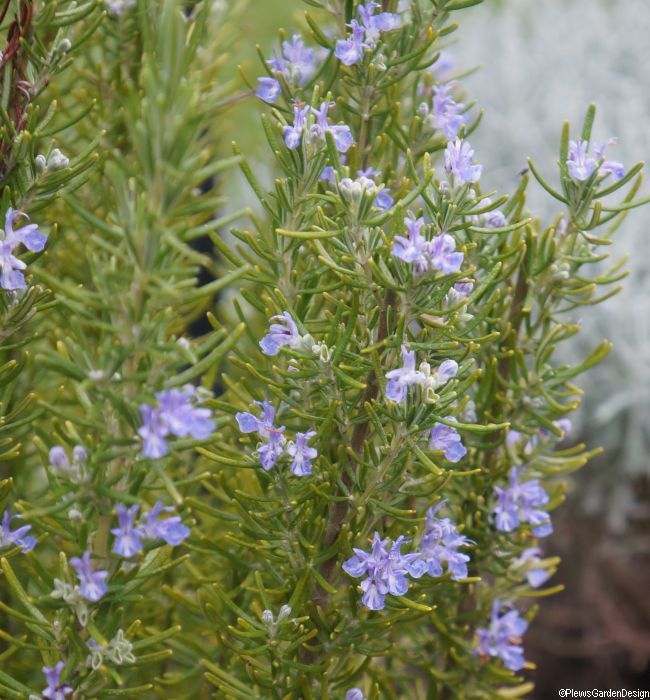
Raised beds made with oak sleepers and filled with Rosemary would be tidy, yet slightly informal, depending on whether you clipped the rosemary to a neat shape or let it grow naturally.
A low drystone wall is traditional in many areas of Britain, and is a thing of beauty, but it doesn’t keep dogs and children contained. Rather than installing netting above, why not add a hedge inside? This could be Yew, Taxus baccata, clipped and formal or loosely trimmed informally. For a hedge to bring bees, birds and hedgehogs into your garden, and form part of a wildlife corridor choose a flowering hedge or add some climbers to ramble through.
The plants that you choose for your garden hedge need to be the correct ones for all the above reasons and also be the best for your soil type and location. For example, a coastal garden needing some security may find gorse (Ulex europaea) a good choice with its many prickles and yellow flowers.
Choosing the hedge plants that best suit you and your garden is not easy to do in a general blog, but there are some suggestions in the blogs below to get you started.
and finally …
For help and advice on whether a hedge, fence, or wall is the best choice for your garden, and more ideas to help you choose the best hedging plants for you and your garden, why not get in touch to ask about our design and consultancy services.
For further gardening advice and inspiration, ideas for edible gardens and more, check out Plews Potting Shed blogs, including the selection below and our monthly Tipsheet You could come and find us on Instagram – @plewsgd Pinterest and Facebook too.
And on that note, you can have a peek at my new garden in the (new) Instagram account @spitfiresandslowworms and for those of you who prefer Facebook – Spitfires and Slow Worms
And if you’d like some personal help, we offer a mix of practical sessions and theory in our bespoke Gardening Lessons and Courses. There’s a blog link below plus a pdf download with more info
Related Gardening articles you may enjoy from our Award Winning Blog
Hedges and Edging
Box Hedging: Planting Design Ideas
9 Alternatives to Box Hedges for Shady Gardens
The Conifer Hedge Question – and some Solutions
5 Evergreen Herbs to edge your Flower Borders
Hawthorn, May Blossom, Crataegus monogyna
16 Deer Resistant Shrubs for Clay Soil
Related Gardening Topics
My Overgrown Garden Renovation – a Snapshot at 3 months (Spitfires and Slow Worms)
How To Renovate Your Garden, Part 1
Garden Design Ideas
How to create a Woodland Edge Habitat in Your Garden
What makes a Good Boundary Plant? Front Garden Planting Ideas
Different Types of Garden Fence Materials
Gardening Courses and Lessons
What might a Plews Gardening Lesson be Like?
Plews Gardening Lessons Information
Free Gardening Info PDFs to download