Edible weeds?
Well, it could be considered one form of organic weed control!
A Weed is a Plant in the Wrong Place – this is as true for edible weeds as it is for those which are ornamental plants that have got out of control.
Many of the plants which are called ‘weeds’ should often more correctly be referred to as native species; or a naturalised species. Many of the flowering species with winter seed heads provide a necessary food source for bees and pollinating insects; and feed helpful predators of garden pests.
And sometimes, what’s good for the butterflies can be good for us humans too. But for a lot of people, the thought of eating the weeds in your garden is odd because they’re used to their food coming from the shops.
Edible Weeds – some important points to know
Many weeds are the ancestors of the garden plant varieties that we covet. They have been bred and developed for our ornamental flower borders, for our kitchen gardens, allotments and vegetable patch.
A large number of those pesky weeds invading your garden are actually valuable foods, loaded with antioxidants, vitamins and protein, sometimes they can be even more nutritious than food you’ll find at the shops. Just like the vegetables, fruit and salad you ‘properly’ grow as food.
The bitterness of many of the edible weed leaves is not necessarily a ’bad thing’ as it tends to increase saliva production and gastric activity, meaning our bodies are able to process food much more efficiently.
However, before you start chomping on the edible weeds in your garden or from foraging do make sure that you know what you are eating: –
- Not all weeds are edible and some weeds and indeed, flowers and plants generally, for that matter, are highly toxic.
- Basically, never eat any plant from your garden without first knowing that it is edible and be sure you know whether or not it is toxic /poisonous.
- You also need to be aware that, just like fruit and vegetable plants, not all parts of edible weeds are edible. Only eat the parts that you know are safe to eat.
- For example, in your vegetable or fruit garden, you may have some rhubarb. The stalks are edible (rhubarb crumble, yum!) but the leaves are most definitely not!
- Also remember that weeds are only edible if the area you will be picking them from has not been treated with chemicals.
- If the weeds are in your garden, then hopefully you only use organic treatments on your flowers, shrubs and vegetables; in which case the weeds should be fine to eat. I say should be – hopefully your neighbour doesn’t spray nasty chemicals near your strawberries and roses!
- If you’re foraging, pick weeds only from areas where you are certain they have not been treated with pesticides, herbicides or fungicides. And obviously, after harvesting wild greens, wash them thoroughly before preparing and eating.

As eating weeds could be a weird concept for some of you, I thought we’d start with three familiar weeds that have a long history of usefulness in the garden as both culinary herbs and medicinal herbs. In another blog we’ll look at more weeds that you may not have realised you can eat.
Dandelion
Taraxacum officinale
One of the most familiar garden and lawn weeds of them all, the dandelion may also be the weed that most people know to be edible. Much loved by children for the time telling properties of its famous dandelion seed clock, every part of this common edible weed is tasty both raw and cooked, from the roots to the flowers.
In fact, the most likely reason dandelions exist in the USA is because the European settlers took it with them as a salad green.
Dandelions contain more beta-carotene than carrots; and have vitamin A and vitamin C too.

The mature leaves can have a slightly bitter taste, so it’s best to harvest the tender young leaves if you want to eat them raw. Older leaves are fine chopped and used as a leafy vegetable in stews.
The yellow flowers are edible too and have a mildly bittersweet flavour. Slightly sweet (from the nectar) dandelion flowers have a bit of a crunch too, and can be eaten raw, breaded or fried. They can also be used to make dandelion wine.
Many people will know that root of the dandelion can be dried and roasted, then used as a coffee substitute. But you may not know that dandelion roots can be added to any recipe that calls for root vegetables.
Clover
Trifolium
Both types of clover that are regularly found as weeds in the garden are edible. They are Red clover, Trifolium pratense and White clover, Trifolium repens.
So who sipped the sweet nectar out of clover flowers as a child? Still a favourite of mine (perhaps I was a bee in a former life?)

But did you know that you can also eat the leaves? Like the flowers, clover leaves are full of protein, and can be eaten raw or cooked. Not the world’s most tasty morsel on their own, but a good addition to stir fries.
Red clover has been used for ages as a folk remedy for cancer. It contains the phytoestrogen genistein, which has been found to have a protective effect against colon and prostate cancers. However there is some evidence that phytoestrogens can have the opposite effect on breast cancer, so overeating may not be a good idea.
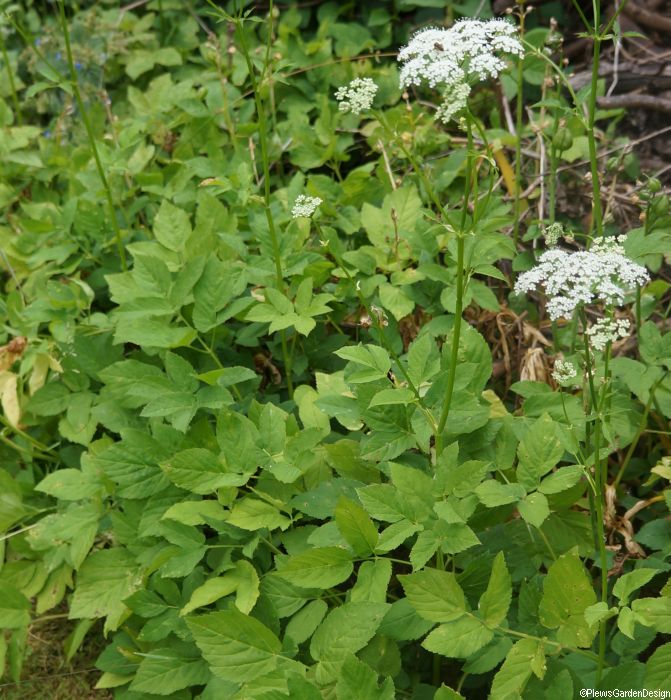
Ground Elder
Aegopodium podagraria
This baby has already had a blog to itself, so if you wish to know more of its medicinal and culinary history – and how to get rid of it from your garden head over to Weeds – Ground Elder.
As an edible weed, the young leaves of ground elder can be eaten as a fresh green vegetable in spring. The roots are also edible, and can be used in casseroles.
Introduced by the Romans, you can look at ground elder in two main ways – 1] its and invasive thug of a weed or 2] it’s a food plant that will grow in deep shade where other plants struggle, and it provides leafy greens full of vitamins in the ‘hungry gap’ of early spring.

In fact, this way of looking at ground elder is perhaps how you should approach all the weeds in your garden. Is that weed a plant in the wrong place or is it a useful addtion to my garden? It’s hardly a curse if you’re thinking of eating your edible weeds, although it may need containing. It gives a whole new viewpoint to growing your own, wildlife gardens and weed control, and we shall be exploring these aspects in further blogs.
Related Gardening articles you may enjoy from our Award Winning Blog
Edible flowers – Eating your Flower Garden
Weeds