

Why 10 Facts about Poinsettia? Well, it is one of the most popular of the Christmas flowers and plants in the UK, Europe and the USA.
Which seems to be as good a reason as any to facts from how the plant got its name, some history and importantly, how to keep it alive until New Year! Read on to learn facts and tips to amuse and help you.
Fact #1
Euphorbia pulcherrima is member of the spurge family. So yes, it’s related to the Euphorbia plants in your garden borders! Poinsettia is also known as Christmas Flower and Christmas Stars. And still occasionally, Mexican flame flower, which was the previous name in common usage.
Fact #2
There are some eight million plants sold in the UK every year. Along with Orchids, they’re the country’s favourite houseplant. A large majority of these are grown in the UK by specialist growers, with at least one nursery producing over half a million Poinsettias. It takes around six months to grow the plants to a marketable size. Many consider these to be better bred than some of the cheaper imports which have been pressed into faster growth.
Fact #3
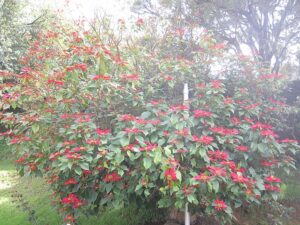
Poinsettia are shrubs, native to Mexico where they are able to grow to their full height of more than ten feet. (That would be a large table display!) There of course, you’re more likely to find them growing in people’s gardens than kept as houseplants.
Fact #4
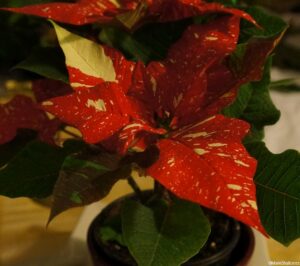
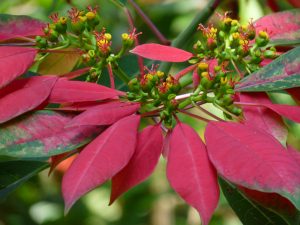
Those bright red, orange or cram speckled flowers that we love actually aren’t flowers. Those petals are bracts or modified leaves. The real flowers are relatively nondescript, grouped in the centre of each leaf bunch. In the wild, the red bracts attract hummingbirds. And it is these tiny birds who feed on the nectar rich flowers and spread the pollen as they fly from plant to plant. Butterflies also love Poinsettias and are drawn to the flowers by the showy bracts.
Fact #5
Going back in history, the Aztecs called them Cuetlaxochitl and considered them to be gifts from the gods, representing mortality and purity. Montezuma, last of the Aztec Emperors, filled his palace with poinsettias. But Cuetlaxochitl plants were more than just a symbol, they had practical uses: the sap was used to reduce fevers and a dye was made from the bracts.
Fact #6
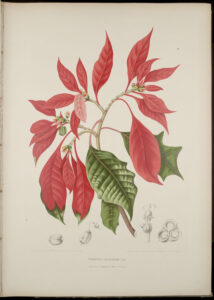
Poinsettia are named after Joel Poinsett who was a US government official sent to Mexico in the early nineteenth century. He was a botanist and physician and thought the plants were wonderfully exotic. Poinsett had cuttings and specimens sent to his home in South Carolina. First described as a new species in 1834 by Johann Klotzch, Poinsettias picked up their name from Poinsett fairly quickly.
Fact #7
From the 1830s Poinsettias were fragile and mostly seen only in the glasshouses and conservatories of wealthy collectors and Botanical Gardens.
Efforts were made to develop them for the popular market, but their short lifespan and spindly growth were big sticking points. Hardy dwarf strains began to appear in the Sixties, thanks to horticulturalist Marc Cathey and the Poinsettia growing Ecke family who made the discoveries and developed the plants successfully. Poinsettias became the best-selling potted plant in the USA and Canada.
Fact #8
Did you know National Poinsettia Day is December 12th? The date was set in the USA in 2002 to recognise the contribution that the industry made to the US economy. From the Eighties their popularity had soared, and Chrysanthemums were ousted from their top spot of favourite American houseplant. Although the Poinsettia itself has recently been usurped by the Orchid.
Fact #9
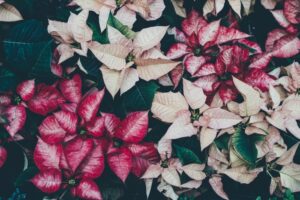
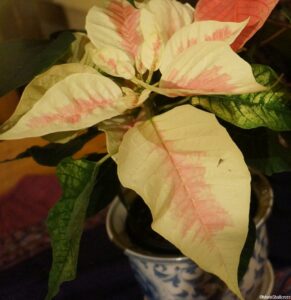
There are now more than 150 named varieties. These include a few with festive names, for example: –
Christmas glory pink
Christmas glory white
Christmas beauty (red)
Christmas eve (red)
Christmas carol (red)
Fact #10
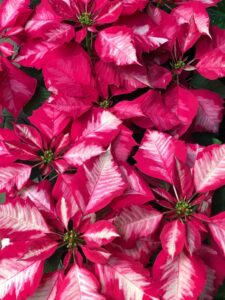
Poinsettia need to have twelve hours of darkness for at least five nights in a row in order for the bracts to change colour. Even bright streetlights can cause confusion for this plant, so it’s not as simple a process as you might think for the commercial growers.
We’ve whizzed through 10 facts about Poinsettia, next up are tips for buying and caring for your Christmas houseplant.
Tips when Buying your Poinsettia
- Never buy a Poinsettia that’s sitting next to outside doors as it will have been damaged by exposure to draughts. Even if it’s not noticeable straight away, that could be the reason why it drops its leaves in a couple of days.
- If the little yellow flowers grouped between the coloured bracts are tight then you’ll know that the plant quality is good.
- Try to check your poinsettia’s soil before buying. They like moist but not wet or dry soil. If its not been correctly cared for it could up and die on you very easily.
- Protect the plant from the cold on your journey home. I have taken hessian bags and newspaper with me before now.
- Last point – is it more cost effective to buy a cheap plant that dies in a few days (before Christmas!) or spend more on a quality plant that lasts from November to February?

Caring for your Poinsettia
- avoid over watering by giving it little and often into the saucer rather than the pot
- they appreciate light and warmth, preferably keep the temperature no less than 13 degrees C and give it some sunlight
- keep your plant out of cold draughts, so if it’s on a windowsill keep it on the room side of the curtains
And finally…
If I’ve made you think more of Poinsettia plants and you’d like to try keeping yours until next Christmas, check out the Christmas Plants Q & A blog link below.
And if you’re looking for a Christmas gift with a difference, why not ask about our bespoke Gardening Lessons, where your classroom is actually your own garden? We can help with both gardening basics and more ‘expert tasks’, carry out worm and other experiments and for example, also show you how to plan a wildlife friendly ornamental border. Click here for a free PDF download with more information on Plews Gardening Lessons and Courses
For further gardening advice and inspiration, check out Plews Potting Shed blogs, including the selection below and our monthly Tipsheet – You could come and find us on Instagram Pinterest and Facebook too.
And on that note, you can have a peek at my new garden on Instagram @spitfiresandslowworms and for those of you who prefer Facebook – Spitfires and Slow Worms
And for those of you who like Christmas – why not download our eBook “Christmas and Yule in Your Garden“? Based on the seasonal blogs it has additional content and photos.
Related Gardening articles you may enjoy from our Award Winning Blog
How to Choose Your Real Christmas Tree
Christmas plants – some questions and answers
Could You Grow Your Own Christmas Pudding?
3 Flowering Christmas Houseplants
Growing New Potatoes for Christmas Dinner
The Winter Solstice and Your Garden
Interesting Plant Facts – Gold, Frankincense, Myrrh


