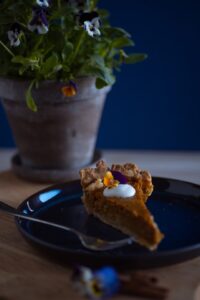
Violets are a traditional Valentine’s Day flower. And, arguably, a more environmentally aware alternative to roses as they are flowering outside in the British Isles in February.
A Little Bit of Botany
- Violets are the largest genus within the family Violaceae.
- Viola can be annuals or biennial plants. Many are perennials and as such may be deciduous or evergreen. They are frequently small perennials with simple, often heart shaped, leaves and 5-petalled flowers, but there are some shrubs too.
- The violet was formally described by Carl Linnaeus in 1753 with 19 species. There are now considered to be between 500 – 600 species. Viola is a large genus and the species have been subdivided into seventeen sections.
- Pansies, which we frequently have as winter bedding flowers, are classified as Viola. The large flowered bedding pansy, Viola × wittrockiana, has a hybrid origin involving at least three species.
- As well as the numerous perennial violet species, numerous viola and violetta cultivars have been developed over the years. These violets do not always breed true from seed so need to be propagated by cuttings and division.

Violets in History
- Sweet violets have a distinctive scent and have been used as perfume for hundreds, if not thousands of years. There are records of violet perfumes in classical Rome.
- They are probably the ‘nodding violet’ mentioned by Puck in Shakespeare’s ‘A Midsummer Night’s Dream’. As all the other flowers in his list were scented and it would seem odd if he mentioned one that wasn’t.
- Violets were also portrayed in Medieval and Renaissance art as symbols of innocence and purity. They often symbolised these qualities in paintings of the Virgin Mary. Their portrayal was often so accurate that, as for example in the famous Unicorn tapestries, Viola odorata was clearly the flower depicted.
- The Parma violet is presumably named after the Italian town as it appeared in Italy in the sixteenth century. Parma may be more noted for its ham and cheese (Parmesan), but the intoxicating scent of its viola flowers is not to be missed.
- Sweet Violet flowers, Viola odorata, were a favourite of Empress Josephine, Napoleon’s first wife. Every year their wedding anniversary Napoleon would present Josephine with a bouquet of sweet violets on. Although he divorced her as she failed to produce an heir, he carried around a locket in which were pressed violet flowers and a lock of her hair for the rest of his life – very romantic.
- The Victorians were particularly fond of the Sweet violet’s delicate aroma. Both pressed flowers and paintings adorned many a Valentine card in the nineteenth century.
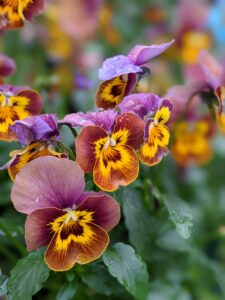
Blue Gold
Blue Gold is a name sometimes given to the Violets that were grown in the Hudson Valley, in the State of New York.
During the late 19th and early 20th centuries, the region had a turnaround from a falling economy to a booming one, when the extensive greenhouses were turned into a production centre for sweet scented Viola on a commercial scale. Their popularity in Europe easily translated into the sophisticated North American cities and these simple flowers became all the rage. Rhinebeck and the surrounding Hudson River towns were soon the self-proclaimed Violet Capital of the World rich with blue gold.
However the combination of changing fashions, fungal disease and the Great Depression was too much, even with the support of Hudson Valley resident and First Lady Eleanor Roosevelt. And so the Violet Capital of the World became a sea of glasshouses falling into disrepair, with a mere handful of growers left today.

Violets in Your Garden
Your garden can provide you with a selection of violets from autumn right through the winter and spring and even summer. Not all of these will be the scented varieties, and yes, some are pansies and bedding plants. But you may be surprised to learn that some of those ‘bedding plants’ have a most delicious scent. I’m particularly fond of one of the Viola cornuta, Viola honey bee which is sometimes found as bedding. It is honey bee coloured and has a sweet, honey rather than vanilla scent.
Where to grow them –
- Woodland Garden – summer flowering varieties in particular prefer dappled shade; earlier flowering types happily bloom under leafless deciduous trees of late winter
- Coastal Garden – many Viola are tolerant
- Cottage Garden – they have an informal air which suits cottage gardens where they can edge flower borders and paths, delighting the spring air with a delicate scent
- Rock Garden – their small size and liking for free draining soil makes them ideal for inclusion in rockeries
- Containers, tall pots, or in pots on the patio table are good, so that you can enjoy the scent
- Acid soil or alkaline soil – depending on species
British native violets
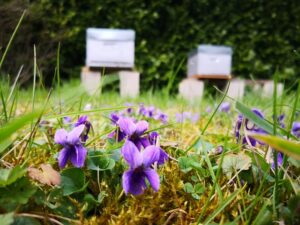
Dog violet, Viola riviniana, is the most commonly found violet in gardens. It isn’t scented, hence the sobriquet ‘dog’. There is also Viola canina, heath dog-violet or heath violet.
For fragrance we have the delightful Viola odorata or ‘sweet’ violet. And Heartsease, Viola tricolour, another native species. This has the common name ‘love in idleness’ suggesting a lover who can think only of his beloved, so has no time to work.

And non-natives
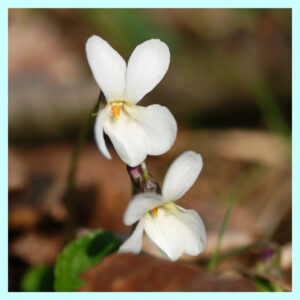
The north-eastern American sweet white violet, Viola blanda, will thrive in most British gardens. It has a small flower with an intense fragrance, well worth kneeling down on the soil for. Viola sororia, woolly blue violet, deserves a mention for being tolerant of clay soils.
Viola cornuta, horned violet is a mountainous European type. Normally a lilac coloured flower, there is also the stylish ‘Alba group’ much loved by RHS Chelsea. Laced with a subtle scent, these are summer flowering violets.
And to finish – what about eating your Violets?
Many violets have edible flowers and foliage. For the best taste eat the just opened flower petals and younger leaves in salads. The petals can also be candied and added to desserts and vegetable dishes. The taste varies with the variety so experiment!
Violetta ‘Rebecca’, a pretty freckled flower, has a vanilla like flavour. Whereas heartsease tastes more like a freshly podded pea. Or at least this is what they taste like to me.
If you would like help with creating a romantic garden design or planting design for Valentines Day do get in touch. Plews is able to offer you just the design or a full service.
For further inspiration check out Plews Potting Shed blogs, including those below which have Romantic inspiration – and find us on Instagram and Facebook
Related Gardening Blogs for You from the Award Winning Plews Potting Shed
Valentine’s Day and Romantic Gardens
Elements of a Romantic Garden for Valentine’s Day
Romantic Roses for Valentine’s Day and Beyond
Garden Visits – Romantic Kenilworth Castle
Shakespeare – Midsummer Nights Dream – Garden Design Inspiration
You might also like these for Mother’s Day and Easter ideas
15 Ideas for Garden Visits for Mothers Day
Gardening Gifts for Mothers Day
Mothers Day flowers – 5 Favourites in your Garden
5 Alpine Plants for Easter Gardens
Flowers for Early Spring