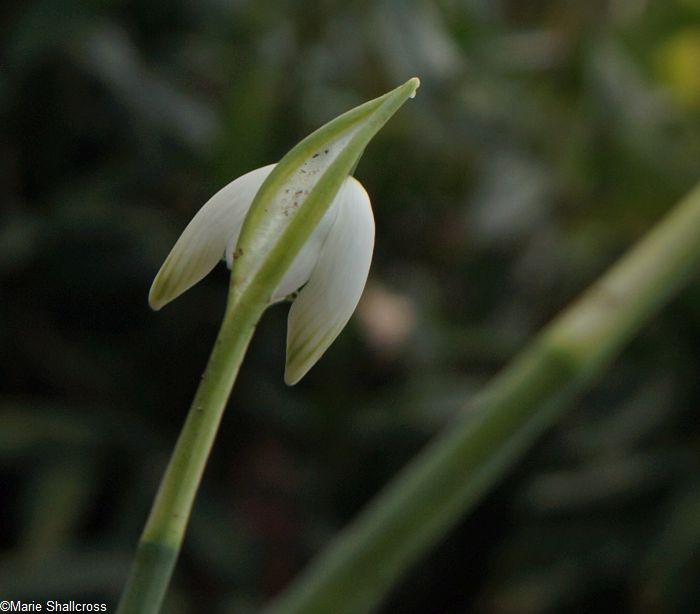
Snowdrop Days at Chelsea Physic Garden – a perfect garden visit for Galanthophiles!
“What is a Galanthophile?” I hear you ask. It is the name for a person who collects snowdrops, the Latin name for which is Galanthus. Someone who really collects snowdrops. Different cultivars, species and varieties, not just has a large clump of the commonly seen snowdrop, Galanthus nivalis.
Viewing hundreds of different snowdrops all in one Galanthus themed garden visit can be quite an experience. Snowdrop Days and Snowdrop Festivals are a wonderful way of reminding ourselves that winter is not a dead time in the garden.
Each garden will display their snowdrops differently, as you’d expect. One of the issues the less mobile gardener may have is getting down to soil level to fully appreciate the small Galanthus growing in the soil.
2017’s snowdrop extravaganza at Chelsea Physic Garden in London had some clever display ideas to get around this. So I thought I’d share highlights from my visit with you.
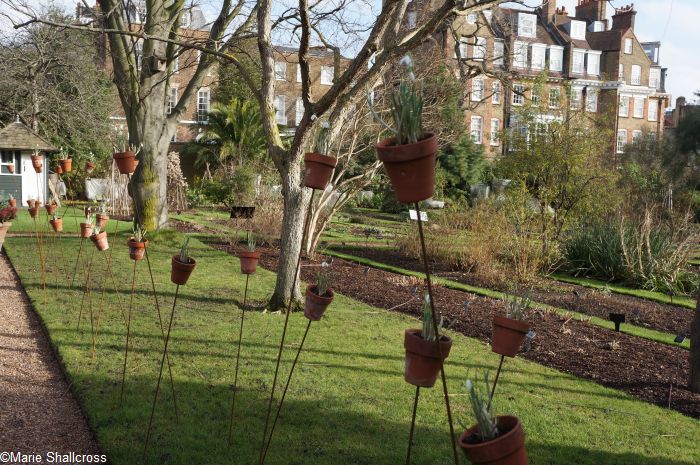
A Galanthus welcome at eye level…unless they’ve grown weird roots that is!
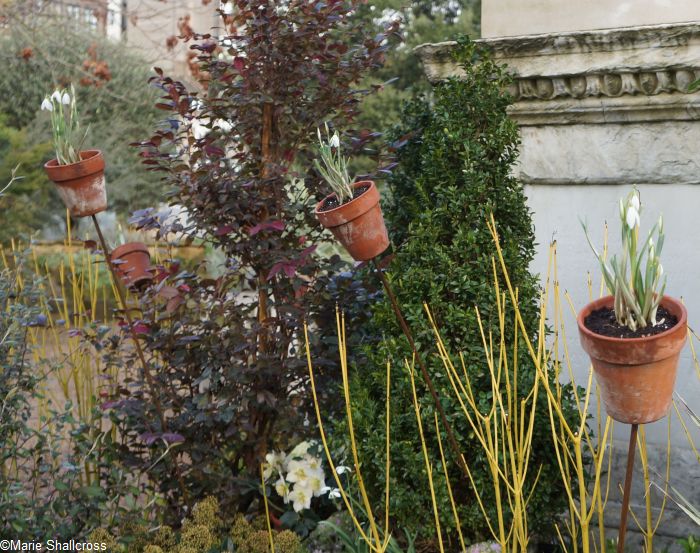
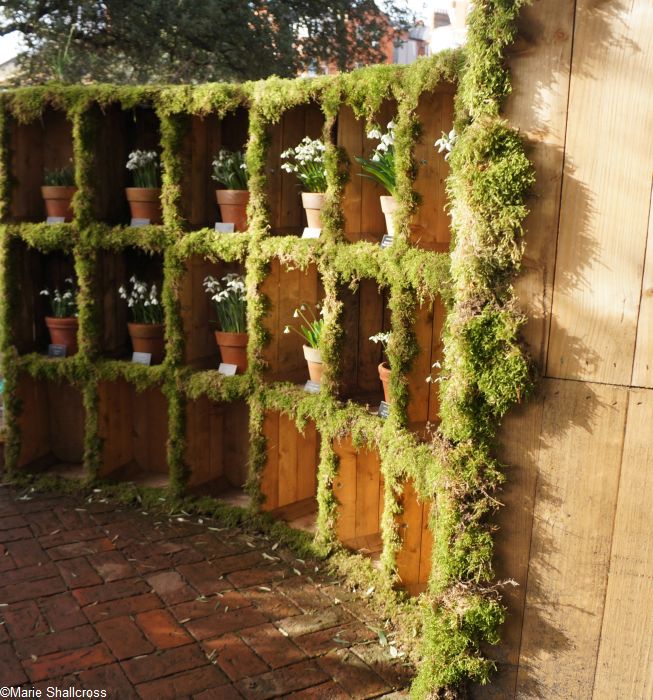
The snowdrop theatre, displaying a selection of different Galanthus cultivars in clay pots. Surrounded by moss to reflect their shade loving nature. Those shelves enable you to get up closer to these lovely late winter flowering bulbs.
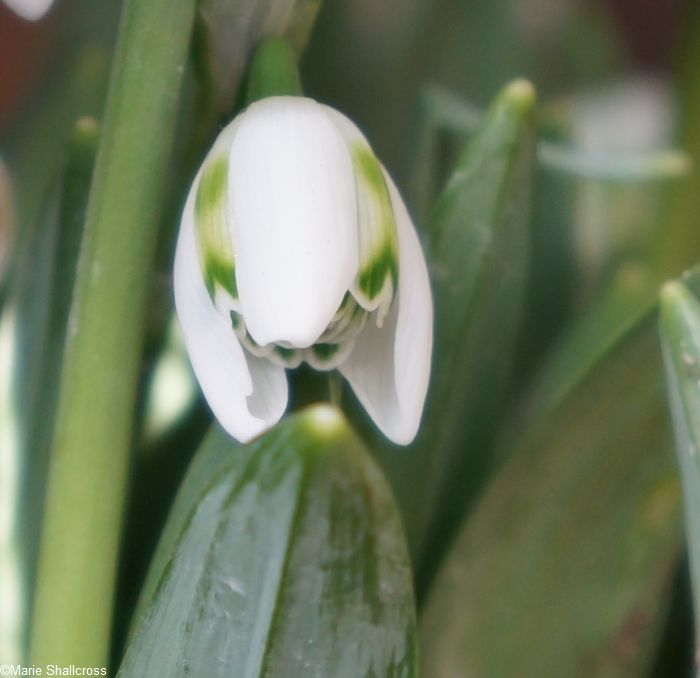
Galanthus ‘Ailwyn’, a neat almost symmetrical double snowdrop, with tightly packed inner frill
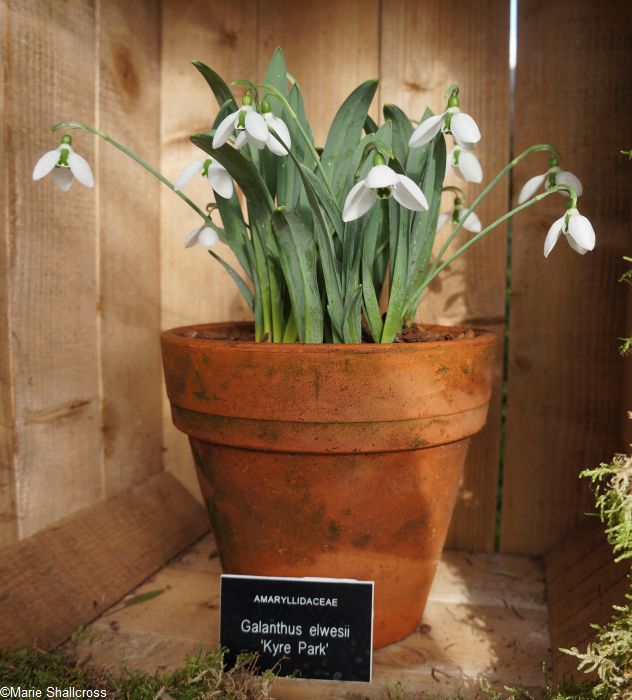
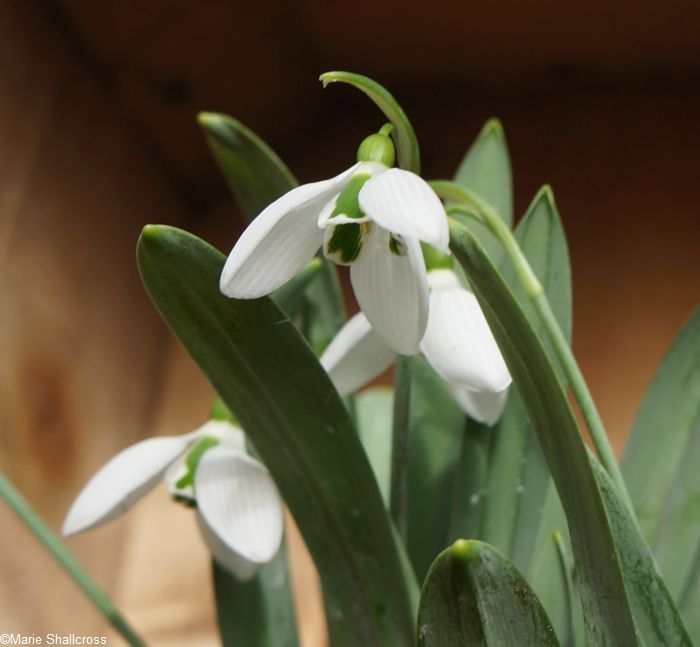
By contrast, Galanthus elwesii ‘Kyre park’ is a scented, single flowered snowdrop. Found, I belive, in the Worcester estate of the same name. Kyre Park is a Grade II listed garden of historical importance. Originally an early 14th century deer park, the parkland was laid out by Capability Brown c1754
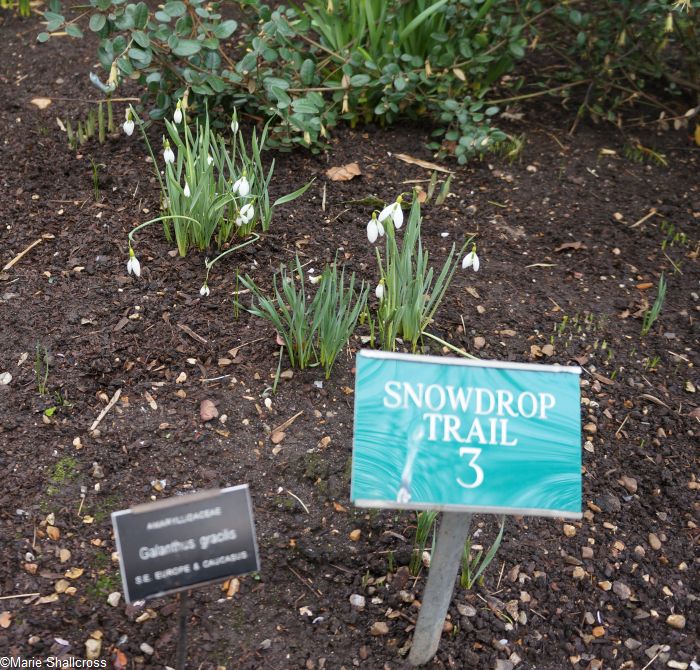
Snowdrop Days at Chelsea Physic Garden can be enjoyed by simply wandering. Or by following the Snowdrop Trail. Here you will find Galanthus perched in mossy hummocks on pillars; snowdrops dyed blue, pink and orange. And of course, snowdrops sitting sensibly in the flower borders nestling up with other winter flowering bulbs, shrubs and herbaceous perennials.
This is a trick you could try at home if you wanted to. Watering the snowdrops with food dye added to the water will cause the flowers to change colour. The colour change is more reliable if the snowdrop is growing in a pot rather than in the border. I have carried out similar experiments with gardening lesson students to show how a plant’s transport system works.
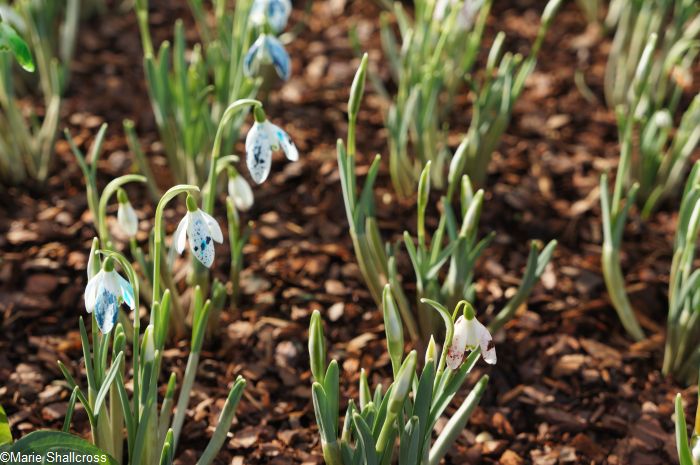
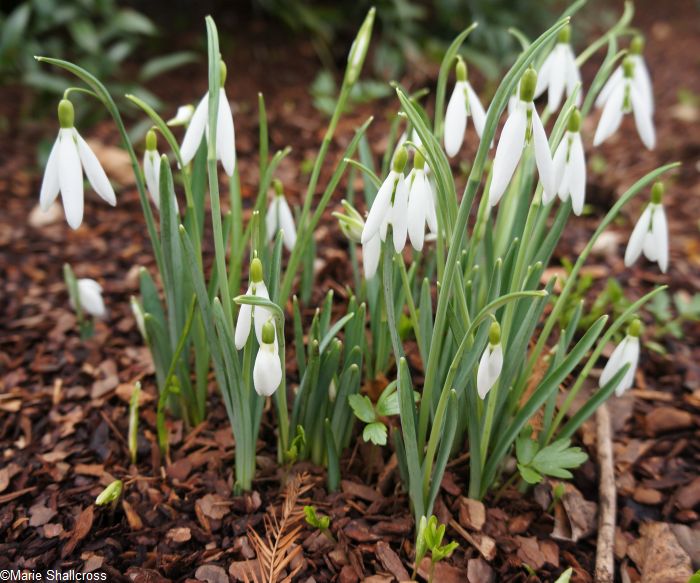
Galanthus ‘Wasp’ is so called as a clump of these snowdrops looks like wasps buzzing together.
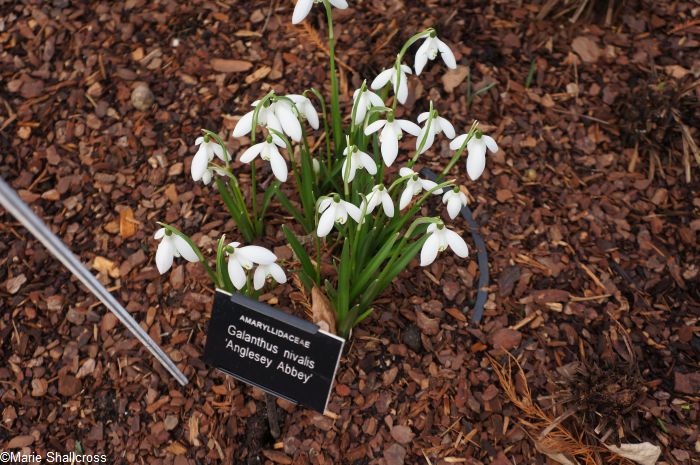
Galanthus nivalis ‘Anglesey Abbey’ is named after the property in Cambridgeshire not the island off the North Wales coast. Anglesey Abbey gardens have at least three snowdrops that are special to them. With over 60 varieties in the grounds it’s another good place to visit for snowdrop days.
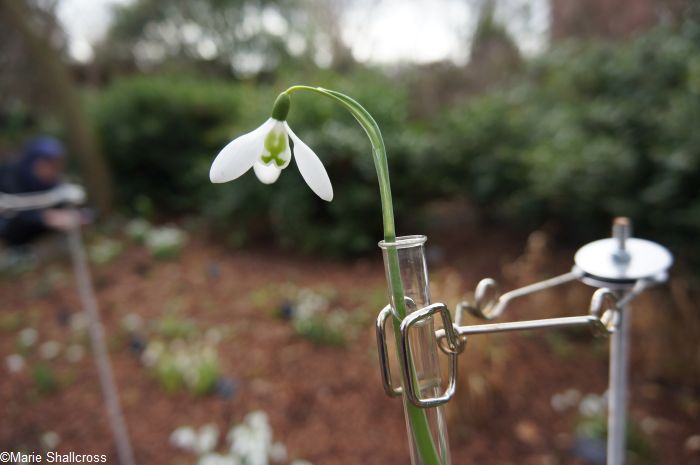
Did I say snowdrops sitting sensibly? The appropriately named Galanthus Lapwing can be seen in all its delicate glory flying in a test tube above the borders. There were a number of Galanthus placed into test tubes for display. What an excellent idea it is, and much appreciated by the wheelchair user I chatted with.

And to finish, Galanthus ‘Ophelia’, another double flowered snowdrop. Although the first recorded cultivation of snowdrops in England was in 1597, by Gerard, they’re not mentioned in Shakepeare’s play ‘The Winter’s Tale’. You can read about the flowers that do appear in that play here.
Chelsea Physic Garden is London’s oldest botanic garden. It was established in 1673 as the Apothecaries Garden in order to grow medicinal plants. A physic garden means a garden of healing, or medicinal, plants.
And if you don’t live in or near London? Chelsea Physic Garden isn’t the only place that holds Snowdrop Days or a Snowdrop Festival.
Many gardens open all year have specific winter gardens. Some are holders of National Collections of winter flowering plants, as you’d expect. For example, you could visit one of the 3 National Collections of Galanthus at the Cambo Estate Snowdrop Festival in Scotland.
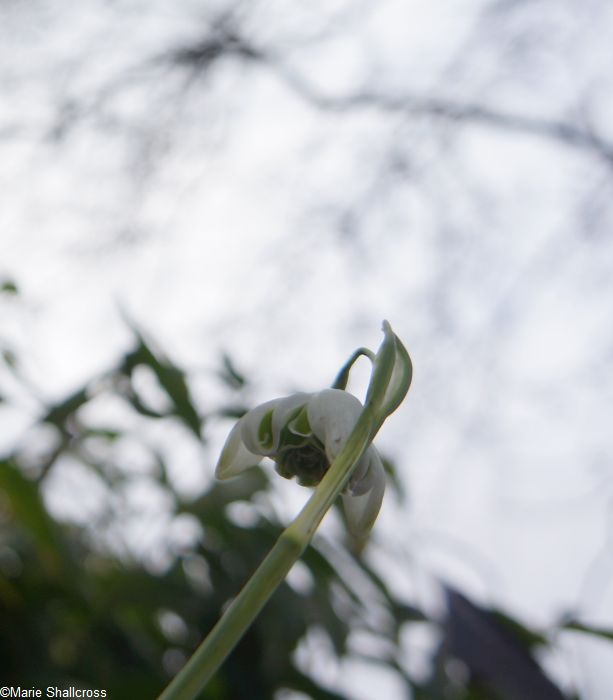
Some gardens and gardeners open their gates at a time when many are officially ‘closed’ so that we can be enthralled by Galanthus.
For example, some members of the National Garden Scheme (Yellow Book, NGS) will be opening their gardens especially for snowdrops. This is the NGS’s 3rd year for a Snowdrop Festival and about 100 members are inviting us in across the country.
So you should be sure to find a garden full of Galanthus wherever you are. Enjoy your own snowdrop days – perhaps you could turn it into a snowdrop festival pilgrimage and visit a few gardens each year. Now there’s a thought to create lots of new Galanthophiles!
Related Gardening articles you may enjoy from our Award Winning Blog
Snowdrop Flowers
Tips for Buying Bulbs in the Green
Six Poisonous Flowering Bulbs
Bare Root Plants
Garden Visits – Chartwell