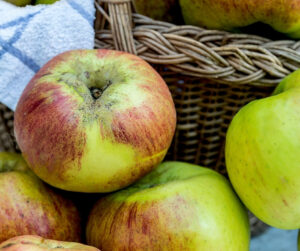
Harvesting apples is generally easy, but there are times when things aren’t quite as straightforward as you’d hope. Perhaps you’re new to this whole grow your own apples malarkey and want to know the best ways to pick and store apples – and yes, knowing when the fruit is ready to pick!
Or perhaps you’ve recently moved into a house where there are apple trees growing, and you’re not sure if they’re eating apples, cooking apples, and are wondering how to find out what variety they are. I can’t promise to answer all your questions here, as gardens and trees vary, but I’ll do my best. And point you in the direction of finding out more about your apple trees too.
Why are my apples splitting before I can pick them?
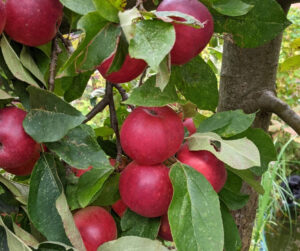
Apple splitting, also known as apple cracking, may be a result of disease but is far more likely to be caused by an irregular water supply. In particular when the trees go through a period of drought and then suddenly receive a large amount of water.
As the fruit takes up the water quickly, it causes a rapid swelling, so much so that the skin is not able to expand quickly enough to accommodate the water, which causes the skin to stretch and crack. Shallow splits in the fruit skin may heal over with a rough, corky covering, causing scarring but generally the fruit is still edible. Larger cracks may cause the apples to rot, especially near harvest, when increased insect activity is more likely.
Stressed trees are those most prone to apple cracking, and there may be other contributing factors which increase the likelihood of it occurring. For example –
- the tree is growing in poor soil, lacking in nutrients
- pruning has been carried out at the wrong time
- weak root systems which affect the tree’s ability to take up water and nutrients
- the tree is suffering from disease or insect infestation
- some cultivars are more prone to cracking than others


How to treat apple cracking
The likelihood of this happening can be reduced by ensuring that the trees are well cared for. And importantly, have enough water during spring and summer, especially during periods of prolonged dry weather. Using mulch around the tree helps maintain water levels in the soil. But in dry weather, water your trees regularly, at least one full watering can per tree twice a week.
How do I know my apples are ready to pick?
This is probably the most frequently asked of the harvesting apples Q & A I hear.
How to tell if your apples are ripe for picking – and see video clip at end of this section
Firstly, depending on the variety apples will be ready for picking from mid-August through to mid-October.
If you don’t know the variety for a general clue as to which end of the season they’ll be ripe, think back to spring – or check your garden photos. The earlier the blossom, the earlier the harvest.
Yes, I know that’s simple, but many beginner gardeners don’t always realise the correlation. The weather also plays a part of course, but my point is that late season apples will not be ripe in August however sunny the summer!
Secondly, to check if your apples are ripe, support them by cupping your hand and gently twisting the stem where it meets the tree. If it releases easily, the apple is ripe.
Tugging should not be required, and indeed is not a good idea as you some fruit may fall off as the branch pings back, causing them to land on the ground and bruise. Which means you won’t be able to store them.

What sort of apple tree do I have?
There are four (main) ways of finding out: –
- doing the research yourself
- asking a horticulturist, gardener or pomologist to come to your garden (this latter is an apple expert)
- ask an expert at one of the many Apple Day events
- sending off samples and photos to Brogdale National Fruit Collection or the Royal Horticultural Society (both UK based, links below with the blog links)
Being an Apple Sherlock Holmes
This is too large a topic to go into detail in this blog, and I will write you one on how to go about researching your mystery apples. These are just a few pointers.
As a general rule of thumb, the earlier the apples are ready to be harvested, the more likely that it is an eating apple or dual-purpose apple rather than a culinary one.
Harvesting Apples – Q & A – why do you need 2 or 3 apples from the same tree to examine? Because there are a wide range of factors than can affect the size of apples even when they’re the same cultivar. For example, were they growing on different trees, or on the same branch; did they receive a similar amount of direct sunlight.
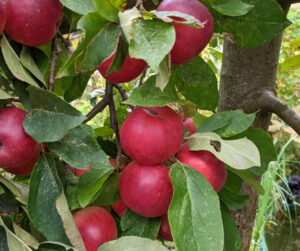
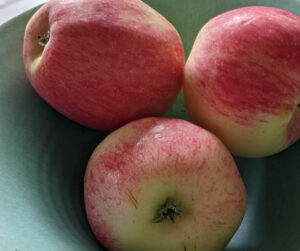
Key apple characteristics include a general impression of the size, shape and colour of the apple. And also such things as the whether the cavity, which is the area around the stalk, is deep, shallow, wide or narrow.
Buy, borrow or loan from your local library some reference books on apples and apple cultivars. I’ve found these invaluable as they’re written by experts. Obviously use internet databases as well and check out local resources as you may have a localised apple cultivar rather than one that’s found nationally.
Also be aware that whilst there’s an obvious size difference between crab apple fruit and Malus domestica (our garden apple) they can cross pollinate and produce a hybrid to confuse the unwary. Another complication in identification can be that your tree was grown from a pip. Apples grown from pips will not look like their parents.


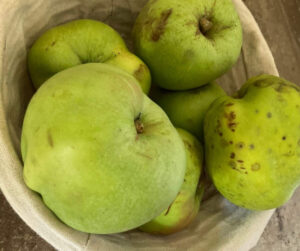
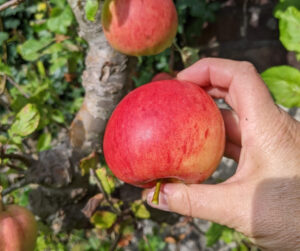
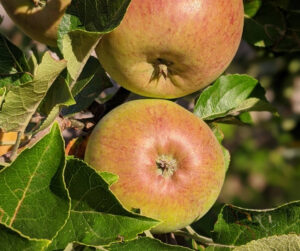

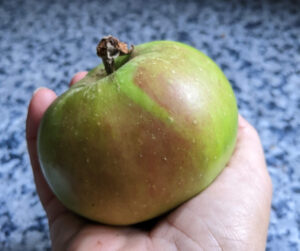
Ask an Expert
This covers the other three options. Do be aware that even the experts may occasionally struggle to find an exact match. There are some 2200 different varieties of apple in the United Kingdom alone! The more information you can provide, whether someone has come to your garden, or you’ve sent off samples, the more likely they are to be able to at least narrow down the most likely cultivars.
You will need to pay for some of these services. When an expert visits your garden remember they will be unlikely to tell you there and then what apple variety you have. They’ll most likely need to do further research.
Harvesting Apples – Q & A – what to do with windfall apples
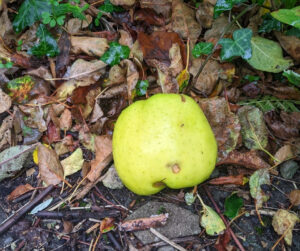
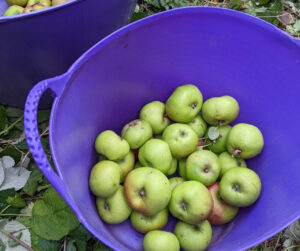
The first thing is to keep damaged apples separate from undamaged. Some windfall apples may actually be in as good condition as those you pick from the tree. I usually separate into three categories –
- Perfect – to be stored for weeks / months depending on variety
- Middling – stored separately from the perfects, and used fairly quickly before they ‘turn’ or start to rot
- Use now – which is either use straight away in pies, crumbles; preserve in chutneys, or freeze as slices or puree
NB Eating apples will generally only store for a short time.

Storing Apples
They need to be kept, cool, dry and frost free – and also separate from each other. Which means wrap each apple in paper, newspaper, tissue, waxed paper, even old tights cut up. The point being they need to breathe and not sweat which would cause rotting, although they need some moisture to prevent them from totally drying out .
Cardboard fruit boxes from the supermarket are a useful option to keep the wrapped apples in and can be stacked, which saves on space. Filing drawers will work too
Wooden apple racks can be homemade or bought. Some have indentations for individual apples, so you don’t need to wrap them. Others just have slatted bases. I quite like these for the ‘middling’ category as the apples won’t be stored for long. They’re easier to check if not wrapped but do leave space in between each fruit.
It just so happens that this year we have a bumper crop of apples to harvest and store, so I’ll let you know how we get on with the different options and what other tips and ideas that work for storing we discover along the way!
Harvesting Apples – Q & A … and finally
Hopefully, these answers to some of the most frequently asked questions I get asked as a gardening teacher and garden consultant have been of use to you. And because the weather affects the quality and quantity of the harvest, it’s also helpful for you to know that this was written in October 2022.
If you’d like to learn more about growing your own fruit, why not have enjoy a gardening course with your own garden as the classroom? Plews Gardening Lessons make a good presents too…
For further gardening advice and inspiration, check out Plews Potting Shed blogs, including the selection below and our monthly Tipsheet – You could come and find us on Instagram Pinterest and Facebook too.
Related Gardening articles you may enjoy from our Award Winning Blog
How to Choose Apple Varieties to Grow in Your Garden or Orchard
Cordon Apple Trees – Garden Surprises when Pruning
Bramley Apple – from chance find to nation’s favourite
Beautiful Apple Blossom Trees for Your Garden
How to have a Mini Orchard in Your Garden
Brogdale National Fruit Collection – Identify Your Apple Tree