

Ightham Mote is a delightful Medieval moated house and garden hidden away in Kent, and one of my favourite places. It is a place we often visit, so some of the Plews Team (Nathan, Hari and Chris) needed little encouragement to join me on a trip there recently.
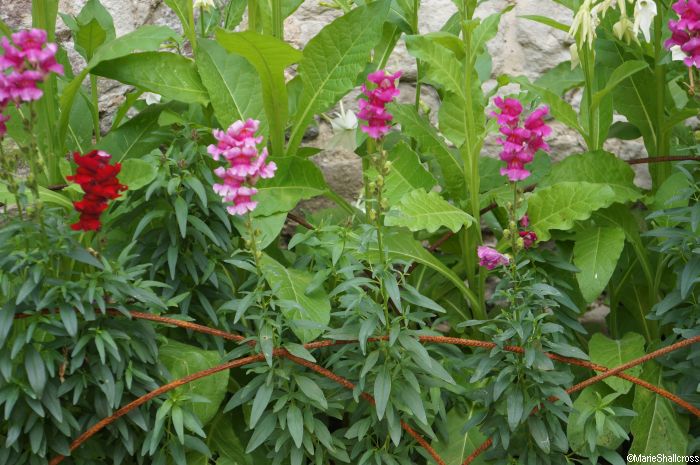
The ‘mote’ in the house’s name refers not to the water around the house but to the ‘moot’ or local assembly which was held here. The house is built around a central courtyard and the few flower borders here are edged with rusted metal hoops to retain the floppiness of the nicotiana and snapdragons.

The lovely floral displays throughout the house are sourced largely from the cutting garden, found behind tall yew hedges.
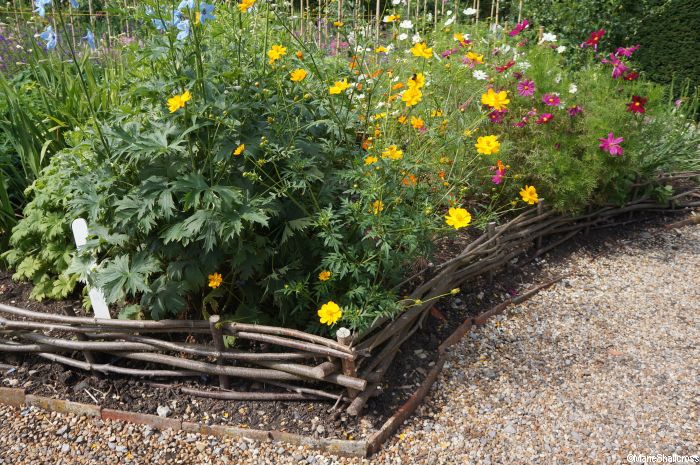
Vegetables and fruit are also grown here. The slightly raised beds are edged with tiles to retain soil and decorative low hazel hurdles to offer support for the cutting garden’s tall herbaceous perennials and annual flowers.

Apples trees are used as decorative ‘full stops’ at the ends of the lavender walk and are grown in pots. This path is an aromatic journey, with scent from both the bee laden lavender and the fragrant sweet peas that grow up tall poles.
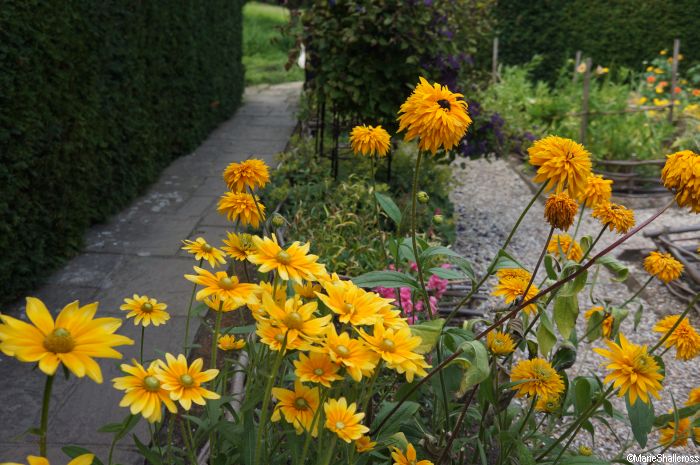
Most of the fruit trees can be found in the orchard, where the bee hives are situated; a traditional placing as the orchard is accessed through an opening in the cutting garden. The bees at Ightham Mote have a nectar rich flowers form early spring right through to autumn.


I also spotted espalier pear trees trained against old stone walls when we went to play some of the oversized garden games provided for visitors.

I really like the perennial evergreen planting scheme around the circular pond. Spiral topiary gives height, whilst the soft leaved, silver-grey stachys adds a further textural element. Stachys is commonly known as ‘lambs ears’ for its furry leaves and makes a ‘stroke-able’ border edging.

More formal topiary could be found in stone planters and lead troughs in different areas of the gardens.
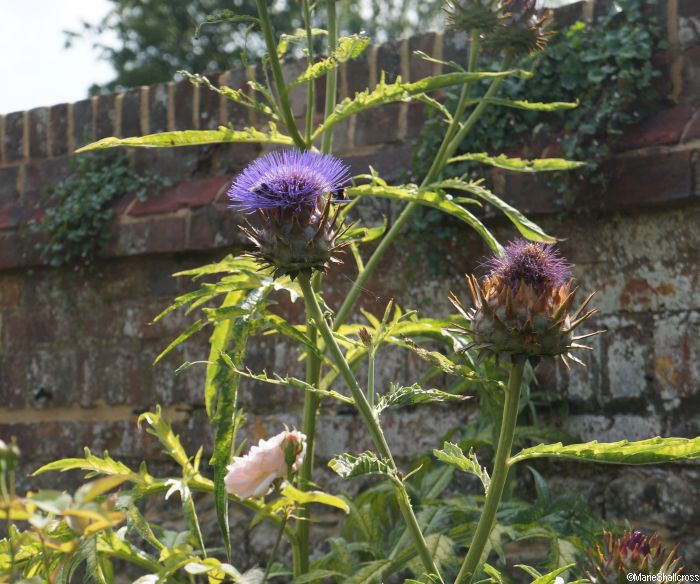
Mixed herbaceous borders with tall architectural perennials such as cardoons and plume poppies looked impressive towering over the stone walls.
And the Turk’s head lilies at Ightham Mote were, of course, beautiful.

Gardening articles you may enjoy from our Award Winning Blog
Topiary – Easy Maintenance Gardening?
Midsummers Day in Your Garden – 3 Flowers, 3 Fruits, 3 Tasks


