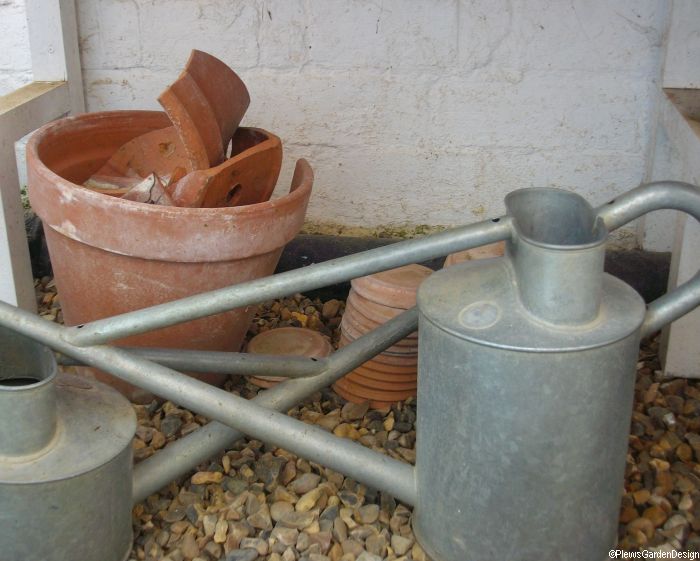
It should be said that I can find it quite fascinating to see exactly what items can be classed as garden sundries in garden centres, plant nurseries and DIY stores. I could probably list everything I’ve seen in the last week and fill up five pages of text – and only just have scratched the surface (with a hoe, of course).
You’ll be glad to know that that isn’t what I intend doing. Instead I thought I’d indulge with some arty photos of gardening essentials. And throw in a few anecdotes concerning the historical significance and common usage in our gardens today of some of the many and varied garden sundries. A relaxed gardening read while you drink your first cup of tea or coffee, is my aim.
What are Garden Sundries?
So what is a garden sundry item? Well, the Oxford English Dictionary defines the word ‘sundries’ as
“Various items not important enough to be mentioned individually”
In other words, miscellaneous objects, too small or to insignificant to be catalogued as individual items.

Things like gardening gloves; balls of twine for tying up tomatoes in the greenhouse; vine eyes (those little staple like nails to attach to a fence to help support climbing plants). Oh yes and plant labels, you know, like the ones you use one year to distinguish the seeds of sweet pea ‘our harry’ from mange tout – and then keep in a box because you might use the same varieties again and it would save you buying more. But you buy more plant labels anyway as you grow different varieties or lose the box at the back of the potting shed along with a ping-pong ball that the cat was playing with. (Or is this just me?)

Garden Sundry Items – Deckchairs
But many of the gardening implements sold as sundries are a little bit large to be called insignificant. For example, a kneeler pad could be a garden sundry item, but can a deck chair be one? I do like deck chairs, the high back makes it easy to rest your weary head after all that weeding. Of course that wasn’t their first use. Folding wooden chairs with woven cane seats – steamer chairs – were in use from the middle of the nineteenth century. They became known as deck chairs from their use on the decks of ocean liners.
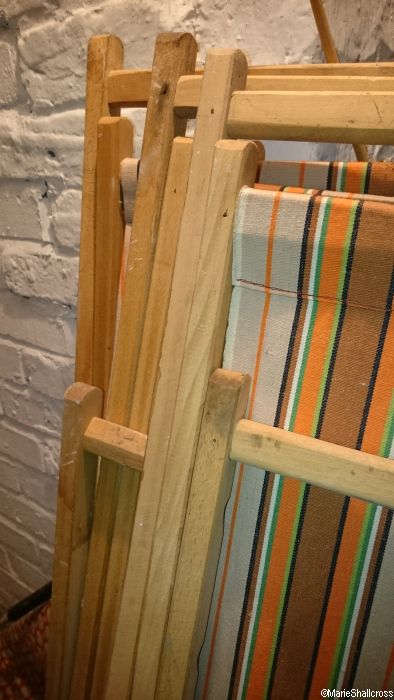
Famously used on beaches in the seaside towns of Britain throughout the 1950s and 1960s, it was an obvious move for them to be used in the garden as well. The folding canvas slung chairs are easy to store and easy to put up; at least in theory, how many of you have trapped their fingers in a recalcitrant deck chair frame!
Garden Design and Garden Sundries
When I’m writing up a design concept I often have a section for sundries. In that I put both essential and optional garden objects such as
 water butts, compost bins, wormeries,
 garden storage, such as garden trunks
(not garden sheds, they come under the garden buildings category along with greenhouses)
 fire pits, bird feeders, obelisks,
cold frames, outdoor cat toilets, BBQs and so on. Garden statues and ornaments may come under garden sundries too, as would large pots and troughs. I do this because we seem to have a general acceptance that ‘sundries’ can mean ‘various other things that don’t quite fit into a particular category’.
Small Garden Sundries
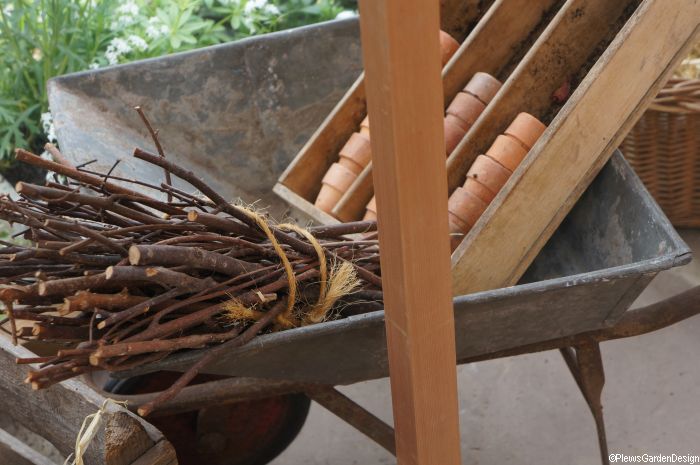
Hand trowels are reasonably small but are they insignificant? They were most likely the earliest form of cultivation tools when we humans started scraping at the earth to sow seeds. Those hand tools were probably pieces of flint and rock or a short bit of branch. Spades with their long shafts would have come along much later, as they were a gardening or agricultural tool that needed to be made.
We now have an array of small garden hand tools for specialised uses to choose from. The late nineteenth century and early twentieth century gardeners had an even more incredible selection, as can be seen in old gardening catalogues. Browsing through some of these is a pleasant way to spend a winter’s evening; some of the items are fascinating in their restricted use. (Or is this just me again?) The Garden Museum in London has a selection of gardening sundries and there are frequently displays of old gardening tools at garden shows and historic gardens.

Seed sowing is an area where the garden sundries term comes into full use. We have seed trays of various types, dibbers, propagators, growing media such as perlite, tiny plastic and clay pots to hold seedlings in, and those curious moulds to make a hole in the potting compost.
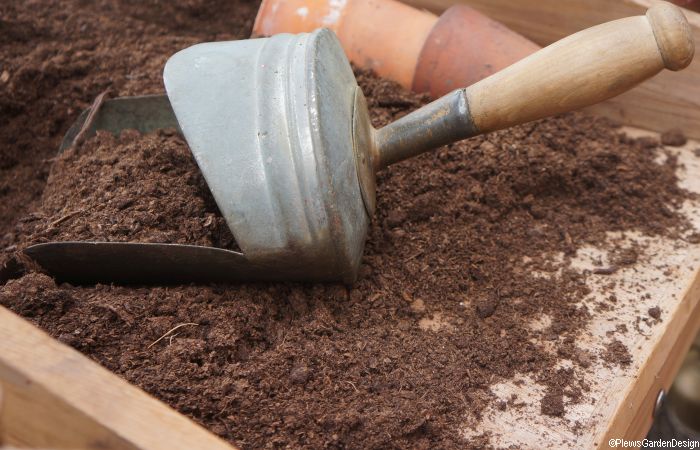
So where has this ramble got us? I think it is fair to say that garden sundries is a catch-all term for all those gardening items that don’t quite fit into a well-defined category. For example, power tools are a fairly obvious group, but there would undoubtedly be disagreement as to whether the scoop used for soil mixing in the potting shed should come under ‘seed equipment’, ‘general propagation’, or ‘spades and trowels’. If in doubt, it’s a sundry garden item. And as such makes a good present for a keen gardener, for Christmas and for birthdays. Plews doesn’t sell gardens sundries but we do have Gardening Gift Vouchers for you to choose from.
Note to librarians reading this blog
there may be an argument for properly categorising garden sundries and equipment according to a similar method of one of the accepted library schemes. For example, 001 for small hand tools, 001.1 for the regular shaped hand trowel, 001.2 for a long handled version and so on. It’s kind of tempting…I may need to spend some time in the potting shed investigating further…
And for further gardening advice and inspiration, check out Plews Potting Shed blogs, including the selection below and our monthly Tipsheet – You could come and find us on Instagram Pinterest and Facebook too.
Related Gardening articles you may enjoy from our Award Winning Blog
The Potting Shed
Garden Tools
7 Tips for Gardening on a Budget