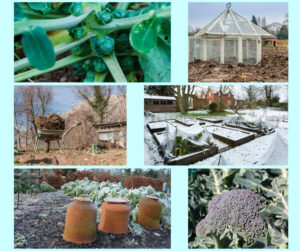
Why only 9 Winter Vegetable Garden Tasks to be doing now when there are obviously many more? Because you don’t want to be overwhelmed and end up not finishing or even starting gardening jobs as there’s just ‘too much to do’. That isn’t helpful or productive! There are links to other Plews Potting Shed articles at the end for more help and leading you onto other tasks and topics if you want.
Winter Vegetable Garden Tasks to be Doing Now
Some of these jobs will take you longer than others, as there’s more than one part to them. Others may need repeating. And some you can do in the warm with a cup of coffee. Firstly the list – and its not definitive as your garden, what you’re growing, whether you have a polytunnel and so on may be very different to your neighbours. Which reminds me, although I’ve said ‘vegetable garden’ the tasks will apply to an allotment. And of course many will also apply to an ornamental garden or kitchen garden too.
The list and then onto the tasks in more detail one by one.
- Harvesting winter vegetables, stored vegetables
- Tidy up the vegetable plot
- Ordering and sorting seeds, tubers
- Forcing rhubarb
- Tidying sheds and cupboards
- Preparation of new perennial beds
- Creation and / or purchase of compost bins, water butts
- Inspecting sheds, greenhouses, etc
- Planning
1 Winter Vegetables
Harvesting Winter Vegetables
Although many gardeners, especially beginners, focus on summer and early autumn vegetable crops, there are plenty of hardy vegetables that will stand the winter months in the UK and provide you with fresh vegetables.
For example,
- Beetroot
- Broccoli
- Brussels sprouts
- Cabbage
- Kale
- Leeks
- Parsnip
- Perpetual spinach
- Swede
Most of these will need to be netted to keep off hungry pigeons and the like. Its worth spending an extra couple of minutes checking for rips in the netting when you’re harvesting the day’s greens.
Stored Vegetables
If you have stored potatoes, carrots and winter squash, then put a note in your diary to check them regularly. Remove any that are beginning to rot. They may still be usable and if not, compost.
If mice are a problem place humane controls nearby – or get a cat or two.

2 Tidy up the vegetable plot
Remove all remaining plant debris from the vegetable beds. Pick over dead and dying leaves from crops that are still growing but you’re not yet ready to harvest.
Stake or earth up Brussels sprouts stalks that look leggy and vulnerable to wind rock.
Have planks of wood nearby so you can place these on the beds to work from rather than treading on wet soil. This avoids compacting the soil.
3 Winter Vegetable Garden Tasks – Seeds
I would say exercise restraint when you’re ordering seeds, but as my good intentions usually fail in this regard…
But do make sure you’ve planned what you‘re going to grow, so that even if you get side tracked, you have at least ordered what you set out to!
Organising Seeds
Ideally, organise your seed packets as they arrive, along with the old ones left over from last year.
On an minimum waste, upcycling theme, you could use
⦁ a shoebox
⦁ an old cake tin
⦁ bulldog clips
⦁ vintage wooden box
⦁ boxes that deliveries came in
Use dividers to separate the packets; now this is where it’s your choice. You could group the seeds by
⦁ when they should be sown (month / season)
⦁ latest sowing date – ‘use by’
When I am in an organised mood, I have –
⦁ one container for this years seeds to be sown, organised by month. Seeds which will be successional sown can then be moved to a later month after the first sowing
⦁ a further container for seeds which are ‘spare’ and can be sown in a subsequent year
⦁ and a third container for ‘these might still be viable’ – as we use these in gardening courses for experiments

Sowing Seeds
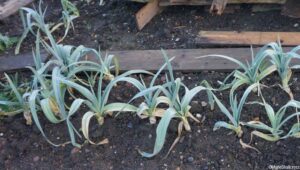
Some seeds can be started off now if you can give them frost protection. This can give you an early start with vegetables like leeks and Brussels sprouts that take a long time to mature. You can also sow and grow some salads such as ‘all year round’ lettuce.
Onion sets
These are ‘baby’ onions and can be a useful way of growing onions if you don’t have room for lots of seed sowing in the autumn.
Chitting Potatoes
This means encouraging the potatoes to sprout before planting and is usually carried out with main crop potatoes. Save egg boxes as they will come in handy for potato chitting. Purchase your seed potatoes if you haven’t already.

4 Winter Vegetable Garden Tasks – Forcing Rhubarb
And before you say anything, Rhubarb, strictly speaking is a vegetable not a fruit, which is why I’ve included it.
- Forcing, or blanching creates early, tender stems of rhubarb
- Early cropping varieties give better results
- Rhubarb needs a period of cold to break dormancy, before beginning forcing
- The crown should be at least two years old
- Once there are signs of growth, cover the rhubarb with a traditional forcing pot or upturned bucket with a stone to keep it in place
- The rhubarb should be ready to pick by March

5 Winter Vegetable Garden Tasks – The Potting Shed
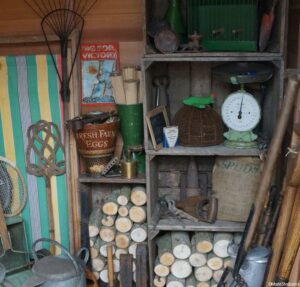
This is often the hub of the vegetable garden or allotment. Where pots, seed trays, hand tools and sundries are kept, tea drunk and slugs cursed. But it often becomes cluttered and – lets be honest – not a priority when we’d rather be sitting in the garden watching the summer sunset.
Winter is a good time to sort through, take stock and clean the various items. Out of date or beyond repair sundries safely disposed of. Hand tools are easily cleaned (see link below) and its remarkably therapeutic! Spare parts can be ordered.
Perhaps you could treat yourself to some new or upcycled storage?
6 Preparation of beds and borders
The preparation will of course depend on the growing method in use or to be used. And the crops – annual or perennial to be grown, or indeed still growing. Trying out new techniques, perhaps in just a small area of your vegetable garden, can be fun.
For example, two new beds need preparing. One by double digging, addition of compost, raising the level etc – a more labour-intensive process. The other prepared using the trench composting method. Recording the results over a few years isn’t critical but can shed a light on what works for you and your garden. this is one of the topics we explore in the Edible Gardening Course.
There are pros and cons to both digging over the soil and following a no-dig method. It is perfectly possible to use a combination of growing methods within the vegetable garden, as, so far as I can tell, some methods seem to produce better harvests for certain types of vegetables.

7 Compost bins and water butts
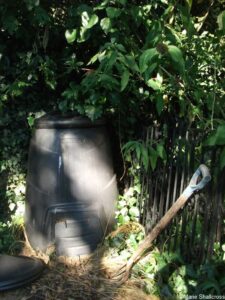
Do you have enough? Do you have any?! This task requires you to review what you have, check their condition and decide if more need to be built or purchased.
Whether they’re homemade, bog standard recycled plastic or something a bit fancier, you need compost bins and water butts in your vegetable garden. And if you have a smaller vegetable plot, then you need these close to hand. For all that I design sustainable gardens which need minimal watering once established, the vegetable garden has different watering needs. Annual veggies put on a lot of growth in a relatively short time and we expect a good harvest too. All of which requires water as well as a nutritious soil.
8 Repairs and more
Whether it is clearing out gutters, sending your lawn mower to be serviced or deciding you need to replace part of the fencing around the vegetable garden so it’s still rabbit proof, inspection is an essential winter garden task.
It is unlikely that as a home gardener your tasks will be purely horticultural. Inspecting sheds, greenhouses, fences etc for damage and organising repairs where needed, is easier in the winter when there is less growth covering structures and you have more time to have a good look.

9 Planning
I’ve put this task at the end of the list, but it really belongs at the beginning. Thing is, its often easier to get going with something practical and then sit down to plan after you’ve covered a few of the essential winter vegetable garden tasks above.
Planning involves a review of your vegetable garden as a whole as well as in its individual beds and areas. This is where record keeping comes in useful. What you did last year and the year before; what the weather was like and the effects this may have had is information you need when forward planning.
This means my first suggestion is if you haven’t kept records now is probably the time to start. A topic we cover in the first gardening lesson I always aim to keep it simple. The easier it is to keep records, the more likely you are to do it. it is mentioned in links below but I will spend a whole blog in this in a week or two to get you off to a good start.

10 Winter Vegetable Garden Tasks – what next?
If these winter vegetable garden tasks feel a bit overwhelming, we have other ways to help you. For example: –
- Click through the links below to read more tips in Plews Potting Shed blogs
- Get your copy of Plews News for monthly tips and ideas
- Have a look at our Gardening Courses for individual help and encouragement – due to current National Lockdown, we are offering these as 1-2-1 virtual gardening lessons. We are hoping to resume the ‘in your garden’ lessons very soon, as they are allowed under the rules; your safety and ours is key.
- Or you may like to have your vegetable garden designed so its an easier place to manage. Yes, growing your own isn’t all hard work – or it doesn’t have to be! Why not get in touch and ask about our garden design and planting design services. These also have the option of virtual design meetings.
And if you’re on social media, come and find us for more ideas and tips – particularly Instagram but also on Facebook Pinterest and Twitter
Related Gardening Blogs for You from the Award Winning Plews Potting Shed
General
What is a Vegetable Garden and Why Would You Want One?
What is Organic Gardening?
What is a Vegan Garden?
Gardening in January – Tasks, Ideas and Flowering Plants
Seeds
Ten Tips for Successful Seed Shopping
Seeds and seed sowing
Growing Methods
Grow your own vegetables in rows
Trench Composting – Sustainable Gardening
What is Square Foot Gardening?
How to use the Three Sisters Cultivation Method
Lasagna Gardening – Growing Methods for Gardeners
Compost
How to Make Compost
Potting Shed
Caring for Garden Tools part one, hand tools
Plastic Free Gardening Tips
Veggies
Growing Potatoes in Your Garden
Rhubarb – Growing Your Own Rhubarb Triangle
Unusual Vegetables for Your Garden
5 Favourite Vegetables