Could you grow your own Thanksgiving feast?
Whilst there are ‘how to’ blogs listed at the end, this is more of an intro to the fruit and vegetables that were most likely to have been served at the first Thanksgiving, with a few tips. Herbs are included too, as what was available might surprise you.
Growing this range of plants is achievable and not difficult. You’ll be able to grow at least some of them if not all, depending on the gardening space you have: which could be a windowsill to a few acres. Then you can enjoy a home grown feast in Britain for an American or Canadian celebration.
Turkeys, Thanksgiving and a bit of History
I’m not going to discuss raising turkeys in this blog post as most of us have neither the time, space nor inclination to rear them. But I am in the camp that believes that turkey was eaten along with other wild and domestic fowl, deer.
Wild turkeys were living in the Americas when the European settlers, the ‘Pilgrims’, arrived there in the early seventeenth century. A new species to their eyes, it was the Native American Wampanoag who introduced them to the bird that would become a central feature of the national feast of thanksgiving.
Originally, this was the same agricultural celebration as the Plymouth Colonists had been used to calling Harvest Festival back in Britain, a time to give thanks for the safe harvesting of crops to provide food over the lean winter months.
That first Thanksgiving feast was celebrated in October 1621, a year after the ‘Pilgrim Fathers’ arrived in New England.
Thanksgiving is celebrated on different dates in these two countries. Canada takes the second Monday in October whilst the USA has the fourth Thursday in November. But both are fundamentally autumn or harvest festivals. The different dates may be due to fact that the more northerly Canada will harvest crops earlier than the USA. Interestingly, the Wampanoag and the colonists were not particularly identified with Thanksgiving until the late 1900s.
The fruit, vegetables and herbs list
What do you need to grow your own Thanksgiving feast? The following are all traditional in either or both Canada and the USA meals. But more importantly, I’ve only included those which would have been available as imported stores and crops grown in that first year. Along with comments as to how they might have been used.
The main methods of cooking at this point were in a pot over an open fire and roasting on a spit, and they would also have had a ground oven.
- Maize
- Pumpkin
- Climbing beans
- Onions
- Cranberry
- Hazelnuts
- Apples
- Paw-paw
And a few herbs –
- Oregano
- Rosemary
- Chives
- Sage
- Thyme
Maize, Sweetcorn
The crops brought to the table by the Wampanoag Indians would have still been unfamiliar to the European settlers. Maize, Zea mays, the staple crop for cornbread, is native to the Americas, particularly Central America. This cereal crop had been in domesticated use since prehistoric times and maize is now the third most important crop in the world. Maize needs a longer summer than we can generally offer in the UK, but luckily quicker maturing varieties have been developed.
The corn would have been eaten either as a kind of porridge, or as a flat bread. So if you want to make these from your home grown sweetcorn you will have to grind the kernels into a flour rather than smother them with butter.

Grow your own Thanksgiving feast – Pumpkin
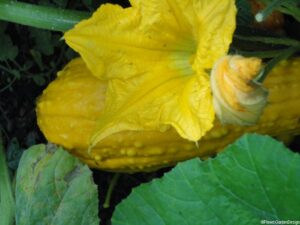
Pumpkins are well known as a Halloween decoration, but we use winter squash for Jack o’ lanterns and it is far more likely that summer squash was eaten at the first thanksgiving.
Why? Summer squash varieties have softer skins which tend to be edible – think courgettes for example – so they need to be eaten fairly promptly. Whereas the harder skinned winter squash will store over the cold months, providing home-grown food through till March.
Gardening Teacher Tip
As a space saving and decorative method of growing the smaller fruited varieties why not grow your pumpkins vertically on a trellis? Pumpkins have tendrils on their stems and the plant will use these to climb up the support.

Climbing beans
Bean casserole is one of the traditional dishes at Thanksgiving meals. Which is not surprising as many varieties are native to the Americas. The main methods of cooking at this point were in a pot over an open fire and roasting on a spit
The ’common’ bean Phaseolus vulgaris is also known as string bean, field bean, flageolet bean, French bean, garden bean and haricot bean. More tolerant of cooler temperatures it is likely to have been the bean accompanying that early thanksgiving turkey dinner.
All the wild species have a climbing habit, but some of the cultivated beans are classed as bush varieties rather than climbing or pole beans.

The Three Sisters
Together, maize, squash and climbing beans form the quintessential Native American cultivation method known as ‘Three Sisters’. If you’d like to try this method of growing crops, check out the link below where I’ve included how to tips and planting plans in the blog.
Grow your own Thanksgiving feast – Onions
Now there would be those who argue that as onions are not native to North America they wouldn’t have featured at the first feast. I would dispute that for various reasons, because –
- the settlers brought many seeds with them and onions grow from seed
- onions were used both medicinally and culinary in the 17th century and would have been considered important
- once harvested onions store for many months
Gardening Teacher Tip
Onion seeds are sown in autumn, whilst onion sets are planted in spring. Basically, the onion sets you buy are ‘baby’ onions. If you’re short on space or time, then use sets rather than seed, as these can be planted straight out into the garden. Unless you’re after a particular heritage variety, which may only be available as seed.

Cranberry
An evergreen dwarf shrub or trailing plant, cranberries are found in both the British Isles and North America. Vaccinium macrocarpon is the cranberry species native to North America, whilst Vaccinium oxycoccos is native to northern and central Europe.
Cranberries prefer an acidic soil, so you may need to grow yours in a pot. They are easy to cultivate, and the red berries are very decorative.
One thing they wouldn’t have done with the cranberries is to make them into a jelly or sauce as an accompaniment. Why? Because sugar was still in short supply and the Pilgrims may have been reliant on collecting honey from wild bees. But the fruit would have been used to stuff the wild fowl.

Grow your own Thanksgiving feast – Hazelnuts
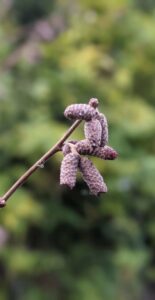
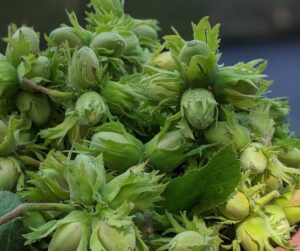
There are two native American species, Corylus americana and Corylus cornuta, and both grow in the area we now call New England. The nuts of both species are sweet and may be eaten raw or ground into flour to make bread or a porridge. This would usually have been a flatbread or unleavened bread as wild yeast wasn’t always obtainable and commercial yeast not available until the later 1800s.
At a guess, I’d suggest the recently harvested green hazelnuts would have appeared at the feast. Fresh nuts have a softer texture and sweeter, crisper flavour than dried.
And not forgetting Apples
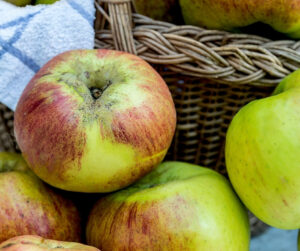
‘As American as apple pie’ is a well-known saying and certainly apples grow well in all the cooler states of the US. However, apples, Malus domestica, are not native to North America, they were brought over as tree seeds by the Pilgrims and other Europeans, so they’re unlikely to have appeared in the first Thanksgiving feast.
Or Paw-paws
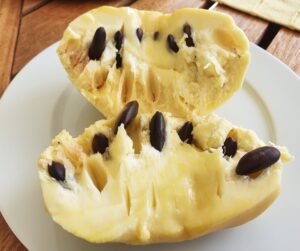
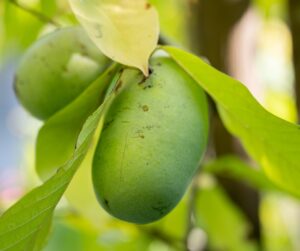
Unlike tropical members of the paw-paw family, Asimina triloba is cold hardy. The largest fruit native to North America, it was eaten by Native Americans who introduced it to the settlers This is a tree with a deep tap root that will grow to c 5m or possibly more. The only question really, is whether there’ll be enough summer sun to ripen the fruit. If you have room, it’s a decorative tree to grow anyway, with leaves similar to a fig’s.
Grow your own Thanksgiving feast – Herbs
What do the following five herbs all have in common? They were all introduced by European settlers. Dried herbs, roots and seeds would have been brought over with the settlers for both medicinal and culinary use. Its likely that there were some fresh herbs of all of these, picked from plants grown since the Pilgrims landed. However, of these herbs that we recognise, there were similar, wild versions of a couple of them growing in the region.
- Oregano
- Rosemary
- Chives
- Sage
- Thyme
Oregano and Rosemary
Both these were introduced in to Britain from the Mediterranean where they’re natives; there’s nothing similar in New England.
Chives
Chives, Allium schoenoprasum, is native to Europe and Asia and possibly North America, although the jury is out as to whether its is native or naturalized there. However, there is the native meadow garlic, Allium canadense.

Sage
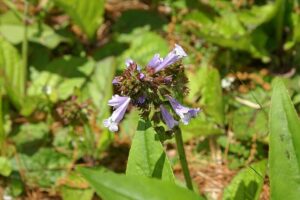
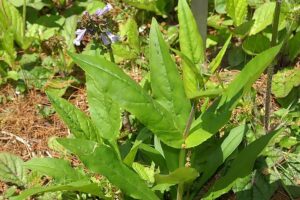
New England has a native sage, Salvia lyrata, lyre-leaved sage. The leaves, flowers and stems are edible so it could well have been included in the feast.
Thyme
Whist none of the Thymus are native, there is an edible Thyme-leaved speedwell, Veronica serpyllifolia ssp. Humifusa, which is native to New England.
Gardening Teacher Tip
Although often considered a garden weed, many of the speedwell family are edible, ornamental and pollinator friendly. The leaves are best harvested before flowering and can be used in salads or in cooking, whilst the young plant tips are used through spring and summer. They taste similar to watercress.
And finally
Could you grow your own Thanksgiving feast? I rather think we’ve established that you can, and easily too. You may like to keep to the first Thanksgiving list of plants, or extend it to what are now considered traditional foods such as sweet potatoes.
And for help with designing a kitchen garden or vegetable plot to grow your own Thanksgiving veggies – why not get in touch?
If you would like help with learning more about your garden and gardening, why not ask about our bespoke Gardening Lessons, where your classroom is actually your own garden. We can help you learn gardening basics, and also show you how to plan an ornamental border or kitchen garden. Click here for a free PDF download with more infomation on Plews Gardening Lessons and Courses
And for further gardening advice and inspiration, ideas for edible gardens and more, check out Plews Potting Shed blogs, including the selection below and our monthly Tipsheet – You could come and find us on Instagram Pinterest and Facebook too.
And on that note, you can have a peek at my new garden on Instagram @spitfiresandslowworms and for those of you who prefer Facebook – Spitfires and Slow Worms
Related Gardening articles you may enjoy from our Award Winning Blog
Grow your own Thanksgiving feast – Tips
How to use the Three Sisters Cultivation Method
Three Sisters History of a Cultivation Method
How to Grow Onions – and a bit of Onion History
How to Choose Apple Varieties to Grow in Your Garden or Orchard
Herbs
Parsley Sage Rosemary and Thyme
9 Evergreen Herbs to Edge Your Kitchen Garden or Vegetable Plot
Growing Your Own – Ideas & Tips
Easy Maintenance Edible Gardens
Edible Plants for Hanging Baskets
Why Do We Grow Vegetables in Rows?
What is an Ornamental Edible Garden?
Growing New Potatoes for Christmas Dinner