Question: – Can you have topiary in your garden?
Answers heard: –
- Yes, if you have acres of land and formal gardens.
- Not if you have a postage stamp plot.
- Ok, well maybe if you have a smart, minimalist city garden you can have topiary in pots.
- Oh yes, and some people have those lollipop plants outside their front doors. Is that topiary in your garden? Not really sure that it counts…
Which leads us onto: –
Everyone knows what topiary is, even if they weren’t sure what it was called. And, of course, everyone knows that proper topiary belongs in large formal gardens attached to historic houses. It may appear in show gardens like RHS Chelsea, but it doesn’t belong to the real life of suburbia. Children, dogs, cats, BBQs and a washing line don’t really mix with the pristine formality of well-clipped topiary.
You know what the problem really is? Everyone. By which I mean, too much generalisation.
I appreciate that sometimes there is a need to use ‘the average garden’ as a quick term of reference. The issue is…well, look around the street where you live, or the residential areas you walk through on your way to the train station. If you’re walking through a large town, there is likely to be an average size of front garden within any given road. There are historical reasons for that.

But whilst the size of the front gardens may be similar is there an average style? It’s unlikely. And that’s where the use of generalisation falls apart. We are all of us different and our style of dressing, our houses, our gardens reflect that.
My point? If there isn’t an average style of garden for most of us, then why can’t you have topiary in your garden?

Historical Topiary
Topiary became a very popular garden style in Roman gardens; both in the smaller atriums and the large formal gardens adjoining country villas. As well as geometric shapes and intricate topiary statues, clipped hedges were an integral element of the garden.
Pliny the Elder credits its introduction by Mattius, a friend to the Emperor Augustus in the first century BC. And Cicero recording seeing in 54BC evergreen shrubs sculpted to form a fleet of ships.
Topiary may also be used as term to describe gardening styles which rely on the close clipping (pruning) of shrubs into decorative shapes, particularly when a hedge is pruned in this way.
Parterre gardens became a major feature of Italian Renaissance gardens in the fifteenth century. Large topiary specimens would be placed at the juxtapositions of the intricate designs. Parterre gardens were typically ornate geometric and swirling designs made with level, clipped box (Buxus) hedges.
Knot gardens, an English Tudor favourite, were similar to parterre gardens. But rather than box, evergreen herbs such as Santolina (Cotton Lavender), Lavender and Thyme were used. The decorative effect came from undulating hedges, as if the herbs were growing over and under each other, as in a knot.

These formal garden styles remained popular until the advent of a looser more naturalistic fashion with the picturesque and landscape garden styles the eighteenth century.. Some old established topiary gardens survived; most notably at Levens Hall in Cumbria. Which also happens to be one of my favourite gardens.
Formal gardens became popular again in Britain during the late nineteenth century. For example, topiary hedges of Yew (Taxus baccata) made an effective backdrop to rose gardens. Whilst Box cones and spheres grown in large lead planters added to the elegance of terraces.

Topiary in your Garden
So how does this relate to our twenty-first century gardens?
Topiary spheres, cones and lollipops can indeed look chic placed either side of your front door.
But you could extend that air of formality – and neatness – to the rest of your front garden. If a complete knot garden or parterre is not your style, why not create a simple geometric diamond border and have topiary at each point? Or you could mix carpet bedding plants and topiary.

If you have a larger garden, a formal area near to the house can be very effective. A simple square, cross quartered, with low hedging, topiary cones on the corners, topiary spheres at the points in between. Decorative, coloured gravel in-between keeps maintenance needs low. Add a central feature of sundial, armillary sphere or lollipop topiary to give height.
Other ideas? I have seen topiary birds and bees used very successfully as decorative features in wildflower meadows. And in a long, narrow garden, breaking up the space with topiary hedging adds interest in all sorts of ways.

Topiary in your Garden – Plants to use
You don’t need to limit yourself to Box as the plant of preference. Indeed, given the ongoing problems of Box blight and the caterpillar of box tree moth you may like to try a different evergreen shrub.
Box ‘look-a-likes’: –
- Euonymus japonicus
- Hebe topiaria
- Ilex crenata, Box Holly
- Ligustrum japonicum, Privet
- Lonicera nitida, Box honeysuckle
- Osmanthus burkwoodii
- Sarcococca, Christmas Box
- Taxus baccata, Yew

Other alternatives: –
- Lavender, English Lavender (Lavendula angustifolia) is the most often used
- Pittosporum ‘Tom thumb’
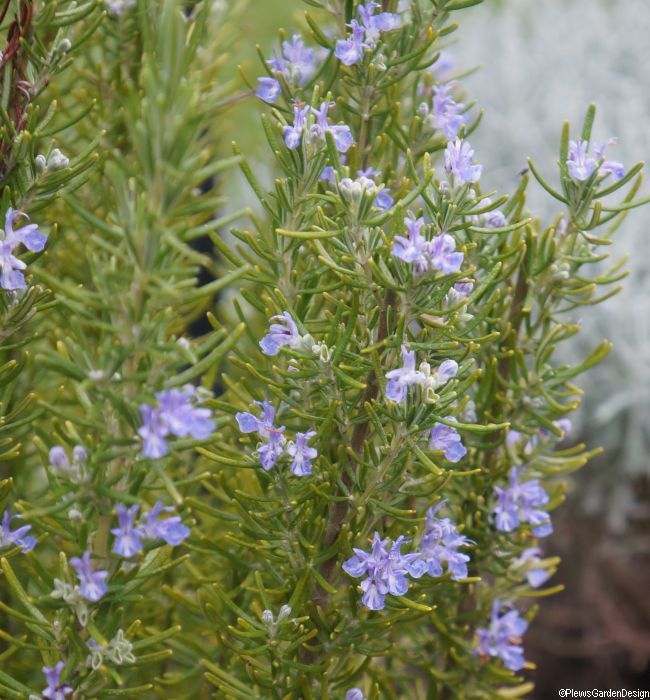
- Rosemary
- Santolina chamaecyparissus, Cotton Lavender
- Teuchrium x lucidrys (a traditional plant for knot gardens)

The plant you choose will depend on your design, as there are foliage colour choices in the above list. You could choose from the dark glossy green of Sarcococca to the soft silver grey of Santolina; to the variegated Euonymus.
You’ll also need to decide whether you’re clipping the shrub into a topiary shape yourself or purchasing as ready-made topiary. You’ll have more choice if you buy the plant and create the topiary. Making your own topiary specimen will take years, but it can be a very satisfying long-term project. Buying a large, mature topiary specimen may not be cheap, but it is worth paying for the expertise if what you wan tis the wow factor.
Maintaining the Topiary in your Garden
The critical thing to remember is that you are trimming to maintain the shape of your topiary. Depending on the species, you may only need to trim once a year; or up to four times if it’s a fastest growing plant. Yew and Box are both slow growing, so an annual clip is generally all you’ll need to do.
Fertilise the soil around your topiary as part of your annual general gardening feed schedule. And apply mulch and organic matter as you would to any ornamental shrub.
If you’d like help designing a topiary garden, or have queries regarding your existing topiary, do get in touch to ask about our design and consultancy services and gardening lessons.
For further gardening advice and inspiration, check out Plews Potting Shed blogs, including the selection below and our monthly Tipsheet – You could come and find us on Instagram Pinterest and Facebook too.