

What are our 7 fun tips for gardening with children?Well, yes, you could buy them a child-sized trowel, and point them in the direction of some bare soil, but there’s so much more fun to be had!
Some of these are quick to carry out, for others you need to wait for the plant or seed to perform.
Although some are more season specific, there are fun experiments and making things that can be enjoyed at any time of year.
Soil Testing
Here we’re carrying two tests to discover what sort of soil is in the garden and how acidic it is.
There are 4 main types of soil and they all feel different. Take some slightly damp soil in your hands and rub it: –
- Clay soil forms a ball that sticks together
- Sandy soil feels gritty when you rub it, and falls apart
- Chalky soil crumbles easily and has white stones in it
- Silty soil feels silky
What do you have in your garden?
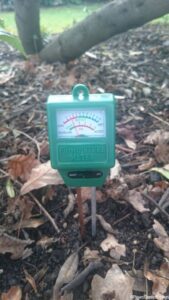
The second test is for testing how acidic Just saying acidic and comparing this to lemon juice or vinegar is easier for young children to understand. You could use a pH meter or soil testing kit to discover whether you have acid or alkaline soil. Both are easily purchased from a garden centre or online. For younger children and a speedier result, the pH meter is quicker.
Will these seeds germinate?
Choose packets of annual flowers and beans with different sow-before dates, include a just out of date one and a very out of date one if you have them.
- Gather together seeds, kitchen paper towel, plastic bags or cling film, a water spray bottle
- Lightly dampen a piece of towel with the spray
- Lay ten seeds from same packet onto it
- Cover with another damp towel
- Fold; place in plastic bag
- Label bag with variety and date
Repeat for each seed variety. Keep the bags warm and moist. They should start to germinate in about a week. Look for a small white root coming out of the seed.
How many of the 10 have germinated? 5 = 50% viability, as in only half the seeds will grow into seedlings.
Finding new uses for toothbrushes
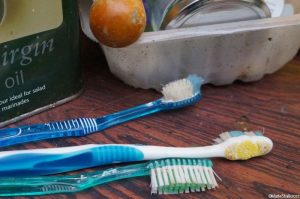
Get out your old toothbrushes, fizz up a pint of water with a spoonful of bicarbonate of soda and a drop of lavender oil then get cleaning. Using toothbrushes enables little hands to reach to all parts of plant pots and seed trays. You can use toothbrushes to clean the frames of greenhouses too…
Clean equipment is important as seeds and seedlings are prone to disease.
7 Fun Tips for Gardening with Children – Plant Pots for Free
While you’re waiting for the seeds to germinate why not make some plant pots?
I’ve used loo roll inners, but you can use inner tubes of kitchen roll, kitchen foil, wrapping paper, etc as well or instead. Cut long tubes to make 2 or more of the length needed.
Method 1
Take an empty coffee tin or similar and make 5 holes in the base with an awl or other pointy tool. With young children, you’ll need to do this yourself. The lid becomes the saucer to catch water. Then take 2 loo roll inners and pop them into the tin, squeezing them slightly to fit and leaving a little bit proud so they’re easier to remove. Fill the tubes with soil/ multipurpose mix. These are especially good for seeds that like a long plant run such as peas and beans.
Method 2
Take a straight sided jam jar or plastic beaker and a sheet of newspaper folded over lengthwise so it’s about 1½ as deep as the jar.
Place the folded edge about 1 cm down from the base of the jar and wrap it tightly around.
Tuck the loose ends of the newspaper into the open end of the jar – this will be the base of your pot.
Carefully remove jar from newspaper.
Stand the pot on its base and from the inside press down the loose paper to form a flat base. You don’t need holes in the bottom as water will leak out anyway. These newspaper pots are best packed together into a waterproof container such as a plastic punnet.

Does it matter which way up you sow seeds?
This one isn’t a quick experiment, as you’ll need to allow time for the seeds to germinate, generally 1 -2 weeks. Fill three pots with multipurpose compost and / or soil. Choose a seed with an obvious pointy end, for example a pumpkin seed.
- plant one pot with pointy end up
- one with pointy end down
- one where it’s lying flat or on its long narrow side. (the latter position reduces the liklihood of the seed rotting)
Label the pots with which way up the seed was sown, water them, and wait to find out which will sprout above the surface first.
This teaches us that a seedling ‘knows’ where the soil surface is. Roots always grow away from and shoots towards the surface. Shoots reaching for the light is called phototropism.
7 Fun Tips for Gardening with Children – Magic water
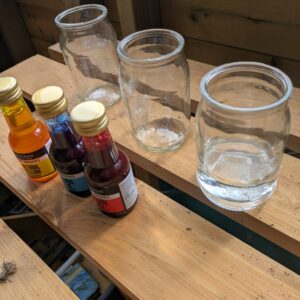
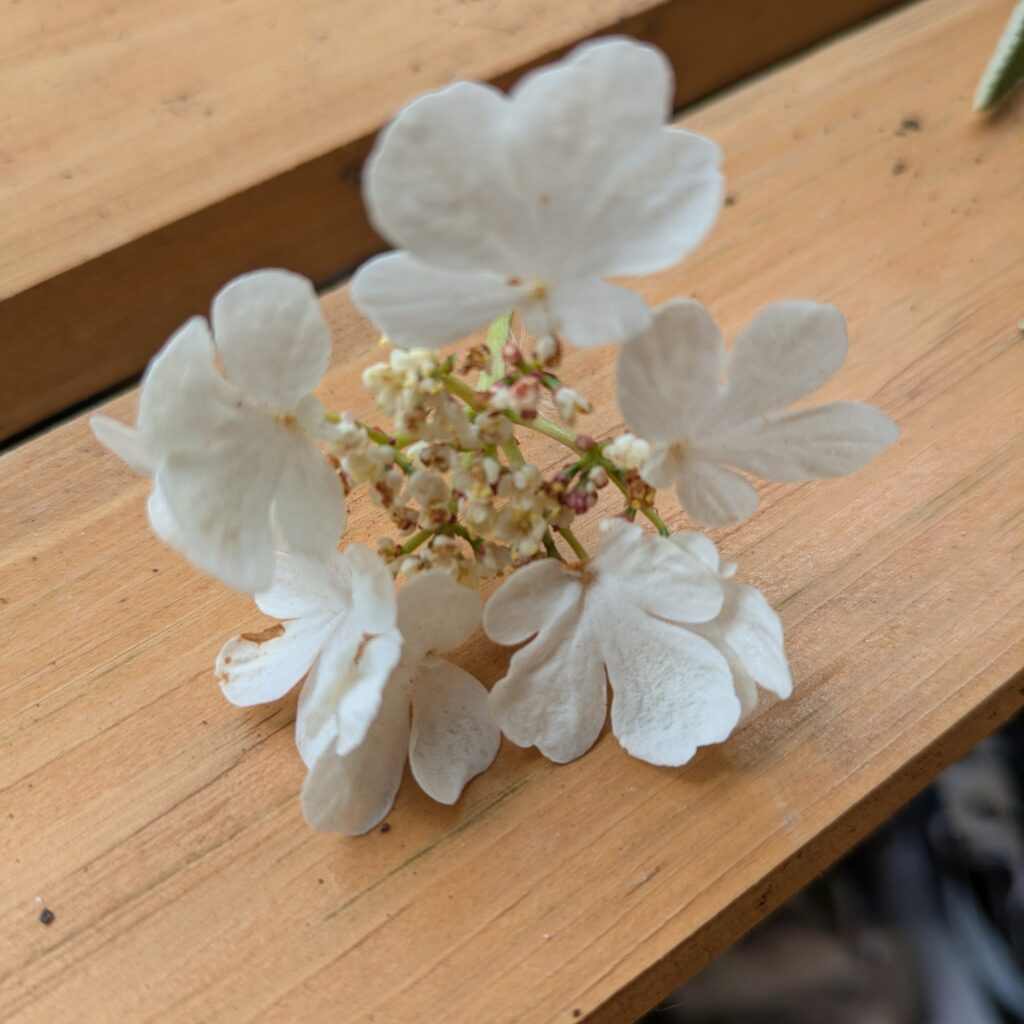
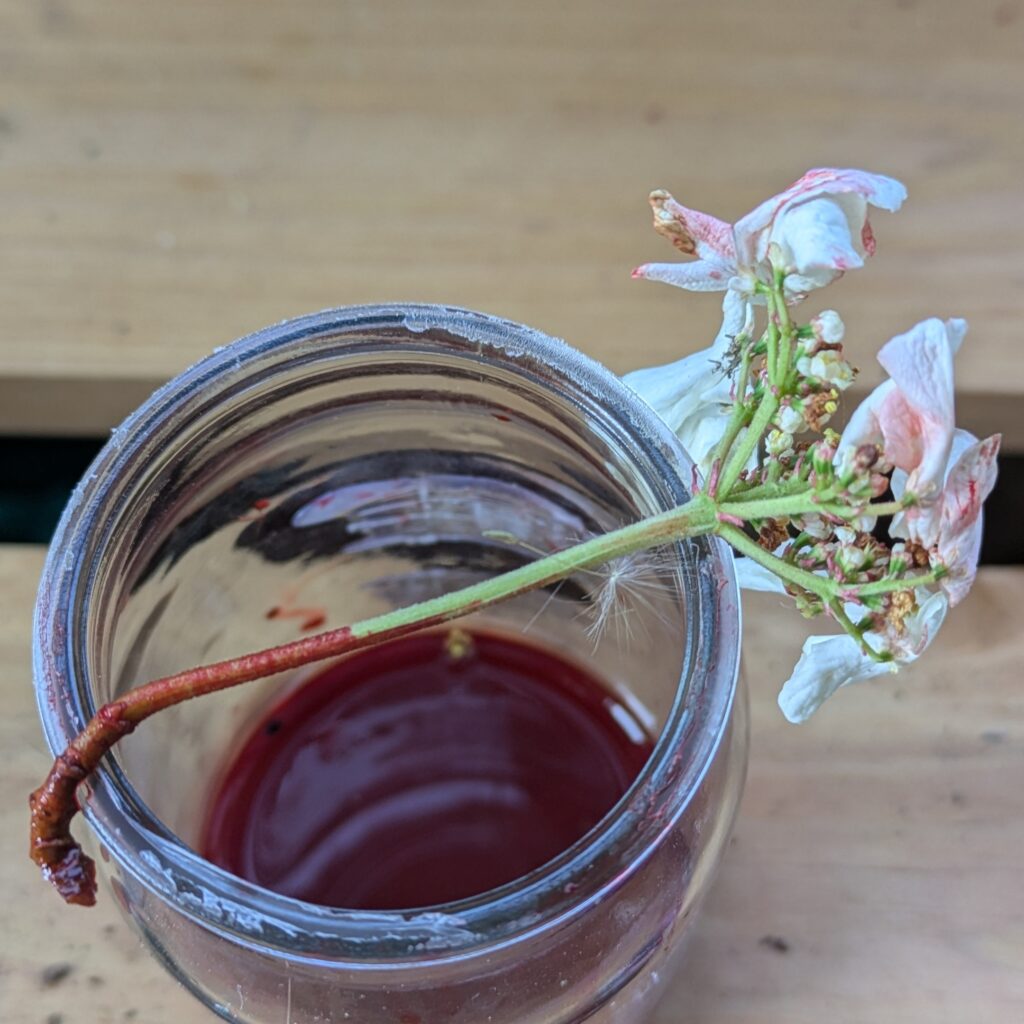
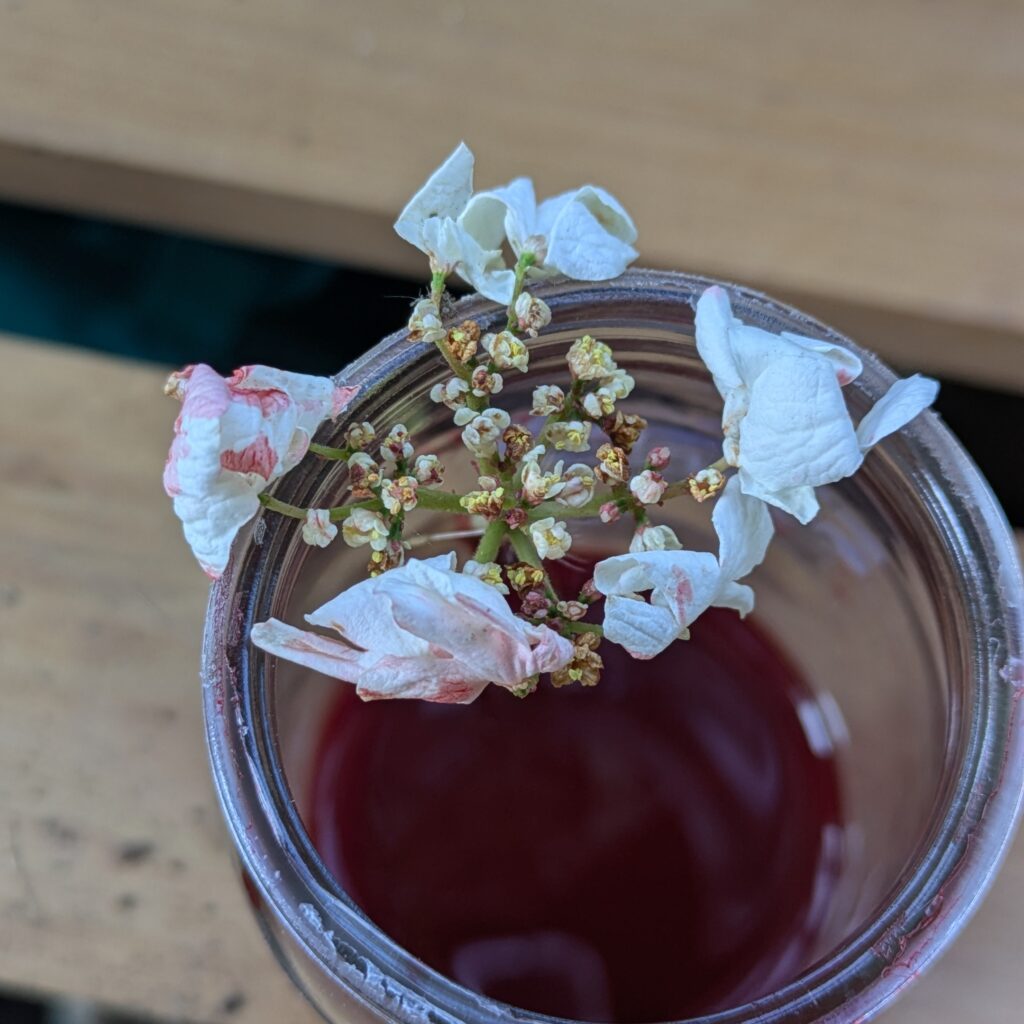
Take a spray of white blossom or stem from a shrub, herbaceous perennial or annual plant with white flowers. Put this in a vase of water that has sufficient food colouring added to be a strong colour, so it’s easy to see the change in the stem and flower colour. Then wait. NB the water can take a day (or longer) to travel up to the flowers.
What you’ll get is a stem that slowly turns blue or red from the bottom up. Then the white flowers begin to be tinged with colour. Some will turn fully red or blue. This experiment shows how plants take up water and nutrients. You may want or need to explain that in ‘real life’ it is the roots in the soil that do the initial water take-up. This is then transported through the centre of the stem by a column of spongy tissue.
To make it even more interesting, you can compare different types of stems for speed. Will the hollow stem be quicker?
Bean tepee or tunnel
Well, I say bean, but any quick growing annual climber will do. There are many things you can use as supports, but bamboo or hazel poles are probably easiest for most people to source. Where you put the tepee may be determined by what you’re growing up it, ie do the plants require sun or shade, if veg do they need the richer soil of a vegetable plot.
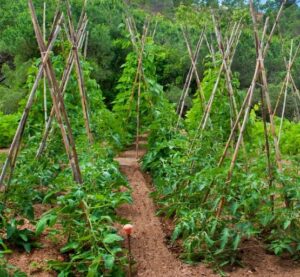
This is intended as a semi-permanent structure to last all summer until the crops are harvested or the flowers finished. For the tunnel, two rows of canes are angled together and tied at the top. A horizontal cane sits in the gulley and is tied to the uprights for extra support. For the tepee, the upright canes are bound together at the top. For both, add horizontal plant supports such as twine or lightweight hazel / canes across the uprights. How many horizontals you’ll need will depend on the size of the structure and what’s being grown, but on average, about six.
Suggested edible plants
- Climbing beans
- Runner beans
- Peas (be sure they’re climbing not bush)
- Mini cucumbers
- Courgettes
- Mini squash
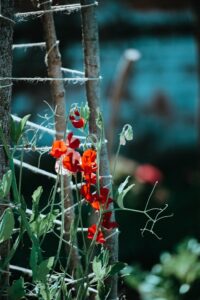
- Nasturtiums, Tropaeolum majus
Annual flowers
- Black-eyed Susan, Thunbergia alata
- Nasturtiums
- Sweet peas, Lathyrus odoratus
- Chilean glory flower, Eccremocarpus scaber
- Spanish flag, Ipomea lobata
and finally
That’s it for now. There were more than 7 fun tips for gardening with children, but I can still think of plenty more ideas for educational fun in the garden – for children and adults alike! Check out the blogs below
In 2025, National Children’s Gardening Week runs from May 25th – June 2nd, the same week as spring half term holiday for most schools. But having fun in the garden is such a mood improving and easy way to learn about science experiments, how plants grow and live – learn about horticulture in fact! – that it’s an approach to gardening that will give you and the children in your life year round pleasure to counter balance those frustrations of deer eating your runner beans and slugs munching your Hostas.
And if Plews can help you with anything, please do get in touch. For example –
Our Garden Consultancy & Advice Visits may help with some of your issues. Or does your planting need a rethink? Do you have a birthday coming up? Plews bespoke Gardening Lessons, where your classroom is actually your own garden make a wonderful and practical gift. You could learn how to grow an orchard of citrus fruits in your conservatory! We help you with both gardening basics and more ‘expert tasks’, depending on what you need. Have a read through this pdf download for info.
For further gardening advice and inspiration, check out Plews Potting Shed blogs, including the selection below. You could come and find us on Instagram Pinterest and Facebook too.
Feeling nosey? You can have a peek at the progress of my garden renovation, Spitfires and Slow Worms, on Instagram and Facebook
You’ll get to see it in person if you come to the Plews Gardening Workshops Although later dates and topics still need to be finalised, there are current ones on Eventbrite for you to book into. Follow for updates on topics and dates on Instagram, Eventbrite, Facebook
Plus get your local garden club, allotment, WI, U3A or other group to ask me along to give a talk (and bring plants 😉)
Related Gardening articles you may enjoy from our Award Winning Blog
Fun Tips for Gardening with Kids in Small Gardens and Balconies
February Half term Fun in the Greenhouse
What Might a Plews Gardening Lesson Be Like?
Wild about Gardens – Design Ideas for Humans and Wildlife
RHS Chelsea 2019, Plant Heritage, Children’s Gardens, Glorious Flowers
Free Gardening Printables to Download
Pizza Garden Planting Plan for a Pizza Shape
Pizza Garden Planting Plan for Borders and Square Foot Gardens